
By 9pm, half the room has already left. The people who stayed are sitting with the colleagues they already eat lunch with. The best anyone says about it on Monday is “yeah, it was nice.” Meanwhile the budget looked generous on paper: venue booked, catering sorted, drinks, AV, styling, entertainment and transport all signed off.
That gap is the real problem with most Christmas party budgets. They’re built as a list of supplier costs, not as a plan for what the night should actually do.
Employees don’t experience venue hire, catering and entertainment as separate line items. They experience the night as a whole. Was it easy to get to? Did the timing respect their life outside work? Did they feel comfortable the moment they walked in? Did they have a reason to talk to someone outside their usual circle? Was there a moment that felt different from an ordinary dinner and drinks?
Those questions, not the supplier invoices, determine whether a Christmas party feels worth the investment.
Eventbrite found Australian businesses spend an average of $9,722 on workplace Christmas parties, with some investing more than $100,000.[1] Employees are investing too: recent Australian workplace reporting found staff expect to spend an average of $141 out of pocket to attend work Christmas celebrations, between transport, childcare, outfits and Kris Kringle gifts.[2]
A budget that size deserves to do more than pay for a room, a menu and a run sheet. It should remove unnecessary friction, then protect the moments that actually make people glad they came.
The Real Question Isn’t “How Much Should We Spend?”
Most Christmas party budgets follow a predictable order: venue first, food second, drinks third, and whatever’s left goes to entertainment, styling or an activity.
That sequence is understandable. It’s also where most events lose their purpose.
The better starting question isn’t “What do we need to pay for?” It’s “What do we need this event to do for the team?”
Some years, a Christmas party needs to acknowledge a genuinely brutal stretch. Other years, it needs to reconnect people who’ve spent twelve months split across locations, projects or hybrid arrangements. Sometimes it just needs to give people permission to switch off, or a reason to feel proud of the group they’re part of.
None of that happens automatically just because everyone’s in the same room. A venue and a meal tell people they’ve been hosted. A well-designed night tells them they’re included, appreciated and part of something shared. That distinction should drive every major budget decision that follows.
Where Christmas Party Budgets Quietly Get Wasted
Budgets rarely blow up over one dramatic mistake. More often, value leaks away through a string of sensible-looking choices that improve how the event looks without improving how it feels to the people in the room.
A striking venue can mean a miserable journey home. A late finish quietly excludes parents, carers and anyone travelling across the city. A generous drinks package can only carry the social atmosphere so far just as much as polished stage entertainment can be genuinely excellent and still leave the room as an audience rather than a party.
The most common failure mode is passive attendance: people arrive, sit with the colleagues they already know, eat, watch something happen, and leave. The event was delivered competently. It just never gave anyone a reason to behave any differently than they would on an ordinary Tuesday.
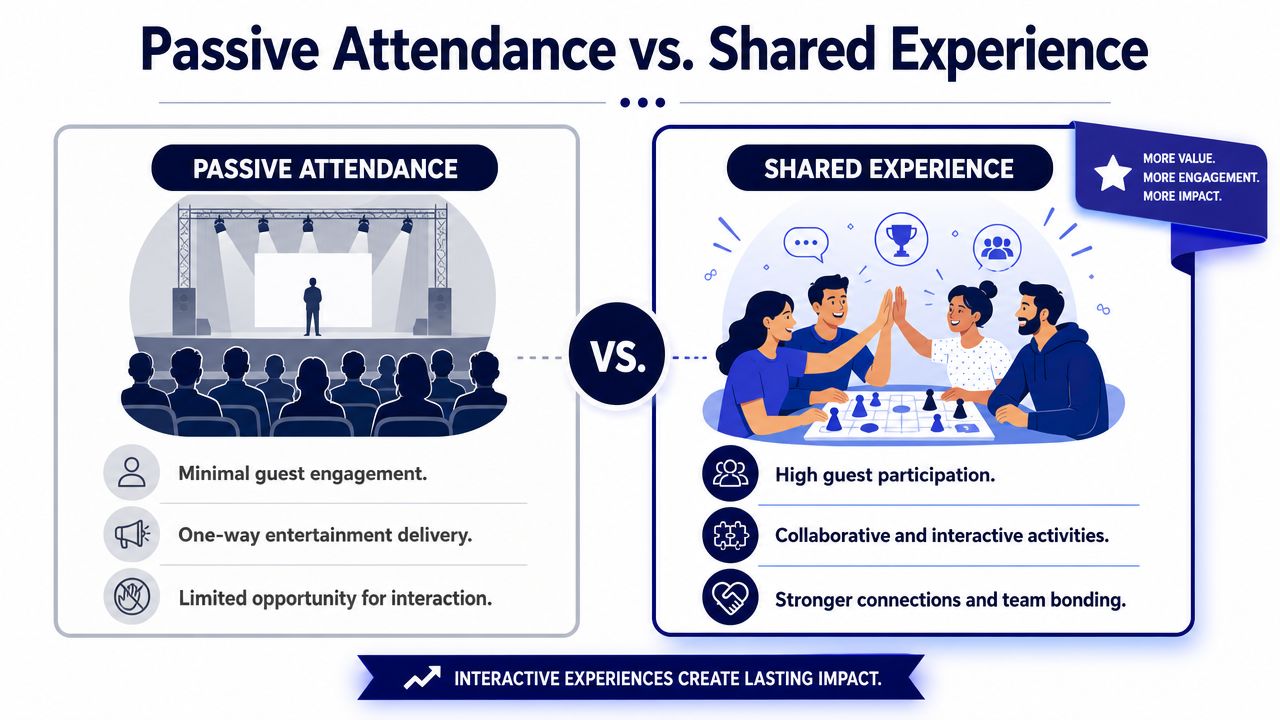
A shared experience doesn’t mean compulsory games, forced performance, or putting introverts on the spot. It means giving people a low-pressure reason to engage with someone outside their usual orbit.
Self-Determination Theory offers a useful lens here. The theory identifies autonomy, competence and relatedness as core psychological needs tied to motivation and wellbeing.[3] Translated into event terms: participation works when people have a comfortable way in, understand what’s being asked of them, and feel connected rather than exposed. That’s why well-facilitated interaction consistently beats forced fun. It gives people a role in the experience without making them the entertainment.
What Makes a Christmas Party Feel Worth the Budget?
A memorable night isn’t built on one extravagant inclusion. It’s the result of several conditions working together.
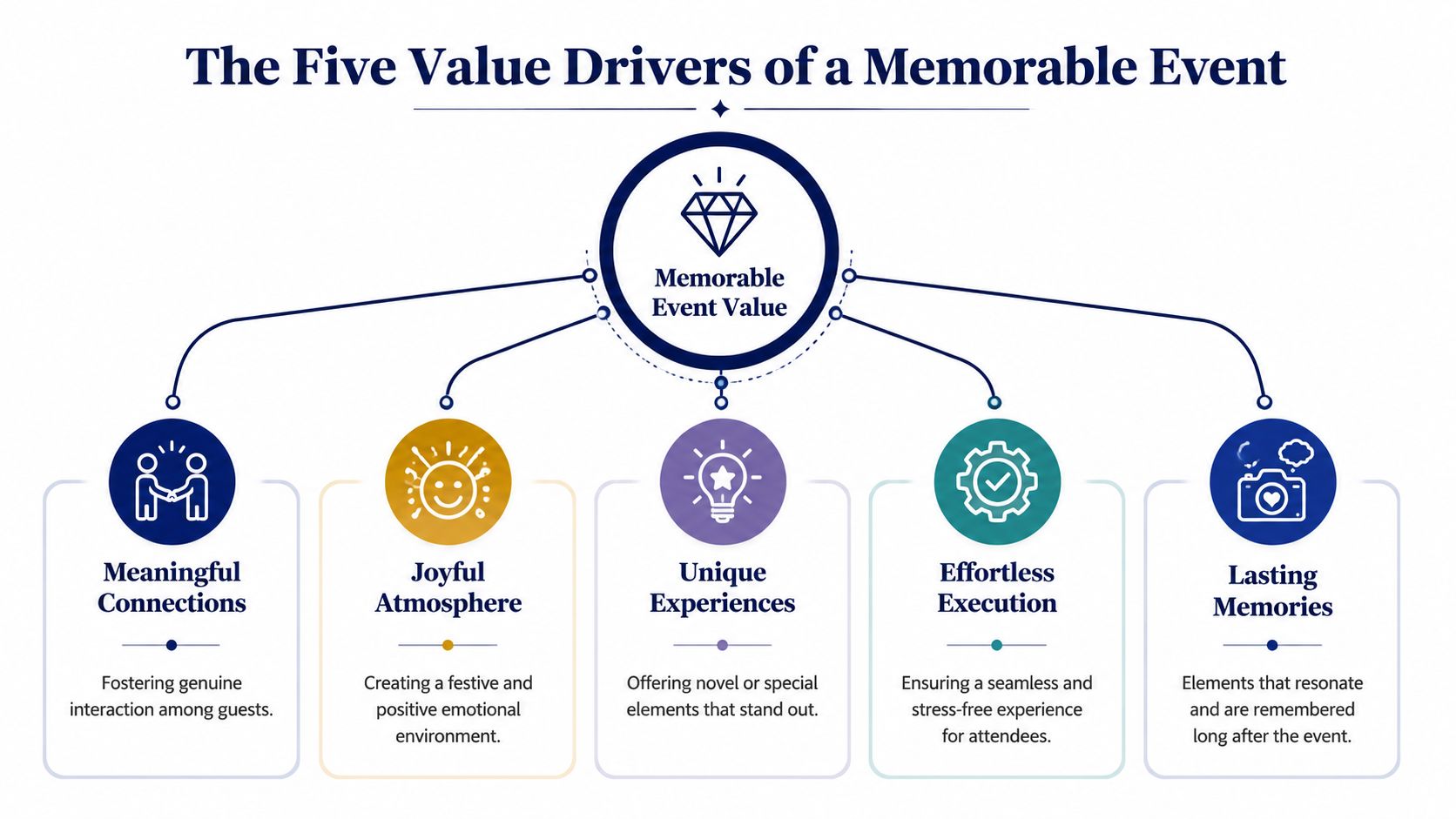
These five drivers are a far better test than spend-per-head.
A premium venue earns its cost when it’s accessible, comfortable and suited to the format. It’s wasted money when it’s simply a nicer-looking backdrop for the same passive evening. A recognition moment can cost almost nothing and still carry real weight, if it’s specific, sincere and tied to what the team actually achieved. A shared activity can outperform another menu upgrade entirely, because it builds connection, gives the night its own identity, and sends people home with a story instead of just a full stomach.
The goal isn’t to make every line item hit all five drivers. It’s to make sure the event, taken as a whole, does.
Christmas Party Budget Planner
Most planners already have a spreadsheet. What’s usually missing is a way to tell the difference between costs that make the event possible and costs that change how people actually experience it.
Before locking in the budget, classify each item as a must-have, impact cost, or nice-to-have. Use the notes column to record exactly what that spend is meant to improve: ease of attendance, comfort, interaction, recognition, atmosphere, or memory.
| Budget Item | Estimated Cost | Must-have / impact / nice-to-have | Notes |
|---|---|---|---|
| Venue hire | Must-have / Impact / Nice-to-have | Capacity, access, timing, location | |
| Food and beverage | Must-have / Impact / Nice-to-have | Dietary needs, service style, alcohol approach | |
| Entertainment or team activity | Must-have / Impact / Nice-to-have | Shared experience or passive entertainment | |
| Facilitation | Must-have / Impact / Nice-to-have | MC, host, activity lead, event flow | |
| AV or equipment | Must-have / Impact / Nice-to-have | Audio, screens, microphones, music | |
| Styling or theming | Must-have / Impact / Nice-to-have | Only if it changes the experience | |
| Transport or parking support | Must-have / Impact / Nice-to-have | Taxi support, parking, easier attendance | |
| Accessibility needs | Must-have / Impact / Nice-to-have | Venue access, hearing, mobility, seating | |
| Gifts or recognition moments | Must-have / Impact / Nice-to-have | Thank-you format, awards, meaningful gestures | |
| Charity contribution or donation items | Must-have / Impact / Nice-to-have | Give-back element or community impact | |
| Contingency | Must-have / Impact / Nice-to-have | Late additions, supplier changes, weather |
This exercise tends to expose false economies fast. A cheaper venue that creates travel friction, a budget entertainment option that leaves the room passive, or a generous menu with zero shared moment can all look efficient on paper, while quietly undercutting the night itself.
The question worth asking of every line is simple: what will this actually change for the people attending?
A Smarter Way to Allocate Your Budget
Once the essentials are locked in, the budget needs hierarchy. Not every cost does the same job. Some make the event possible, some make it valuable, and some just make it more polished.
Research on remembered experience is useful here. The Peak-End Rule suggests people judge an experience disproportionately by its most emotionally intense moment and how it ends, rather than by averaging every minute equally.[4] A Christmas party isn’t a psychology experiment, and this shouldn’t be treated as a formula, but it’s a genuinely useful discipline for budget decisions. Don’t spread spend so evenly across venue upgrades, menu add-ons and styling that nothing’s left to create an actual collective high point, or a strong way to close the night.
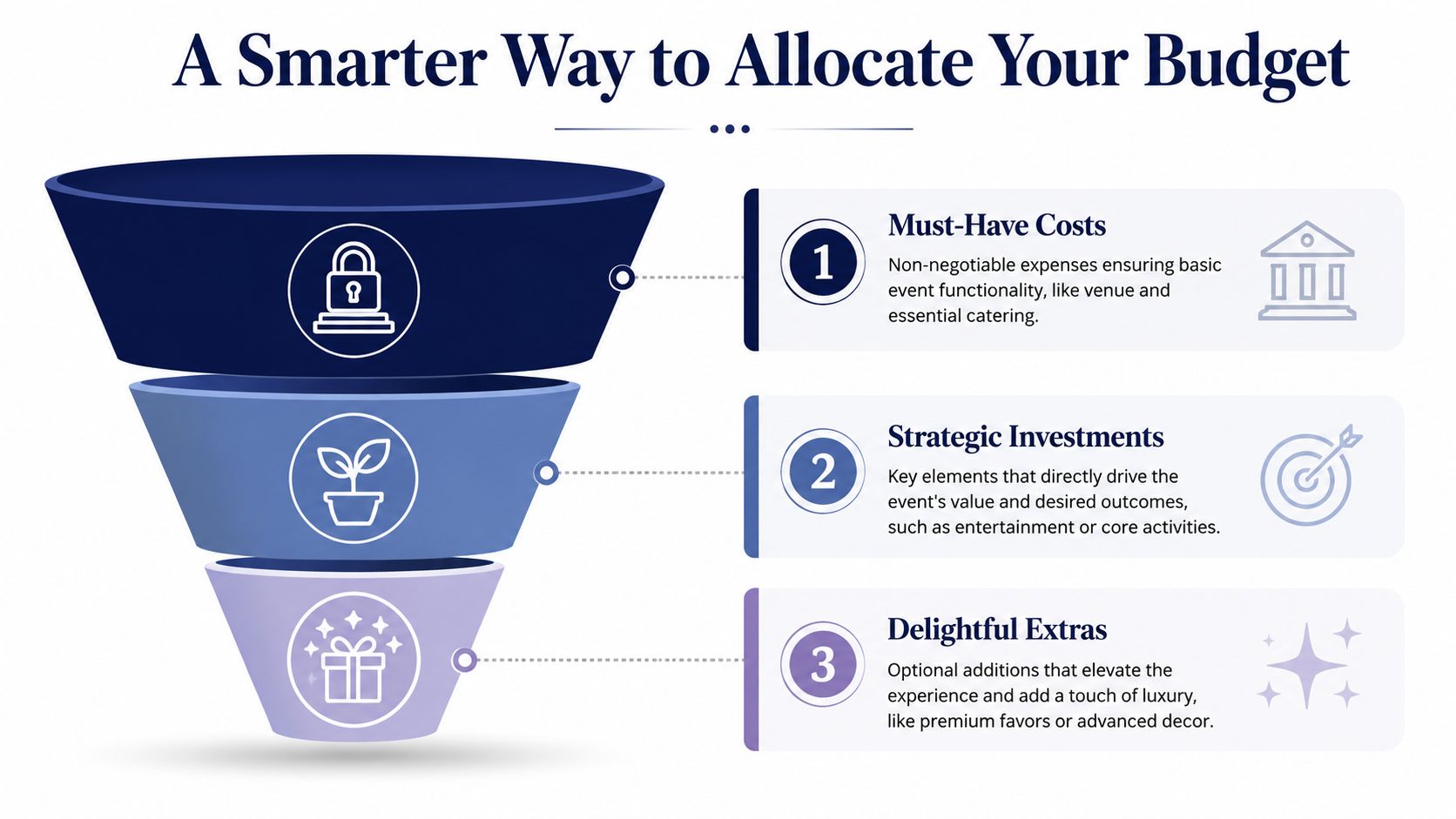
If your current draft budget skews heavily toward must-haves and extras, with little left for strategic investment, that’s usually the clearest sign the night will be polished but forgettable.
Must-have costs protect the event from failure. Strategic investments are what create the reason it mattered, and the moments people are most likely to remember and talk about into the new year. Delightful extras can be worthwhile, but they should never quietly eat the budget that strategic investment needs.
Why Play Makes the Budget Work Harder
Play isn’t entertainment for entertainment’s sake. In a workplace setting, it’s a way of changing how people participate: giving them permission to engage, contribute, test ideas, laugh and interact outside the roles they usually occupy. That’s why play-based Christmas team building belongs firmly in the strategic investment category, not the nice-to-have one.
The National Institute for Play describes play as a biological and cognitive state linked to curiosity, engagement and social connection, and explores its role in activating systems tied to emotion, motivation, movement and reward.[5] None of this means a single activity will rewrite a team’s culture overnight. It won’t. What it does mean is that a well-designed shared experience can make people more present, less self-conscious and more socially engaged than they’re likely to be at an unstructured dinner or a stage-only show.
Research on enactment adds a related angle: studies have found that actively performing actions can support memory differently from simply observing them, though the effect varies by task and context.[6] Doing something together creates a different kind of recall than watching something unfold. A meal gets consumed. A shared experience becomes a story people still bring up at the next party.
The strongest format isn’t necessarily the loudest one. It’s the one that suits the group and gives every person in the room a real role to play.
| If the event needs to create… | Consider… |
| A visible expression of thanks | Recognition woven into a shared activity or charity outcome |
| Better cross-team connection | Collaborative problem-solving, creative challenges or game-show formats |
| A lift after a demanding year | High-energy, low-pressure play with no public performance required |
| A purpose-led celebration | Charity team building with a tangible community outcome |
| A social but inclusive atmosphere | Facilitated experiences with multiple ways to contribute |
| An energised conference or awards event | Short, participatory energisers built into the program |
Key Questions for Budget Review
Before contracts are signed, run the budget through these questions.
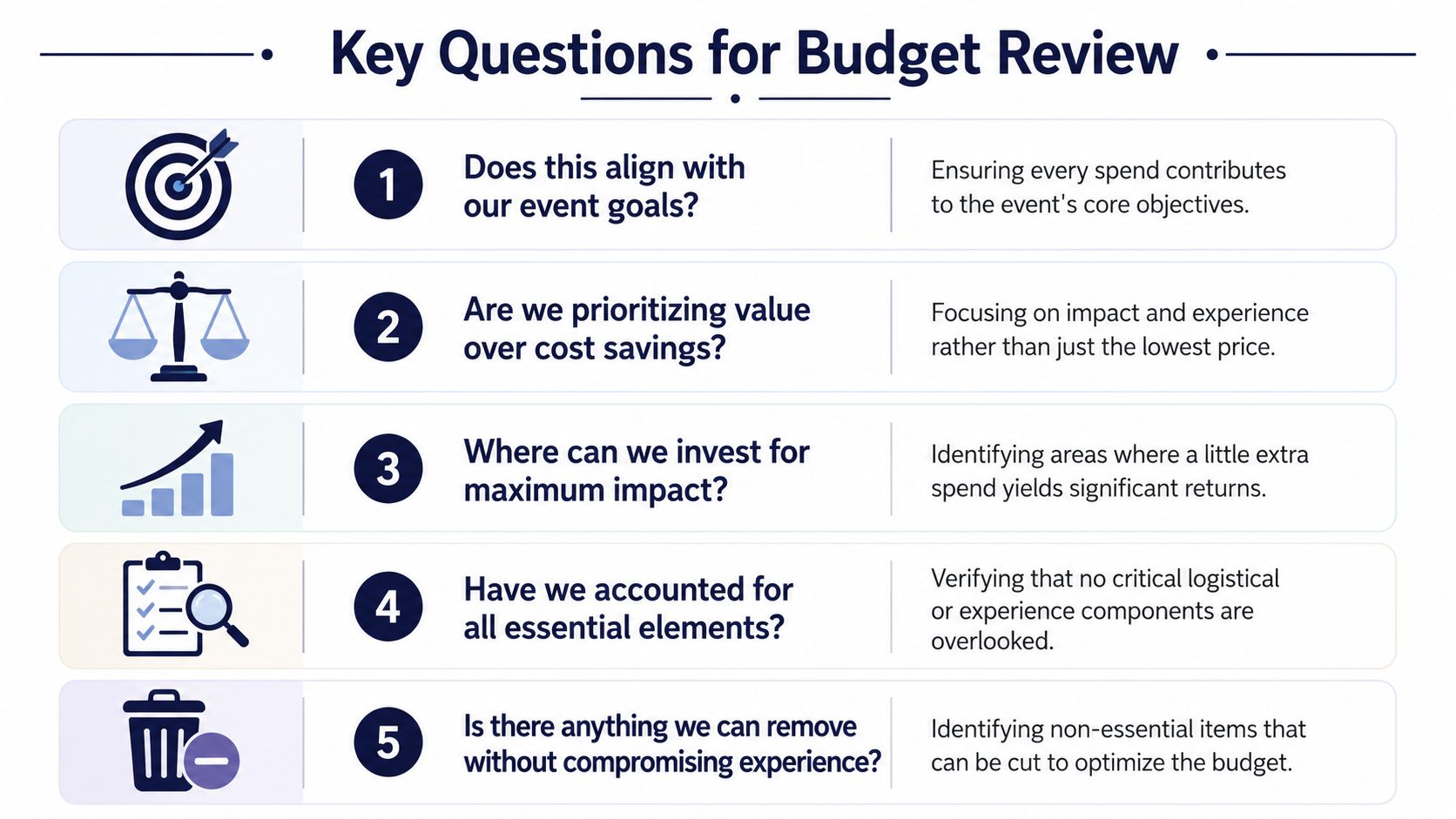
The most useful question of all is this one: where will employees actually feel this spend?
If the honest answer is “it makes the event easier to attend, easier to join, more meaningful in the moment, or more memorable at the end,” that line item is doing real work. If the answer is “it’ll look good in photos,” it’s worth a second look.
Spend Less on Filler, More on the Moment
The best Christmas party budget isn’t necessarily the biggest one. It’s the one that understands the difference between funding a function and designing an experience.
It protects the essentials. It removes avoidable friction. It gives people a genuine way to participate. It builds toward a high point worth remembering, and closes the year with recognition that actually lands. Get those things right, and the room won’t just say it was “nice” on Monday. They’ll be telling each other the story long after the decorations come down.
Corporate Challenge Events helps teams create Christmas parties and end-of-year events that feel worth the budget through play based team building, charity team building and serious fun with lasting impact.
Research Sources
[1] Eventbrite, The Workplace Christmas Party in Australia (2017). [2] Human Resources Director, Less Flashy: What Employees Want for Christmas Parties (2025). [3] Ryan, R. M. and Deci, E. L., Self-Determination Theory and the Facilitation of Intrinsic Motivation, Social Development, and Well-Being (2000). [4] Do, A. M., Rupert, A. V. and Wolford, G., Evaluations of Pleasurable Experiences: The Peak-End Rule (2008). [5] National Institute for Play, The Science of Play. [6] Steffens, M. C., von Stülpnagel, R. and Schult, J. C., Memory Recall After Learning by Doing and Learning by Viewing (2015); Engelkamp, J., Memory of Self-Performed Tasks (1994). [7] Australian Taxation Office, Minor Benefits Exemption and Common Entertainment Scenarios for Business.