Calendars are packed, notifications never seem to stop and lunch is often eaten in front of a screen. Even when the workday ends, the pressure does not always end with it. So when did your team last have the chance to properly pause, reset and enjoy being together?
Well-designed stress relief team activities create breathing room within a demanding work rhythm. They give people permission to move, laugh, create and reconnect, without turning wellbeing into another task on the to-do list.
These activities can provide a valuable circuit-breaker, but they cannot compensate for excessive workloads, poor leadership or psychosocial hazards such as high job demands, inadequate support, unclear roles and strained workplace relationships. Lasting wellbeing requires leaders to address the conditions creating the pressure, while also giving people practical opportunities to recover from it.
That recovery also needs to continue beyond the team activity. For individuals who struggle to switch off after a difficult day, this guide to recovering and resetting after work shares practical ways to create a clean transition, restore energy and set healthier boundaries for tomorrow.
1. Walk-and-Talk Meetings
A walk-and-talk meeting works best when the conversation is small, purposeful and not overloaded with formal decision-making. One-on-ones and two- or three-person brainstorms can often shift more easily once people leave the office and change their physical surroundings. Stanford's walking research found that walking increased creative output by an average of 60% compared with sitting, which is a useful signal for leaders who want movement without pretending exercise is a stress cure. The practical win is simple, a short walk can loosen thinking, improve the pace of dialogue and help a stuck conversation feel less boxed in.

Where it works and where it doesn't
This format suits managers, team leads and project partners who need a lower-pressure setting for honest discussion. It's also one of the easiest stress relief activities for employees to fold into existing schedules, especially when there's a nearby accessible route and the weather cooperates.
Practical rule: keep the route simple, the group small and the purpose clear.
The trade-offs are real. Weather can interrupt the plan, some employees won't enjoy outdoor movement, and confidential or formal feedback conversations may still need a room. Accessibility planning also matters, because a walk-and-talk shouldn't create a barrier for colleagues with mobility needs or sensory sensitivities. For leaders who want a better meeting structure before taking the conversation outside, the meeting agenda template can help teams keep the dialogue focused.
2. Two-Minute Team Reset
A two-minute reset is one of the most practical workplace stress activities because it doesn't ask much of anyone. People can breathe, stretch, drink water or sit before the next meeting starts. That kind of pause can help teams step out of constant output mode and into a better state for the next task, without dressing it up as therapy.
The strength of this format is that it fits real workdays. It doesn't require equipment, a venue or a long explanation, which makes it easier to use between meetings, after a tense call or before a dense planning session. It also works for hybrid and distributed teams because the reset can happen on camera or off camera, with the same simple cue.
The cultural test is whether leaders model it
The first few attempts may feel awkward, especially in teams that equate stillness with laziness. That doesn't mean the activity is wrong, it means the culture needs time to accept that a short pause can support better work rather than interrupt it. A manager or team leader who normalises the reset sends a stronger message than any wellbeing poster.
A reset is easiest to adopt when it sits between work blocks, not on top of them.
The limits are just as important. A two-minute reset won't fix overload, and it shouldn't be sold as a substitute for proper psychosocial risk controls. It works because it creates a brief recovery point, which is often exactly what pressured teams need before the next round of decisions. For teams looking for a tiny but repeatable structure, Micro Play is a practical companion to this approach.
3. Team Laughter Challenge
Shared laughter can change the tone of a day without requiring a full event plan. A team laughter challenge invites clean jokes, funny workplace stories or light mishaps that people are comfortable sharing, as long as the humour stays inclusive and never targets an individual or group. Research explains that laughter can activate, and then relieve, the stress response while also supporting muscle relaxation and social connection, which is a sensible reason leaders keep revisiting this style of team wellbeing activities. The value isn't in forcing comedy, it's in giving people permission to relax together.
Keep the humour safe and voluntary
This activity works best in teams where trust already exists or is being actively built. If people worry that a joke will be judged, weaponised or repeated later, the exercise loses its value fast. The tone matters more than the format, so a quick round in a team meeting can be enough.
-
Use shared stories, not targets. Humour should build inclusion, not embarrassment.
-
Make participation optional. A team member can pass without explanation.
-
Keep the stories work-appropriate. Clean, light and respectful is the standard.
-
Stop before it becomes performative. A short laugh is better than a forced comedy session.
Laughter yoga fits well here because it reflects the same principle, shared release without turning the activity into a heavy intervention. It's a useful option when the team wants lightness, but leaders still need to read the room carefully. Humour works when people feel safe, not when they feel obliged to entertain.
Use play to get the laughter flowing
Laughter often comes more naturally when nobody is being asked to be funny. This is where a playful activity such as Minute to Win It can help. Teams take on fast, ridiculous 60-second challenges involving stacking, balancing, tossing and coordination while their colleagues cheer them on.
The ticking clock, unexpected wins and spectacular near-misses quickly get people laughing and draw them into a state of play. Attention shifts away from job titles, deadlines and everyday pressure as people become absorbed in the challenge and the shared experience. It creates genuine laughter without putting anyone on the spot to tell a joke or entertain the room.
4. Screen-Free Team Break
A screen-free break gives the team permission to step away from laptops and phones together. It might be morning tea outside, a shared lunch without devices or fifteen minutes in a communal space where work talk is not the default. The activity is simple, but that is also its strength. Nobody needs to learn rules, prepare a presentation or compete for attention.
To make it work, leaders need to protect the break from becoming an informal meeting. If conversation immediately turns to deadlines, client issues or the next project, people have left their desks without really leaving work mode.
Create a clean break from work mode
Give the team a light optional prompt, such as a favourite meal, a place they would like to visit or something they have enjoyed recently. Avoid questions that ask people to disclose personal challenges or manufacture vulnerability. The goal is relaxed conversation, not a surprise workshop.
This format works particularly well after a demanding delivery period or during a conference day when people have spent several hours absorbing information. It offers a low-stimulation alternative for teams that do not need more energy, only a little space.
5. Make Their Day Challenge
Not every activity that supports workplace wellbeing needs to be physical or high-energy. A Make Their Day Challenge asks each person to do one thoughtful and useful thing for a colleague. That might mean acknowledging an unseen contribution, offering practical help, sharing specific positive feedback or checking in with someone who has been unusually quiet.
The value comes from paying attention to what would genuinely help another person. A generic compliment may be pleasant, but an offer to review a document, take one task off a crowded plate or recognise the effort behind a result can have far more meaning.
Small acts need genuine intent
-
Offer practical support. Ask what would make the person's day easier.
-
Be specific with recognition. Name the contribution and why it mattered.
-
Notice quieter colleagues. Recognition should not always flow to the most visible people.
-
Keep the action proportionate. Thoughtfulness matters more than creating a grand gesture.
The FISH! Philosophy develops this idea through the practice of Make Their Day, alongside Be There, Choose Your Attitude and Play. It gives teams a practical framework for making attention, energy and positive interactions part of the way they work together.
6. Collaborative Creative Break
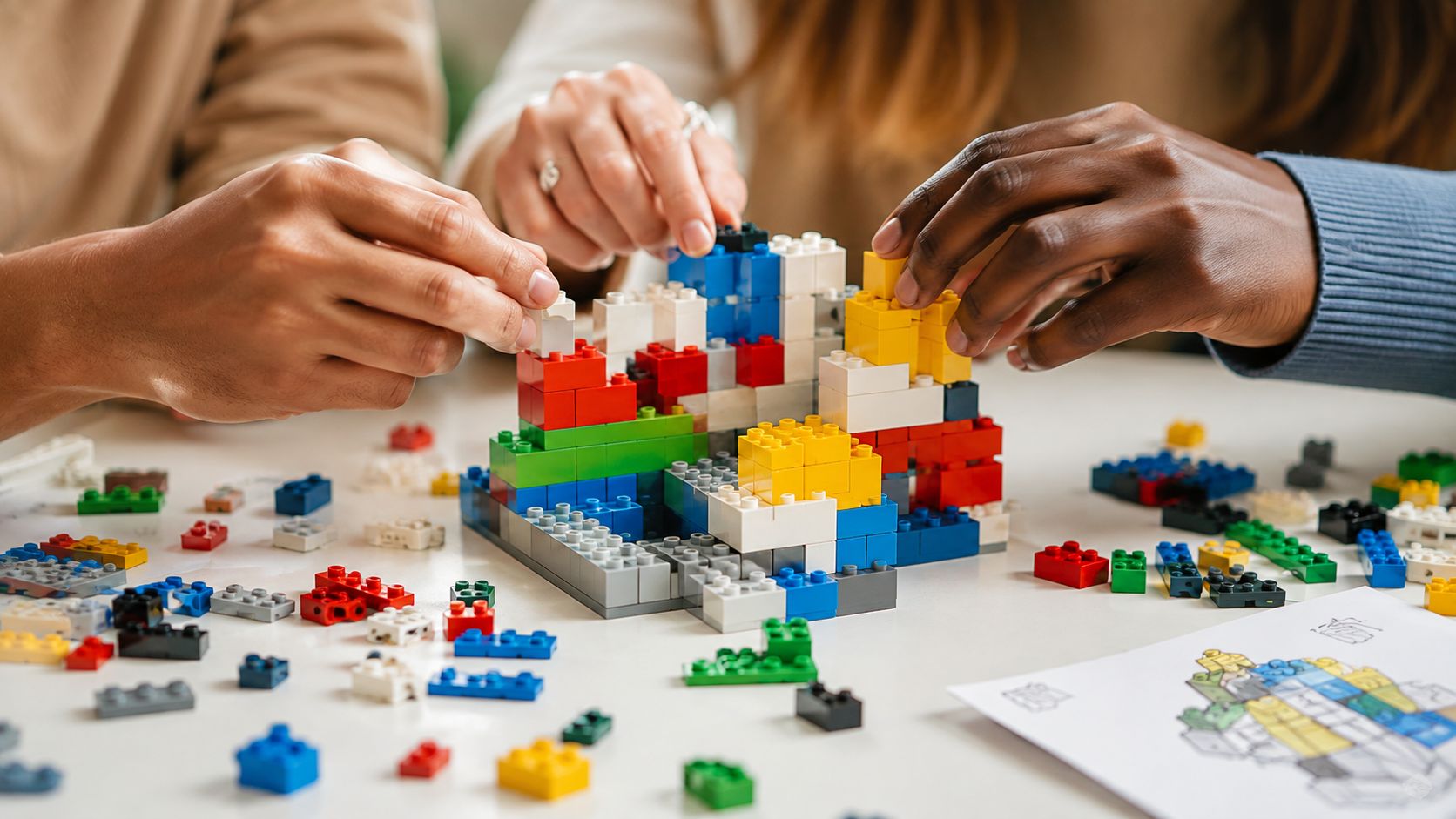
A collaborative creative break invites people to draw, build or design something away from their normal responsibilities. The materials can be simple, such as paper, markers, card, recycled materials or building pieces. The point is not to produce professional artwork. It is to experiment, make something together and enjoy a different kind of conversation while hands and minds are occupied.
Some colleagues will sketch, some will build, some will shape the concept and others will keep the conversation moving. That variety gives people different ways to contribute without requiring everyone to think or create in the same way.
Keep the focus on process, not polish
The fastest way to drain the play from a creative activity is to overjudge the result. Give the team a loose theme or playful constraint, then allow room for interpretation. If you are preparing a simple in-house version, these affordable craft ideas may help with materials and inspiration.
For a fully facilitated creative experience, LEGO Legends brings teams together through challenges, collaborative planning and an original LEGO build. The program combines hands-on play with a charitable donation of LEGO to children through a local charity partner, adding shared purpose to the creative experience. Organisers exploring that element can also compare the top charity team building programs in Australia.
7. Outdoor Team Play
Outdoor team play changes both the activity and the environment around it. A park, lawn or outdoor venue can host relaxed games, optional movement, a team picnic or simple challenges that allow people to interact beyond their usual work setting. Fresh air, natural light and space to move can make the experience feel noticeably different from another session inside a conference room.
The energy level should reflect what the team needs. Some groups will enjoy active games and friendly competition. Others may get more from a slower format with refreshments, casual conversation and the freedom to join activities at their own pace.
Accessibility and comfort are part of the activity
Good outdoor planning includes shade, seating, nearby facilities, weather protection and lower-intensity ways to participate. Organisers should also consider mobility, sensory needs, sun exposure and whether a competitive format will feel energising or demanding for this particular group.
For teams ready for a larger shared experience, Mini Olympics brings outdoor play to life through relays, target games, team tosses and balance challenges. The variety allows different strengths to appear across the event, while cheering, encouragement and playful competition create a collective energy that is difficult to generate around a meeting table.
Outdoor play works best when people have more than one way to take part.
8. Team Photo Walk
A team photo walk combines movement, observation and creativity without requiring a complicated event plan. Small groups can head outside with a list of prompts, such as an unexpected colour, a clever reflection, something that represents teamwork or the most playful object they can find. They then return to share the stories behind their photographs.
The activity encourages people to notice their surroundings and compare perspectives. The same prompt can produce completely different images, which gives the team an easy starting point for conversation and laughter. It can be run around an office precinct, venue, park or city block, provided the route is accessible and boundaries are clear.
Add structure for a bigger experience
Keep an informal photo walk simple. Use a short route, limit the number of prompts and avoid judging technical photography skills. If the team wants more pace, problem-solving and purpose, Snapshot turns the concept into a facilitated challenge. Teams use iPads to recover fragments of sabotaged photographs, locate the correct settings, recreate each image and edit their final submissions.
Snapshot works particularly well when a group wants a change of environment with movement, technology and a visible creative outcome. The facilitator can also adapt the experience to the location, group size and time available so the challenge remains engaging rather than overwhelming.
9. Music and Movement Reset
Music can give a team an immediate cue that the current work block has ended. Choose one upbeat song and invite people to stand, stretch, walk around or move in whatever way feels comfortable. The aim is not a choreographed routine or a public dance performance. It is simply a short change in energy and attention.
This activity works well after a long presentation, before an afternoon planning session or during a conference transition. It can be as understated as playing a song while people refill their water and change seats.
Make movement optional and adaptable
Volume, music choice and physical participation all require care. Give people the option to stay seated, step outside or use the time differently. Avoid singling out anyone who does not dance or move visibly. A successful reset leaves the group more comfortable, not more self-conscious.
Teams can build a shared playlist over time by inviting one optional song suggestion from each person. This creates variety and gives colleagues a small way to contribute to the team's atmosphere without turning anyone's music taste into a debate.
10. Team Choice Play Session
The simplest way to avoid turning wellbeing into another imposed initiative is to ask the team what kind of play would feel good to them. Offer a small menu, such as a board game, a creative table, an outdoor activity, a light challenge or quiet social time, then let people choose how they participate.
Choice matters because the same activity can energise one person and drain another. A team that spends most of its week in intense collaboration may prefer calm, individual play in a shared space. A group that works remotely or independently may want something more social and energetic.
Let the team shape the experience
Keep the choices realistic, accessible and free from assumptions about age, fitness or personality. Leaders can ask three simple questions before planning:
-
Do you want something active or relaxed?
-
Would you rather compete, collaborate or simply socialise?
-
Would you prefer to be indoors or outdoors?
The answers create a more useful brief than choosing the activity leaders personally find most appealing. They also make it easier to select an experience that feels like genuine time to play rather than compulsory fun.
Choosing the Right Activity to Support Your Team
The right activity gives a busy team permission to pause, play and reconnect. Before choosing, consider the group's current workload, accessibility needs, sensory preferences and appetite for competition. A team coming out of an intense delivery period may prefer a quiet creative activity or outdoor conversation, while another group may be ready to move, cheer and laugh together.
Leaders also need to separate a short-term reset from structural risk management. Stress relief team activities can support positive experiences, stronger relationships and moments of recovery within the workday, but they cannot resolve excessive workloads, bullying, poor leadership or low role clarity. Those conditions require direct organisational action.
The most useful activities respect choice. Some people want energetic movement, some enjoy creativity and some need a lower-stimulation option. When organisers match the format to the people in the room, play feels inviting rather than imposed.
Corporate Challenge Events creates play-based programs that help busy teams step out of pressure and back into better connection, communication and collaboration. If your workplace needs a short reset or a larger team experience, visit Corporate Challenge Events to explore professionally facilitated options built for Australian teams.