
It’s that time of year again; calendars are filling, catering orders are going in, and someone’s asking whether the theme should be “rustic luxe” or “sparkle and shine.” For many leaders, the end-of-year celebration has become another item on the to-do list, something to tick off before the office closes. But behind the menu selections and venue scouting, there’s a quiet pressure building: Will any of this actually mean something?
Because what’s really at stake isn’t just a festive afternoon. It’s a chance to close the year with clarity, connection, and meaning. And for your team; especially after 12 months of effort, change, or quiet drift, this celebration might be one of the few moments where they stop and feel something together.
The truth is, most teams don’t remember the details of a Christmas party. They remember how they felt. Who they sat next to. Whether it felt real. And whether it felt like their team.
So, what if your goal wasn’t just to organise a great event… but to create a moment they’ll still be talking about in March?

Why Most Events Are Pleasant, Not Powerful
Most Christmas parties are… fine. There’s food, maybe a game or two, a bit of a buzz. People leave feeling mildly entertained, then forget most of it by the time they’re back at their desks.
That’s because many end-of-year events are designed around comfort, not connection. The goal is often to reward or relax the team, but without intention, it all blends into generic “nice-to-haves.” And in a year that’s likely been full of pressure a “pleasant” event might not be enough to shift how your team feels.
Here’s the core issue: we remember emotion, not agendas. Teams don’t hold on to the cheese board or the playlist. They remember the moment someone said thank you and meant it. The feeling of being proud to belong. In other words, we remember peak emotional moments, not event logistics.
Research from The Power of Moments tells us that people remember experiences with one or more of four elements:
- Elevation – something joyful or surprising
- Insight – a shift in how we see things
- Pride – being recognised or celebrating achievement
- Connection – feeling close to others
Most parties unintentionally skip all four. They deliver a polite end but not a powerful moment.
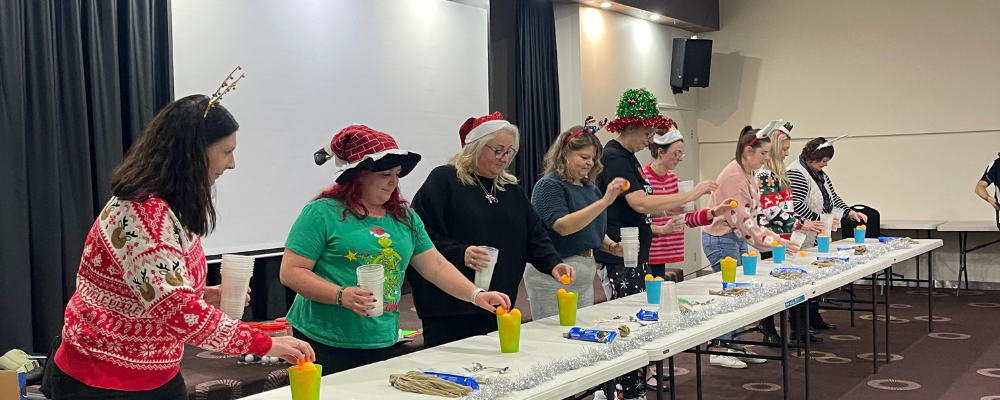
The Pivot
What if you shifted your role from party planner to memory architect?
Instead of asking, “Will they enjoy it?” ask:
“What do I want them to remember?”
That’s the pivot that turns a forgettable Christmas gathering into a defining team moment. It’s not about adding more to the schedule; it’s about intentionally creating emotionally resonant moments that shape how your people feel about the year they’ve had, and the team they’re part of.
The choices you make say something about what you value: Recognition over routine. Real connection over forced fun. Pride in what’s been built together.
If you’re unsure where to begin, start with this question:
“If your team looked back on this party in six months, what do you hope they’ll say?”
That simple prompt can unlock a totally different approach; one that’s built around people, not just plans.
If you stripped back the catering, the theme, and the playlist, what would this party say about your team?
That’s the question more leaders need to ask. Because while Christmas parties often look like a reward for work done, they’re actually one of the most powerful, untapped tools for cultural reset. They’re one of the few times all year where the entire team pauses at the same time, in the same space, emotionally and physically. That creates a rare opportunity to influence what people carry with them into the new year.
This doesn’t require a massive budget or a reinvention of tradition. It just requires intentionality being clear on what you want the experience to say and feel like.
Before you lock in logistics, take five minutes to think strategically. Use the following as a tool to shift your focus:
5 Questions to Reset Your Thinking
- What’s the emotional state of the team right now?
(Are they drained? Disconnected? Coasting? Winning?) - What needs to shift before the new year starts?
(Energy, clarity, unity, momentum?) - What do I want people to say about this day in March?
(What story or feeling should carry forward?) - What kind of moment will make them stop and feel something real?
(A moment of pride? Surprise? Shared laughter?) - Where can I remove a filler and add something that matters?
(Even one meaningful gesture can shift the tone of the entire event.)
The answers won’t give you a schedule, they’ll give you direction.

Real-Life Memory Makers
Now, let’s look at how a few companies have used this same mindset to create Christmas experiences their people still talk about well into the new year. Here are two organisations that used the Christmas season to do more than celebrate. They created moments that stuck.
Baystate Health:
In 2021, Baystate Health faced the same end-of-year fatigue most organisations feel, with the added pressure of widespread burnout in the healthcare sector. Rather than defaulting to a standard catered function, the leadership team asked a more deliberate question: What will make our people feel seen, appreciated, and personally acknowledged?
They launched a home-delivered gift program. Each employee received a curated holiday package, tailored to individual preferences. It wasn’t just the gift that landed, it was the intention. The message was clear: “We thought about you.”
Baystate didn’t increase their budget. They increased their relevance. The program created a ripple effect that lasted well into the following year, with many employees referencing it as a standout example of meaningful recognition.
Zappos:
Zappos is often cited for its distinctive workplace culture, but one of its most memorable holiday initiatives didn’t take place inside the office. It happened on doorsteps across the country.
In a now-legendary gesture, Zappos flew employees from Nevada to New Hampshire to act as undercover “elves.” In the middle of the night, they delivered Christmas gifts to families in need, quietly and without fanfare. The families woke to find presents outside their doors, never knowing who made it happen.
For the Zappos team, this wasn’t just a volunteering moment. It became part of their collective story. For the company, it was culture made visible. It turned a holiday tradition into something employees felt proud to be part of, and proud to talk about well into the following year.

Translating Insight into Action
You’ve reflected. You’ve seen what’s possible. Now it’s time to act, with intention.
This isn’t about replicating what Baystate or Zappos did. It’s about using the Christmas party to respond to your own team’s reality. That means stripping back the noise and making three clear decisions. We recommend using your answers from the questions above.
- Decide what feeling matters most
What’s missing right now, energy, connection, recognition, pride?
Choose one, and design for it. A party that tries to do everything rarely does anything well.
- Create one moment people will talk about
It doesn’t need to be expensive or extravagant. But it does need to be thoughtful.
Plan for one moment that breaks the routine and feels like it was made for them. That’s what creates emotional carryover into the new year.
- Make your appreciation specific
Avoid the generic “thanks for a great year.” Be clear. Be direct.
Whether it’s team wins or individual contributions, use this moment to say what’s been achieved and why it mattered.
If you do nothing else, do this:
Replace ‘event planning’ with ‘meaning design.’
Because when the moment is right, the memory does the rest.
At its best, the Christmas party is more than a celebration. It’s a cultural bookmark. A moment that quietly says, “This is who we are and this is where we’re going next.”
That doesn’t happen by accident. It happens when leaders choose to be intentional. When they pause long enough to ask, What do my people need right now? and How can I make this feel real?
You don’t need to do more. You need to do what matters. A single well-designed moment; one gesture, one story, one surprise can shift how your team feels about the year they’ve had, and the one they’re about to walk into.
Because the most powerful part of a Christmas party isn’t what happens on the day. It’s what your team carries with them after.
At Corporate Challenge Events, we help leaders design Christmas celebrations that do more than reward. Our team-building experiences create moments that teams remember and cultures build on.
If you’re ready to shift from checklist to culture-shaping moment, explore our Christmas programs or talk to us about a tailored experience for your team.