
Employee engagement is still one of the biggest challenges facing leaders, yet it remains one of the most poorly solved. Organisations continue to invest in communication plans, manager training, pulse surveys, and culture initiatives, but the gap between effort and outcome is still wide.
Gallup found that in 2024, only 27% of managers globally were engaged at work, while disengagement cost the world economy US$438 billion in lost productivity. This is not a soft issue sitting at the edge of business performance. It is a business performance issue.
The problem is not that leaders are ignoring engagement. The problem is that it is still often approached as though one formula should work for everyone. One meeting style. One communication rhythm. One way of contributing. One idea of what engaged behaviour is supposed to look like.
But people do not all engage in the same way.
Some people think out loud. Others need space before they contribute. Some are energised by fast-moving collaboration. Others engage more deeply when they have clarity, structure, or time to process. In other words, the challenge is not always whether people are willing to engage. Often, it is whether the environment gives them a natural way to. That shifts the question for leaders from how do we get people to try harder to something far more useful: are we designing work in a way that allows more people to genuinely step into it?
Why One-Size-Fits-All Engagement Falls Short
One of the most limiting assumptions in workplace engagement is that it should look the same across a team. In practice, many organisations still reward the most visible forms of participation: the person who speaks first, contributes quickly, thinks out loud, or brings immediate energy into the room. While those behaviours may signal engagement for some people, they are not universal.
Engagement is shaped by how people naturally connect, contribute, and process. When leaders rely too heavily on one preferred way of participating, they are not creating a neutral environment. They are creating conditions that suit some people better than others.
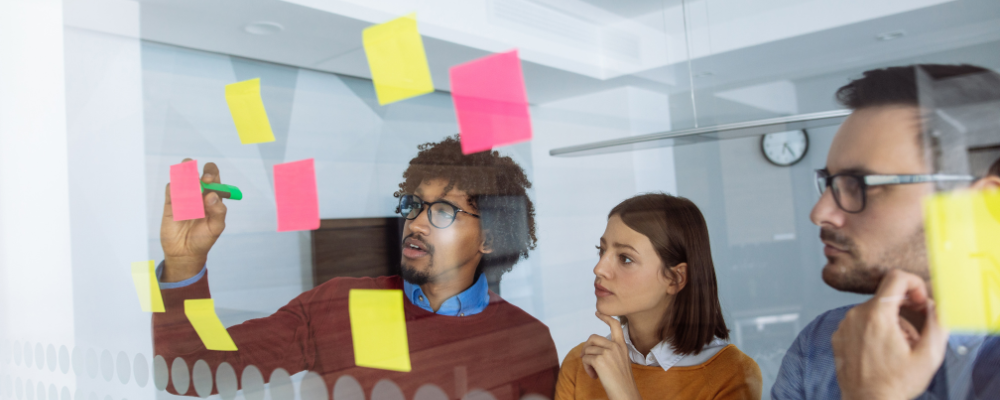
A brainstorm makes this easy to see. For one person, it is energising. The pace, spontaneity, and exchange of ideas help them engage more fully. For another, that same setting creates pressure. Their engagement is still there, but it happens through reflection, filtering, and internal processing rather than immediate contribution. Someone else may say very little at first, then add real value once they have had time to absorb what has been said and respond more thoughtfully.
That is what many engagement strategies miss. The same activity can create very different engagement states depending on the person experiencing it. The issue is not always willingness. Often, it is fit between the individual and the way the moment has been designed.
For leaders, that shifts the challenge in an important way. The task is not to personalise every moment for every person, nor is it to lower expectations around contribution. It is to design work with enough range that more people can find a natural way in. That is a far more useful starting point than asking why some people are not trying harder to engage.
Is Play the Truest Form of Engagement?
If engagement is about how people connect, contribute, and process, and play is the fundamental cognitive state through which humans innovate, adapt, and solve complex problems, then a bigger question opens up: is play the truest form of engagement?
Play sparks intrinsic motivation. It creates the internal pull to lean in, take part, and act. Once that motivation moves into action, it becomes engagement: contribution, response, problem-solving, momentum. This is where work moves. This is where impact begins.
Seen this way, play is not separate from engagement. It is the cognitive state that helps activate it.
Research on playful work design reinforces the point. Employees who intentionally introduce playful elements into their tasks report higher same-day engagement, explained by stronger satisfaction of autonomy, competence, and relatedness (SCHARP, BAKKER, & BREEVAART, 2022).
Types and Dimensions: Why Play Does Not Land the Same Way for Everyone
If play is so closely linked with engagement, why does it still feel limited in today’s workforce? Part of the answer is that play is too often treated as though it were a simple mood, a personality trait, or something people either have or do not have. To solve the engagement problem properly, we need to look beyond play as a general state of mind and understand how people enter it.
There are many different ways to categorise the types of play. What matters most is not the label itself, but the fact that play is multi-dimensional. People do not access a state of play through one universal route. They come into it through different natural interests, preferences, and predispositions. For one person, that doorway might be movement. For another, it might be imagination, competition, exploration, humour, or problem-solving. The point is not to force people into fixed categories. It is to recognise that there are many ways into the same state.
This becomes even more useful once we move from types into dimensions. Dimensions are not fixed boxes either. They sit on a spectrum rather than at opposite ends of a binary. Most activities can move along that spectrum depending on how they are designed, and many experiences contain elements from both sides at once. Running, for example, might be solitary, reflective, and low-pressure for one person, or high-energy, social, and mastery-focused for another. The activity itself has not changed, but the way it is experienced has.
That is why the same brainstorm, workshop, meeting, or team activity can land so differently across a group. What looks like one shared experience on the surface may, in practice, offer a natural entry point for some people and friction for others. Once leaders understand the difference between types and dimensions, engagement becomes far easier to design for. The goal is no longer to find one activity that works for everyone. It is to create enough range within the experience that more people can connect, contribute, and process in a way that feels natural to them.
Designing for Engagement Through Play
This is where play becomes especially useful in practice. Well-designed play does not ask everyone to contribute in one dominant way. It creates variety in how people can connect, respond, and add value.
That design rests on three things: variety, balance, and choice. Variety means there is more than one way to contribute within the same experience. Balance is about getting the conditions right, including team size, level of challenge, pace, and clarity. Choice means people can find their own way into the activity rather than being forced into a single mode of participation.
This is exactly how we design programs such as Bikes for Tykes. On the surface, it may look like one shared team activity. In reality, it is intentionally built to allow different forms of contribution.
We create variety through the different ways people can contribute to the same outcome. Teams work together to earn the parts, solve the build, and assemble children’s bikes that will be donated to charity. Some participants focus on solving clues or puzzles to unlock what the team needs next. Some take on the physical build itself. Others help interpret instructions, track progress, or keep the team aligned around what needs to happen next.
We create balance by carefully setting the conditions around the experience. Team size is managed so there are enough people for collaboration and diversity of thinking, but not so many that some become passengers. We also use rules to stop the activity collapsing into one dominant mode of contribution. By limiting how many people can be on the tools at once, the design encourages individuals to follow their natural predilections and interests.
We create choice by building in different entry points as an invitation, not a demand. Some people naturally move straight into the hands-on build. Others engage through planning, organising, directing, or helping coordinate the group. Everyone is working toward the same outcome, but they are not forced into the same role to get there.
From Theory to Practice: What This Looks Like in the Workplace
This thinking does not stop at team building. It applies just as much to how work is designed day to day. If play helps seed motivation, and engagement grows when people have a natural way in, then leaders need to look closely at the environments they are creating every day. That includes meetings, project rhythms, problem-solving sessions, learning environments, and the informal moments in between.
That means creating more variety in how people can contribute, more balance in the conditions surrounding the work, and more choice in how people enter it. In practice, this might look like changing how meetings are run, how collaboration happens, how ideas are explored, or how teams are given space to solve problems.
The principle is simple: when people are given a more natural way in, engagement becomes easier to access.
The Culture PlayBook
For leaders wanting to turn this into action, the Culture Playbook was created for the moments when a team is ready to pause, reflect, and build a more intentional rhythm around how they work together. It is designed for teams who understand that engagement is not sustained by good intentions alone, but by the repeated conditions that shape how people enter meetings, contribute ideas, solve problems, and stay connected over time.
The Playbook helps teams identify what actually brings them to life, not as a single formula, but as a shared understanding of the different cues, conditions, and moments that support engagement across the group. It helps teams notice those patterns and turn them into practical rhythms, so the everyday experience of work is not built around one preferred style, but designed to support a broader range of ways to engage.
The result is a shared language for what helps the team connect, contribute, and process well, along with simple, repeatable practices that make those conditions easier to create again. That is how engagement becomes more sustainable.
If you would prefer a helping hand
Science of Play: Unlocking Human Potential is designed for exactly that. Delivered through Corporate Challenge Events’ exclusive Australasian partnership with the National Institute for Play, it gives leaders a practical, science-backed way to understand why engagement drops, what happens when play is designed out of the workplace, and how to restore the conditions that help different people connect, contribute, and perform well under pressure. More than a one-off session, it provides shared language, practical tools, and a clear pathway for building stronger engagement rhythms that last beyond the event.