At Corporate Challenge Events, we often talk about the impact of play in the room. The stronger conversations. The shared problem-solving. The moments of laughter, contribution, and connection that help teams work better together long after an event ends. But there is another side to that impact, and it deserves just as much attention.
Over the years, more than 251,000 participants across Australia and New Zealand have stepped into our charity team building programs and helped create something far bigger than a single event. Together, they have built bikes for children, packed play into communities, and turned team experiences into practical support for people who need it. That kind of contribution is worth pausing for.
This piece is really a thank you. A thank you to every person who showed up, joined in, and helped make that collective impact possible. Because while the numbers are impressive, they only tell part of the story. What matters most is what sits behind them: thousands of people choosing to take part in something that created value both inside their teams and out in the wider community.
So rather than simply list the totals, we wanted to stop and help you picture them. What does 10,500 donated bikes actually look like? What does $669,000 worth of LEGO really mean in physical terms? And how do you begin to grasp the scale of what 251,000 people have helped create together?
This is the architecture of impact. And it belongs to every participant who helped build it.
What does $2.1 million in donated bikes actually look like?
When we say 10,500 bikes have been donated to children through our charity team building programs, it is a number worth stopping at. Not just because it is big, but because every single one of those bikes exists because a team showed up, got involved, and chose to build something that would matter beyond the day itself.
To picture it properly, you have to bring those bikes out of the spreadsheet and into the real world.
If you lined all 10,500 bikes up wheel to wheel, they would stretch for around 18 kilometres.
That is roughly the length of Manhattan from top to bottom, or about half a marathon. It is a long, long way to look down a line of handlebars.
If you stacked those bikes one on top of the other, the tower would rise 10.5 kilometres into the sky.
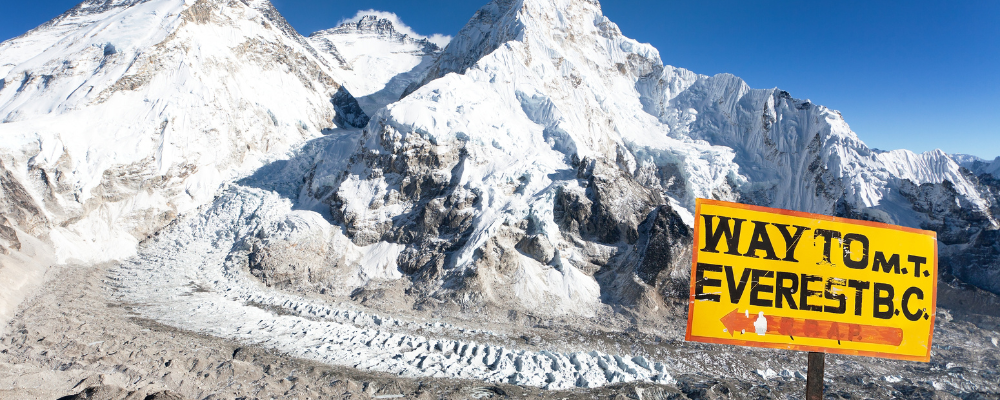
That is further than the highest point on planet Earth. Mount Everest sits at 8,848.86 metres above sea level, which means these bikes would stack around 1.65 kilometres above the summit.
If each bike took just 20 minutes to assemble, building 10,500 bikes would add up to 3,500 hours of hands-on work.
That is 145 straight days of non-stop building, or enough time to start in summer and still be tightening bolts into winter.
If each of those 10,500 children rode just two kilometres to and from school each day, that would create 42,000 kilometres of travel every single day.
That is more than the circumference of the Earth, which is about 40,075 kilometres. In other words, this impact could spread the power of play right around the planet, with kilometres still to spare.
And then there is the part no distance can fully measure. For a child, a bike can mean getting to school more easily, visiting a friend, exploring their world, or simply feeling the freedom that comes with having wheels of their own.
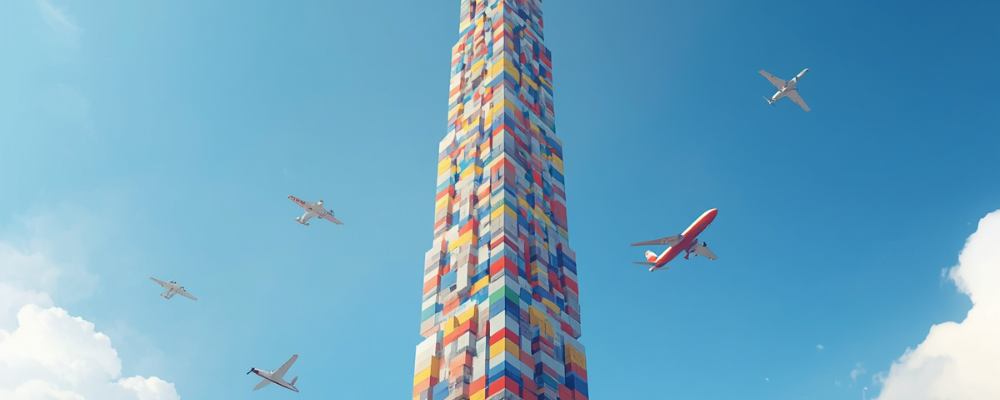
6.69 Million Bricks: What $669,000 of LEGO Actually Looks Like
When we talk about donating $669,000 worth of LEGO, it is easy to picture a generous number and move on. But that total becomes much more interesting when you break it open. Behind it sits 6,690 boxes of LEGO and 6.69 million individual bricks, each one adding up to something children can build with, learn from, and return to again and again.
If every piece were stacked as a standard LEGO brick, the tower would rise about 64 kilometres into the sky.
That would take it past the stratosphere and deep into the mesosphere, the layer of the atmosphere where meteors burn up
If those 6.69 million LEGO pieces were laid end to end, they would stretch for around 1,070 kilometres.
That is roughly the distance from Paris to Berlin, built out in LEGO.
If a child opened one box of this donated LEGO every single day, they would still be opening boxes more than 18 years from now.
In that time, they would grow up, finish school, sit exams, learn to drive, and step into adulthood, while the boxes just kept coming.
If someone sat down to build through all 6.69 million pieces at a pace of 500 bricks an hour, it would take more than 13,000 hours.
That is over six years of full-time work, spent building, sorting, testing ideas, pulling them apart, and starting again.
The largest LEGO sculpture ever recorded by Guinness World Records, a model of London’s Tower Bridge, used 5,805,846 bricks.
This donation represents even more pieces than that, which means the LEGO donated through these programs could outbuild one of the most famous large-scale LEGO creations ever made.
That is what makes LEGO different. It does not arrive finished. It arrives as possibility. It invites curiosity, trial and error, focus, and imagination.
So when you look at $669,000 in donated LEGO, you are not just looking at a generous number. You are looking at years of building, rebuilding, problem-solving, and play placed into the hands of children who deserve the chance to create something of their own.
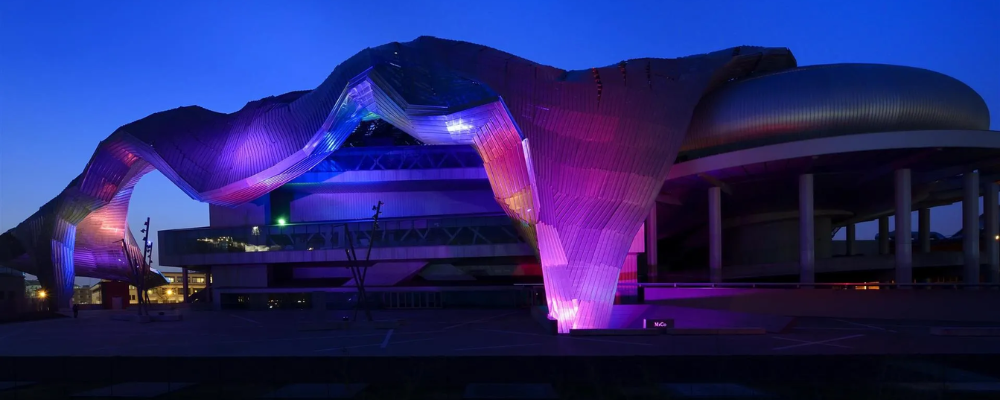
The Infrastructure of Play: 251,000 Perspectives
At Corporate Challenge Events, we’ve always maintained that play isn’t a break from work, it is the work. It is the infrastructure that helps teams move from simply functioning to truly performing.
But when you step back and look at what that has added up to over twenty years, the scale becomes much bigger than a single event or a single team.
Over the last two decades, 251,000 participants have stepped into our charity programs across Australia and New Zealand. That is a quarter of a million people who have put down their laptops, leaned into a shared challenge, and helped turn play into something practical, generous, and lasting.
If we gathered all 251,000 participants in one place, we would need a venue around twelve times the size of one of the world’s largest convention centres.
Allianz MiCo in Milan seats 21,000 people. We would still be looking for seats long after it was full.
If all 251,000 participants stood hand in hand, the line would stretch for roughly 427 kilometres.
That is almost the full length of the Grand Canyon, one of the world’s great natural wonders.
If we gathered all 251,000 participants for one giant team building reunion and gave each person just three seconds to say hello, it would take more than 209 hours to hear from everyone.
That is nearly nine straight days of introductions, without stopping once.
If each of the 251,000 participants spent just two hours at an event with us, that adds up to 502,000 hours
In other words, these programs represent more than 57 years of combined social impact, created one shared experience at a time.
Together, 251,000 participants across more than 5,500 events have helped generate more than $3.4 million worth of donated impact across bikes, LEGO, toys, dog kennels, essential items, flat packs, and more.
What matters most is where all of this ends up. In the hands of children with bikes to ride. In homes, schools, and communities where LEGO becomes creativity, focus, and possibility. In shelters, support services, and charities receiving practical items that make a real difference. The impact does not stop when the event ends. It carries forward into the lives of the people and places receiving it.
That is what gives these programs their weight. What begins as teamwork in one room becomes something useful, tangible, and lasting for someone else.
So to every participant who has stepped into one of these events, thank you. Thank you for helping turn play into something that reaches far beyond the day itself.