
Most work Christmas party planning starts with the venue: a restaurant, rooftop, winery, hotel ballroom or bar. Then the menu, the drinks, maybe a theme if there's time. After that, the organiser hopes the room does the rest.
The parties people actually remember are planned in the opposite order. They start with one question: what will our people actually get to do together?
A study of 359 employees across German organisations found that satisfaction with company Christmas parties tracked with an external location, fun activities, informality and symbolic touches connecting the event to the organisation. Heavy drinking and formality tracked the other way, toward dissatisfaction. It's an observational study, not a formula, but the direction is clear: food, drinks and a run sheet aren't enough. People need a reason to take part. Read the research on company Christmas parties and employee happiness.
The six examples below aren't templates to copy. They're what happens when a company treats its party as something the team builds, not something staged in front of them.
1. Let Your Team Create Part of the Night
The moment people remember from a work Christmas party is rarely the band, the styling or the dessert table. It's the moment someone in the room surprises everyone.
HubSpot built its documented holiday party, “HubSpot’s Got Talent,” around exactly that: staff performances, a taiko drumming demonstration, a company-specific sing-along, and a "Twelve Days of Christmas" written about life at HubSpot.
It worked because it reflected the people in the room. Not generic entertainment dropped into a function space, but entertainment that belonged to the company.
For your own event, that could mean:
-
A voluntary talent segment with short performances or skits
-
A "year in review" presentation built by different departments
-
A festive lip-sync battle or music challenge
-
A staff-made welcome video, photo montage or awards intro
-
A few colleagues telling the stories that defined the year
Keep participation optional and performances short. Give people time to prepare. Use an MC who can hold the pace and make nervous contributors feel safe.
This works best for teams with a strong sense of humour or a lot of shared stories. It isn't about manufacturing a talent show. It's about letting the team recognise itself in the celebration.
2. Give People a Shared Mission Before They Settle Into Their Usual Groups
Left alone, a dinner-and-drinks event follows a predictable pattern: people arrive, find familiar faces, and stay there.
A shared mission breaks that pattern without forcing anyone into awkward networking.
Atlassian's Team Bingo ran across its Team '22 event, in person, digital and satellite, giving everyone simple prompts to complete, share, and earn recognition for. It made a large, dispersed group feel like part of one thing.
The same logic works for a Christmas party. The activity doesn't need to be complex. It just needs to give mixed groups a common goal before the social part of the night begins:
-
A festive mystery to solve around the venue
-
A challenge trail across different activity points
-
A Christmas bingo card built around people and shared moments
-
A photo mission that sends teams exploring a precinct
-
A short challenge that unlocks a reveal before dinner
For teams who like clues and a bit of pressure, Christmas Cluedo turns the night into a festive investigation: evidence, challenges and hidden intel, all in the name of solving a case before Christmas is ruined.
The value isn't just the game. It's the conversation people have while they're trying to work it out together.

3. Put a Real Contribution at the Centre of the Celebration
A donation announced from the stage is generous. A team that has made, packed, built or earned something together feels the impact differently.
In 2010, NVIDIA replaced its conventional holiday party with a US$250,000 donation to two local non-profits, while more than 1,000 employees and volunteers built an urban garden and restored a park in San Jose. Read the original NVIDIA Project Inspire announcement.
You don't need to cancel the party to take the lesson. For most organisations, the stronger move is a hybrid: give the team a meaningful shared challenge first, then move into food, drinks and recognition while the energy is still up.
That could include:
-
Building bikes for children in need
-
Completing challenges to earn toys or gifts for a charity partner
-
Packing care kits for people doing it tough
-
Creating gifts or resources a local organisation can actually use
-
Inviting a charity representative to receive the team's contribution on the night
Santa for a Day does exactly this: teams work under time and budget pressure to fill Santa sacks with toys for children who need them most at Christmas.
Purpose works best when the outcome is visible. People should know who benefited, what their work achieved, and that it wasn't just a symbolic gesture between courses.

4. Give the Team Something to Build, Make or Reveal
Not every team wants a high-energy competition. Not everyone wants to perform.
Many people connect more naturally by making something together. LEGO's annual Play Day brings colleagues across factories, offices, stores and hubs together for a company-wide day of learning through play, with a different theme each year.
It's not a Christmas party, but the idea transfers well: a shared creative brief gives people a role without putting them on the spot.
For a Christmas celebration, that could mean:
-
Designing a team-made Christmas display or sculpture
-
Producing a short film, music video or campaign concept
-
Creating a shared artwork that stays in the office
-
Building something for a charity partner
-
A design challenge that ends in a reveal and team vote
LEGO Legends combines playful challenges, creativity and a charitable outcome: teams earn LEGO through short games, build an original creation around a shared brief, then donate new sets to children through a charity partner.
A creative format gives quieter people a real way to contribute, and it gives the night a visible ending. By the time everyone gathers for the reveal, every team has something to show.
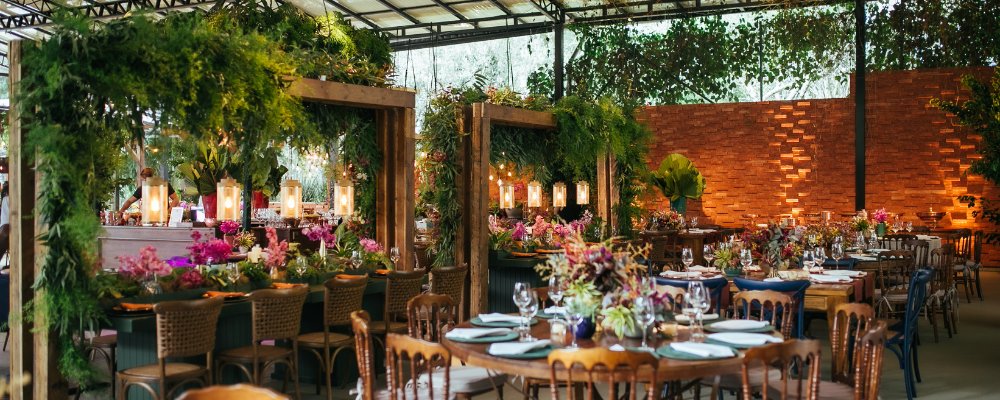
5. Design the Room for Different Ways to Join In
A work Christmas party shouldn't rely on one social mode.
Some people want the dance floor. Some want a challenge to solve. Some want a long conversation in a quiet corner. Some need ten minutes to watch before they join in.
Good event design gives all of them a way in. ABC Hire’s Xmas party ideas show how layout choices, lounge pockets, market-style setups, lighting, activity zones, change the way guests move through a space.
The lesson isn't to copy someone else's styling. It's to build in choice:
-
An arrival moment that gives people something to notice or do immediately
-
Lounge seating for guests who want to settle into conversation
-
A shared activity point that pulls people away from their usual table
-
Food and drink stations that create movement instead of one long queue
-
Alcohol-free options that feel as considered as the cocktail menu
-
A quieter area for anyone who needs a break from the noise
This doesn't mean filling every corner with props. It means avoiding the default format where the only option is standing at a high bar table hoping someone starts talking.
Give people choice in how they participate, and more of them will actually participate.
6. Turn Recognition Into a Ritual, Not a Speech Between Courses
A good Christmas party should recognise the year that's been, not just mark the fact that it's ending.
The German study found symbolism correlated with higher satisfaction. Recognition is one of the easiest ways to build that in, as long as it sounds like your company, not an HR template.
Atlassian's guidance on employee recognition points toward peer-to-peer appreciation and company-wide awards that reflect the values you actually want to reinforce, a stronger starting point than generic categories.
Instead of "Employee of the Year," recognise what your people actually value:
-
The person who quietly made everyone else better
-
The calmest colleague when plans changed
-
The team that solved the problem nobody else wanted
-
The person who made new starters feel welcome
-
The unexpected collaborator
-
The colleague who brought the energy when it mattered most
Ask for peer nominations in advance. Keep each citation brief and specific. A few lighter awards keep the room warm, but balance them with genuine appreciation.
When people hear their own year reflected back to them, the event carries more weight. It becomes a way of saying: we saw what you did, and it counted.
The Best Work Christmas Party Idea Is the One That Fits Your Team
You don't need all six ideas in one event.
A team that's had a demanding year might need a warm, low-pressure celebration: good food, genuine recognition, room to reconnect. A fast-growing organisation might benefit from a shared mission that mixes people beyond their usual departments. A values-led company might want to close the year with a charity experience and a visible outcome. A creative group might prefer to make something together. A sales team might love a fast-paced challenge. A mixed team might need several ways in, with no pressure on anyone to be the loudest person in the room.
The strongest work Christmas parties start with the people attending, then shape the venue and program around what will actually include them.
The planning question worth asking is: what will our team be talking about on Monday morning?
Not whether the room looked nice. Not whether the menu was adequate. What actually happened that brought people together.
Maybe finance cracked the Christmas mystery. Maybe the quietest person in the office stole the opening performance. Maybe the team handed toys to kids who needed them. Maybe a group who barely knew each other built something genuinely good, together.
Those are the stories that make it back into the office.
Once you know the experience you want, the next decision is where to spend. Our Christmas party budget guide helps you separate essential costs from the moments most likely to change how the night actually feels.
FAQs
What's a good Christmas party idea for a small team?
Small teams often get more out of a single shared activity than a big multi-part event. A short challenge, a creative build, or a mission-style game (see ideas 2 and 4 above) gives everyone a role without needing a large budget or venue.
How do we plan a Christmas party without alcohol as the centrepiece?
Build the night around an activity first and treat food and drink as a backdrop, not the main event. Alcohol-free options presented with the same care as the cocktail menu (see idea 5) keep the focus on participation rather than the bar.
What's a low-budget work Christmas party idea?
Purpose-led and creative formats (ideas 3 and 4) tend to deliver the most impact per dollar, since the "entertainment" is the activity itself rather than paid performers or elaborate styling. Our Christmas party budget guide breaks down where to spend and where to save.
How do you get quiet or introverted employees involved in a Christmas party?
Give them a way to contribute that isn't performance-based. Creative or build-based activities (idea 4), and event layouts that offer more than one social mode (idea 5), let people participate at their own comfort level instead of forcing everyone onto a stage or dance floor.
Should a work Christmas party include a charity element?
It's not required, but it tends to add weight to the event when the outcome is visible, when the team knows exactly who benefited and what their effort achieved, rather than it being a token gesture between courses (see idea 3).
Plan a Work Christmas Party People Want to Join
The goal isn't to keep people entertained all night. It's to give them something worth stepping into together.
Whether your team needs a festive challenge, a charity experience, a creative build, or just a more thoughtful way to celebrate the year, explore our Christmas team building experiences to create a work Christmas party with more energy, connection and stories to carry into the new year.
For teams planning a Christmas event that needs to do more than fill a calendar slot, Corporate Challenge Events offers play-based team building, charity team building, and Christmas party experiences designed to create genuine participation, stronger connection, and a shared story people will retell.