
Leadership programs for students are often treated as an add-on. A badge. A speech at assembly. A small group of visible roles handed to confident students who already know how to perform leadership in public. That model misses the broader point. Modern leadership development is about building judgement, communication, resilience, collaboration, and social awareness across a much wider cohort.
For Australian school leaders, that shift has a direct workforce relevance. Employers don't hire for titles held at school. They look for people who can work with others, solve problems under pressure, communicate clearly, and contribute to culture. Those capabilities don't develop well through passive instruction alone. They develop through participation, reflection, and challenge with enough structure to produce learning rather than noise.
Play matters here because it gives students a live environment in which leadership behaviours can be practised rather than merely discussed. A well-designed challenge creates energy, lowers the fear of getting it wrong and gives students a reason to communicate, make decisions and rely on one another.
For schools already using, or considering, formats such as Model UN, this guide on effective MUN leadership skills offers a useful example of how structured simulations can help students practise influence, negotiation, active listening and decision-making in meaningful roles.
Introduction Why Student Leadership Programs Are Essential
Australian schools are under pressure to prepare young people for environments that demand more than academic recall. Students need to manage ambiguity, contribute in groups, speak with clarity, and stay composed when a plan changes. Those are leadership behaviours, even when no formal leadership title is involved.
The strongest leadership programs for students treat those behaviours as teachable. They don't wait for a select few to emerge. They build opportunities for students to practise influence, accountability, and collaboration in settings that feel real enough to matter.
Leadership is now a capability issue
That is why structured design matters. Leadership capability is not built by selecting students who already present confidently. It grows when students repeatedly practise contributing, making decisions, listening, recovering from setbacks and helping a group move forward.
Play-based experiential learning can create those opportunities because it places students in shared tasks where the behaviours a school wants to develop become visible and can be reflected on afterwards. For a broader overview of how play-based experiential learning can support participation, challenge and reflection, this resource is useful additional reading.
Practical rule: If a program only rewards confidence on a microphone, it isn't measuring leadership well enough.
Access and inclusion shape program quality
A good program doesn't just identify leaders. It expands the number of students who can see themselves as capable of leading in some context. That requires more than a nomination process and a few ceremonial responsibilities. It requires repetition, reflection, and tasks that make contribution visible.
Play-based formats help because they surface behaviour in motion. Students negotiate roles, respond to constraints, manage frustration, and discover how others experience them. Those moments are easier to coach than a leadership theory worksheet.
School leaders who treat leadership as a core developmental capability, rather than a prestige layer, tend to build stronger pipelines of confidence and responsibility across the whole student body.
Beyond Badges Defining Modern Student Leadership
Leadership in schools is often still framed by visibility. Who speaks well in front of a crowd. Who has the confidence to nominate themselves. That framework is familiar, but it doesn't capture how leadership works in modern teams.
The better definition is behavioural. Leadership is the capacity to help a group move toward a useful outcome. Sometimes that looks like public speaking. Sometimes it looks like listening carefully, organising a process, or de-escalating tension at the right moment.
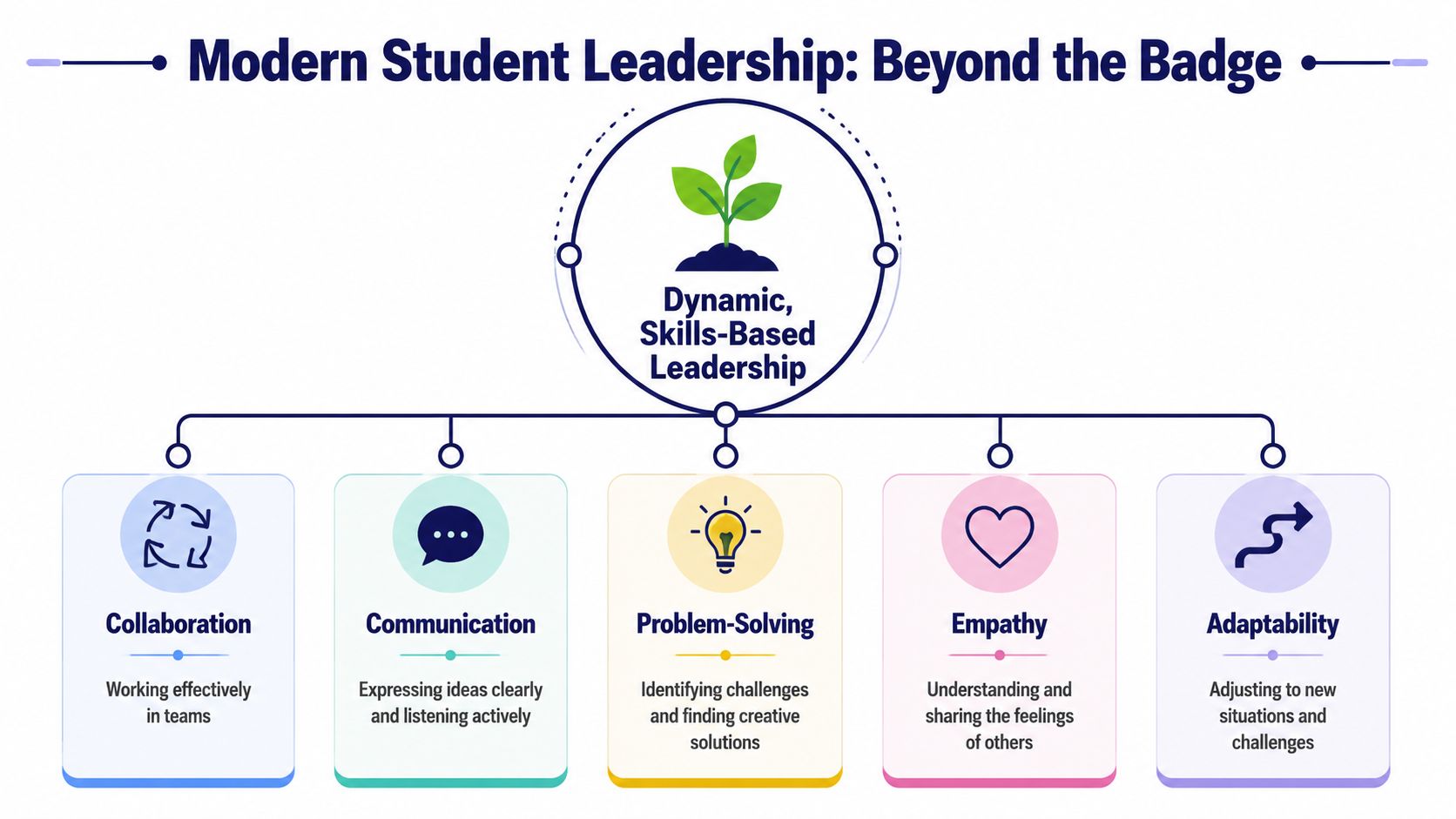
Leadership is a skill set, not a status symbol
When schools define leadership too narrowly, they create two problems. First, they overinvest in a small group of already confident students. Second, they miss the students who are capable of leading through thoughtfulness, reliability, social intelligence, or problem-solving under pressure.
A modern program should build at least five core capabilities:
Collaboration: students learn how to contribute without dominating and support progress without waiting for permission.
Communication: they practise speaking clearly, listening actively, and adjusting the message to the room.
Problem-solving: they make decisions with incomplete information and test ideas in real time.
Empathy: they read group dynamics and respond to the needs of others.
Adaptability: they recover when the task changes, the plan fails, or the team gets stuck.
These are transferable skills. They matter in classrooms, co-curricular settings, future study, and eventually at work.
Why titles alone don't build capability
A badge can recognise leadership. It can't develop it on its own.
Development comes from cycles of action and reflection. A student takes part in a challenge, notices what happened, receives feedback, and applies the lesson in a new setting. That's why experiential formats outperform passive ones so often in practice. They expose strengths and gaps quickly, and they do it in ways students remember.
A program should ask, “What behaviours are students rehearsing each week?” not simply, “Who holds the role?”
This is also where inclusion improves quality. When leadership opportunities are built around tasks rather than titles, more students can enter the learning process. That tends to strengthen school culture because influence stops being treated as something reserved for a visible few.
A more useful operating definition
For school leaders designing leadership programs for students, a practical working definition is simple. Leadership is a pattern of behaviours that helps groups communicate better, think better, and act better together.
That definition changes program design. It moves schools away from ceremonial structures and toward active challenges, peer feedback, group problem-solving, and reflection anchored in real behaviour.
The Science of Play in Leadership Development
Play is often misunderstood in education settings because it's judged by appearance rather than function. If students are moving, laughing, building, and improvising, some adults assume the learning has become less rigorous. In strong leadership design, the opposite is often true.
Play-based learning creates the conditions in which behaviour becomes visible. Students don't build trust, communication, and sound judgement by hearing definitions. They build those capabilities by navigating live situations that require them.
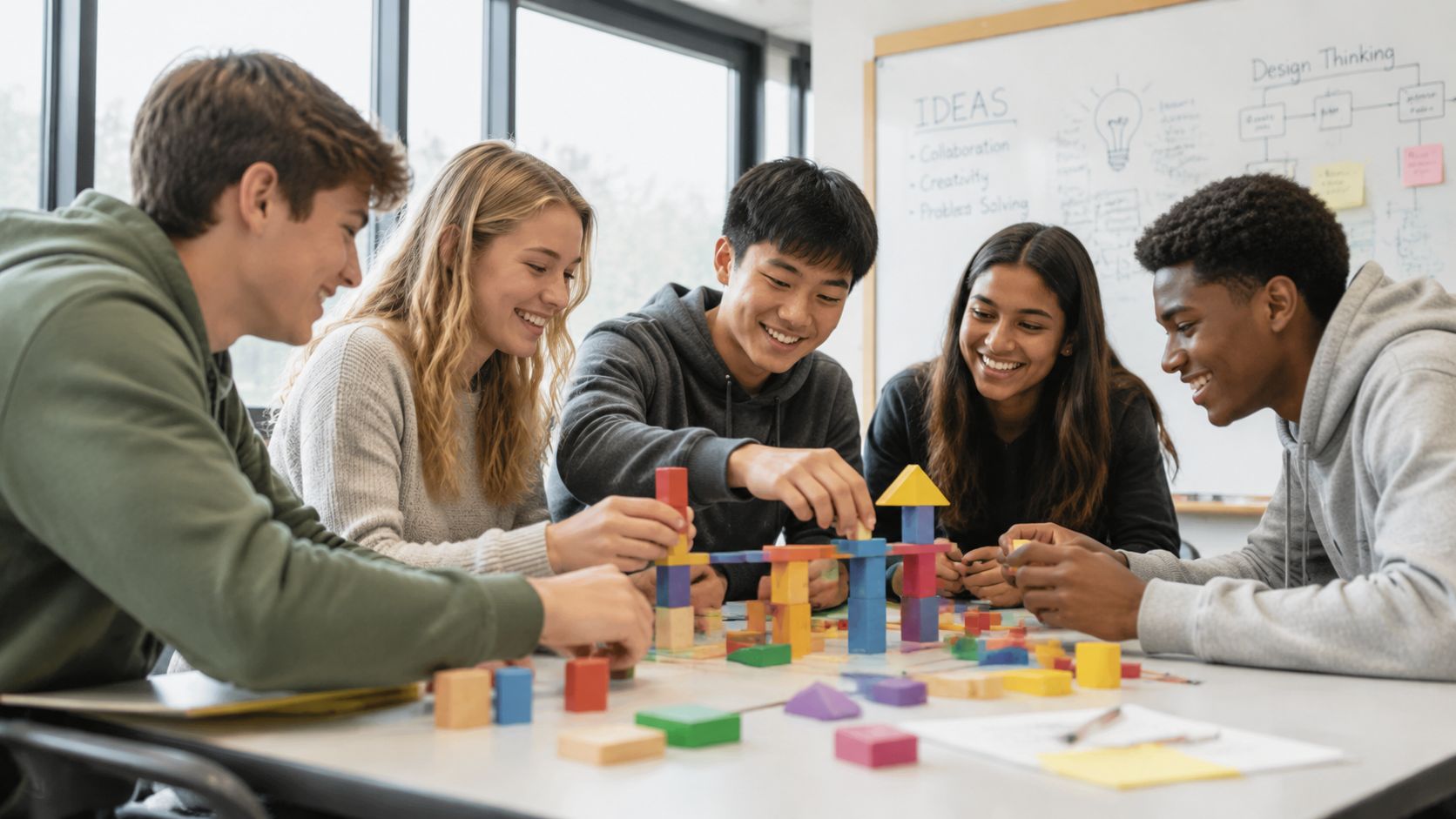
Play changes the learning state
The neuroscience argument for play is practical rather than decorative. The National Institute for Play's model links play-based experiential learning with activation of brain systems associated with emotional regulation, motivation, and social attunement. In plain language, students become more engaged, more socially responsive, and more ready to learn through interaction.
For leaders wanting a broader perspective on why experience can produce deeper learning than passive instruction, the benefits of real-world learning are worth reviewing. The principle is similar: capability grows when students are given meaningful opportunities to apply ideas, respond to challenges and reflect on what they learn
Leadership needs real-world practice
Leadership development becomes more meaningful when students have opportunities to practise it, not simply hear about it. Real challenges give young people a reason to make decisions, depend on one another, adapt when a plan changes and see the consequences of how they communicate.
NOLS’ guide to leadership programs for high school students highlights three elements that help experiential learning go beyond a one-off activity: meaningful challenge, skilled instruction and time to reflect on what happened. While its examples are drawn from outdoor education, the design principle applies in schools too. Students learn more from a team task when it has a clear purpose, requires genuine cooperation and is followed by a conversation about what helped, what got in the way and what they would do differently next time.
That is why strong student leadership programs do not rely on a speech, a badge or a single confidence-building exercise. They create repeated opportunities for students to practise judgement, communication and shared responsibility in settings that feel real enough to matter.
What works better than lectures
The strongest design pattern is straightforward:
Present a challenge: give students a clear outcome with genuine constraints.
Force interdependence: make it impossible for one student to carry the whole task alone.
Add reflection: pause the action so students can identify what helped and what hindered the team.
Re-run under new conditions: let them apply the lesson while the memory is still fresh.
That loop is far more effective than a one-way talk on leadership traits. It gives facilitators real behaviour to coach.
A practical example of this philosophy in action can be seen in approaches to play-based learning, where the emphasis sits on creating conditions for trust, communication, and adaptive thinking rather than treating play as entertainment.
The best activity isn't the one students enjoy most in the moment. It's the one that reveals how they respond to pressure, ambiguity, and other people.
What doesn't work as well
Lecture-heavy programs often fail for a simple reason. They ask students to agree with leadership ideas before those ideas have become personally meaningful. Students may be able to repeat the language of leadership without showing any growth in how they lead.
Unstructured activity can also miss the mark. If a session has energy but no reflection, it may create enjoyment without insight. The sweet spot sits between those extremes. Structured play produces challenge, emotion, teamwork, and then interpretation. That's where leadership development starts to stick.
A Portfolio of Student Leadership Program Models
Not every school needs the same leadership format. Context matters. Age mix matters. Time matters. The strongest approach is usually a portfolio rather than a single flagship event. That allows schools to match the task design to the developmental outcome they want.
Purpose-driven experiences can give leadership learning a stronger sense of meaning. When students are working toward a real community outcome, they have to organise, communicate, share responsibility and follow through together. The charity element does not replace reflection, but it gives the challenge a purpose beyond winning or completing the task.
Charity-based models build purpose with teamwork
Charity formats are effective because they connect leadership behaviour to a visible outcome beyond the group itself. Students don't just complete a challenge. They contribute to something that has community meaning.
Programs such as Bikes for Tykes and Give a Dog a Home work well when a school wants students to experience responsibility, role allocation, communication under time pressure, and service-oriented thinking in the same session. The charity element also changes the tone. Teams tend to take accountability more seriously when the task has a real recipient.
This style suits schools trying to move leadership away from personal recognition and toward contribution.
Active and adventure models surface behaviour quickly
Adventure and movement-based formats are useful when the priority is energy, adaptability, and team coordination. City Scramble, Survivor, Great Race, and similar challenge pathways reveal group dynamics quickly because students need to think, move, negotiate, and re-plan in real time.
These programs are often strong for students who don't shine in formal leadership settings. Physical movement and problem-based tasks can bring out initiative, emotional steadiness, and peer influence that a classroom discussion might never reveal.
Students often show their clearest leadership patterns when the timetable tightens and the original plan stops working.
Creative and problem-solving models develop strategic communication
Creative formats produce a different kind of leadership evidence. LEGO Legends, Out of the Box, Flat Pack Frenzy, and design-led builds are especially useful for schools that want students to practise planning, translating ideas into action, and communicating under constraints without relying on physical intensity.
These models also help mixed groups because they allow several forms of contribution at once. One student may coordinate the process. Another may notice quality issues. Another may build cohesion inside the team.
Here's a practical comparison schools can use when selecting between models.
| Program Model | Primary Objective | Ideal Year Levels | Key Skills Developed |
|---|---|---|---|
| Charity team building | Build responsibility through service and shared purpose | Upper primary to senior secondary | Collaboration, empathy, planning, accountability |
| Active and adventure challenges | Surface decision-making and adaptability under pressure | Middle years to senior secondary | Resilience, communication, role clarity, problem-solving |
| Creative and problem-solving challenges | Strengthen strategic thinking and structured teamwork | Upper primary to senior secondary | Communication, innovation, listening, coordination |
| Scenario-based team missions | Develop judgement and team response in changing conditions | Middle years to senior secondary | Adaptability, leadership presence, situational awareness |
Matching the model to the cohort
Selection shouldn't start with the activity. It should start with the outcome.
For emerging cohorts: choose lower-risk, highly inclusive formats that reward participation and shared contribution.
For student representative groups: use challenge models that require planning, delegation, and post-task reflection.
For senior leaders: add ambiguity, time pressure, and peer feedback to test mature judgement rather than enthusiasm alone.
Schools that want a fuller view of how these experiences can be structured into a broader development pathway can explore leadership development models for tomorrow's leaders.
What to avoid when building a portfolio
The most common mistake is relying on one annual event and calling it leadership development. A single experience can spark momentum, but it rarely creates lasting behavioural change without follow-up.
The second mistake is using the same model for every cohort. Younger students often need confidence and cooperation first. Older students can usually handle more ambiguity, consequence, and feedback. Good program design respects that progression instead of forcing one template across the whole school.
A Roadmap for Implementing Your Program
The schools that implement leadership programs well usually keep the process simpler than expected. They don't start with branding or a launch assembly. They start by getting clear on what behaviour they want students to develop and where those behaviours should show up in daily school life.
That clarity prevents a common drift. Without it, programs become busy but vague. Students may enjoy the experience, but staff struggle to describe what changed.
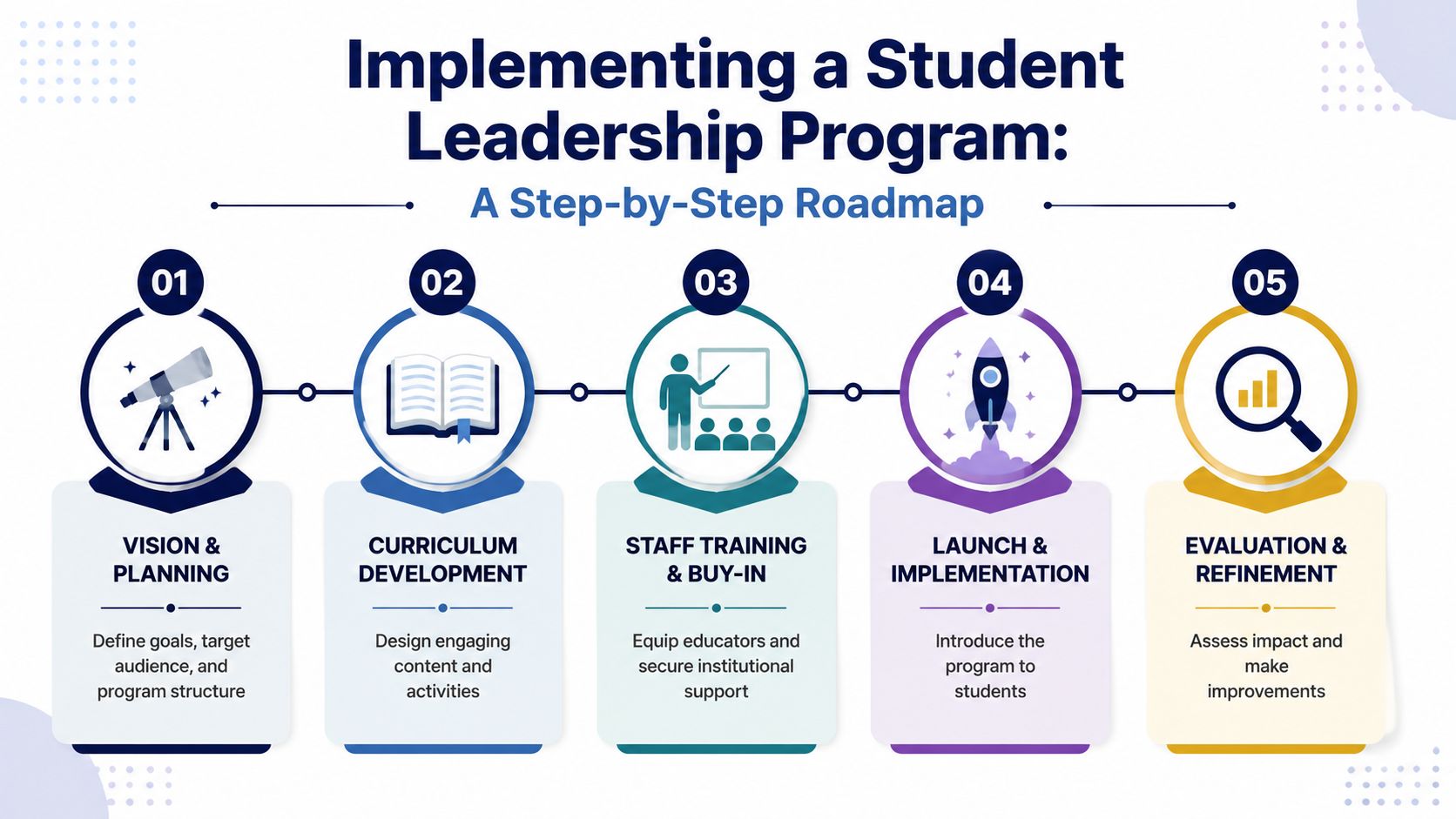
Start with behavioural outcomes
A workable first step is to choose a short list of capabilities the school wants to strengthen. That might include communication, conflict navigation, initiative, peer support, or collaborative problem-solving. The tighter the list, the easier it is to design and measure.
Then identify where those behaviours should become visible. In class discussions. During group projects. In peer mentoring. At camps. In student committees. Leadership learning becomes stronger when staff can connect the program to ordinary school settings rather than leaving it isolated as a special event.
Build a design group that can make decisions
Programs stall when too many people are consulted and nobody owns the design. A small steering group usually works best. It should include staff with operational authority, pastoral insight, and curriculum awareness.
Useful questions at this stage include:
What is the core purpose: Is the program broad capability building, representative development, or culture change?
Who is included: Will the program be open access, nominated, application-based, or tiered?
How often will students practise: One-off events create spikes of energy. Repetition creates learning.
What reflection process will be used: Without reflection, the task ends where the activity ends.
For teams that already coordinate complex staff or student groups, ideas from Sports team management can be surprisingly relevant because they highlight role clarity, scheduling discipline, and progress tracking in group development environments.
Pilot before scaling
A pilot lets a school test the structure without overcommitting resources. Start with one cohort, one term, or one leadership stream. Watch what happens. Which tasks generate useful behaviour? Which reflections produce honesty rather than scripted answers? Which staff members are comfortable facilitating learning from uncertainty?
Operational advice: Pilot the cadence as carefully as the activity. Frequency and follow-up often matter more than spectacle.
The pilot stage should also test practical realities such as staffing, venue, movement between activities, and communication with families.
Protect the follow-through
The final implementation step is often the one schools under-resource. Students complete a high-energy experience, then return to normal routines with no mechanism for transfer. That's where momentum gets lost.
A better model is to build in structured reinforcement. That might include tutor-group reflections, peer check-ins, role rotations, or class-based applications of the same teamwork principles. Schools that want those benefits to last need a deliberate transfer strategy, not just a strong event day. That principle is well reflected in thinking around making team-building benefits last.
How to Choose a High-Impact Program Partner
Some schools build leadership programs internally and do it well. Others save time and improve quality by working with external specialists. The decision isn't really in-house versus outsourced. It's whether the school can access the right mix of design skill, facilitation quality, safety systems, and evidence-based methodology.
The wrong partner usually sells energy. The right partner develops behaviour.
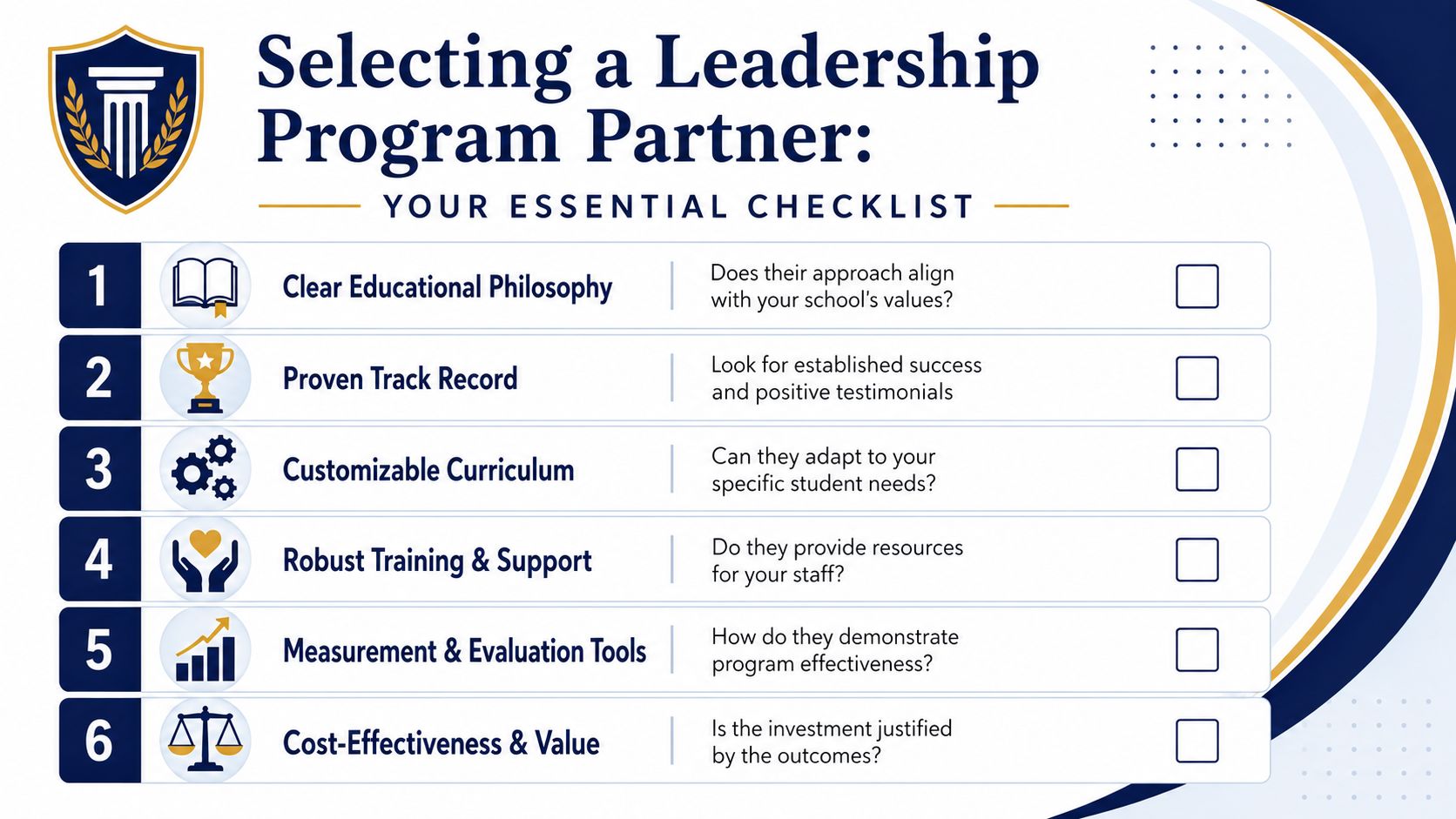
Look for operational maturity, not just good marketing
A strong external partner should bring more than energy and equipment. They should be able to explain the learning purpose behind each activity, how the challenge suits the age group, how safety and inclusion are managed, and how reflection will help students connect the experience to everyday school life.
Questions that separate strong partners from weak ones
A school leader should expect clear answers to practical questions such as these:
What is the learning philosophy: Is the program based on experiential learning, play-based design, service learning, or a mix?
How is safety handled: What are the procedures, supervision protocols, and compliance standards?
Who facilitates the session: Are facilitators experienced in group dynamics, not just event delivery?
Can the program be customised: Does the design flex for age, cohort mix, school culture, and desired outcomes?
How is impact observed: What tools are used to capture behavioural evidence during and after the program?
A provider that can't answer these clearly may still run a lively day. That doesn't mean the day will produce meaningful leadership growth.
Beware of mismatched design
The biggest red flag is misalignment between the school's goals and the provider's default format. If a school wants inclusive leadership development but the program rewards only extroversion and speed, the design is off. If the school wants serious reflection but the provider has no debrief process, the design is off.
Another issue is over-standardisation. Good providers bring a tested methodology, but they should also adapt challenge level, group structure, and reflection prompts to the school context.
A practical procurement lens for this process is similar to the one used when finding an event planner that fits the brief. The principle is the same. Capability, alignment, and delivery discipline matter more than polished copy.
Choose the partner that can describe what students will do, what they will learn from doing it, and how staff will know whether that learning carried forward.
Measuring Leadership Growth and Program Impact
Measurement needs to focus on behavioural change over time. Attendance and satisfaction show whether students took part and enjoyed the experience, but they do not tell a school whether students are becoming more confident contributors, clearer communicators or more capable collaborators.
Leadership development also works best when responsibility is visible. Large education institutions such as George Mason University make their leadership structures clear, showing who holds responsibility for different decisions and areas of work. Schools can apply the same principle at a smaller scale by defining what student leaders are responsible for, where they can contribute and how their progress will be observed over time.
What schools should track instead of simple participation
The most useful measures are usually a mix of qualitative and operational evidence.
Student reflection: short written reflections after activities can reveal whether students understand their own patterns under pressure.
Peer feedback: students often identify growth in listening, reliability, and support before adults do.
Teacher observation: classroom staff can note whether collaboration and communication improve after the program.
Role uptake: schools can watch whether more students step into responsibility over time.
Behavioural patterns: pastoral teams can monitor whether the tone of peer interaction changes in meaningful ways.
None of these requires a complicated research framework. What they require is consistency.
Use low-friction methods that staff will actually maintain
A practical measurement system might include a baseline self-assessment, a short post-program reflection, and a follow-up check several weeks later. Teachers or coordinators can add a simple observation tool with a few defined behaviours such as contribution, listening, initiative, and response to setbacks.
Schools should also decide what success looks like before the program starts. If the target is stronger peer collaboration, then the evidence needs to come from situations where collaboration is visible. If the target is leadership pipeline growth, then the school should track whether participation in future roles becomes broader and more diverse.
Thinking about the ROI of play can help leadership teams frame these outcomes more credibly. The point isn't to force school culture into a corporate dashboard. It's to connect investment with observable gains in confidence, communication, and team behaviour.
A good program leaves traces after the event. Students speak differently to one another. Groups recover faster from setbacks. Staff see more initiative without prompting. That's the level of evidence worth collecting.
Corporate Challenge Events helps Australian organisations and education settings design play-based experiences that build connection, communication, and leadership through action. For teams looking to apply the science of play in a practical way, Corporate Challenge Events offers charity team building, creative problem-solving programs, active challenges, and professionally facilitated experiences grounded in lasting behavioural impact.