
By Hugh Sykes, Corporate Challenge Events
Why do we learn so much about a team in the first ten minutes of an event, and so little in a year of meetings?
After 16 years and more than 1,000 team-building events and workshops, I’ve stopped treating that as a curiosity. I think it’s one of the most important things a leader can understand about their own culture.
Most organisations believe they know how their people work together, yet the culture described through formal structures and employee surveys can tell a different story from the one unfolding between people every day. I regularly talk about how play-based team building can be a catalyst for positive change in workplace culture, and that raises a fair question: how does it actually happen?
The answer goes beyond people having fun together. Enjoyment matters, but the greater opportunity lies in what people discover while they are playing, how they interpret those discoveries and what they choose to do differently afterwards.
Play gives teams a view of themselves that meetings rarely do.
The habits we stop noticing
Workplace culture becomes familiar long before it becomes visible. People learn whose ideas receive attention and how much disagreement a relationship can tolerate. They discover whether asking for help brings support or scrutiny. Eventually, these experiences become assumptions about how to get through the working day, and the team carries on without necessarily examining what it has learned.
Put that team into a playful challenge and those assumptions come with it. The task may be unfamiliar, but the relationships already have a history. Give a group a shared goal, limited resources and a deadline, and familiar behaviours emerge. Someone starts organising. Someone asks questions. One person wants to move immediately, while another wants to understand the instructions before committing to a direction. Some people compete for airtime, some quietly support others, and some work through the problem alone.
You can see a group ask for ideas and begin acting before everyone has had the opportunity to contribute. You can see people defer to a leader whose expertise has little bearing on the problem in front of them. The workplace has entered the game, even though the work itself has been left behind.
These behaviours are useful material for reflection because teams navigate similar situations every day. They interpret information, manage competing ideas, allocate responsibilities and deliver outcomes under pressure. The activity simply makes those interactions easier to notice.
Consider a construction challenge where a team spends most of its time discussing possible designs. Eventually, someone points out that they have barely started building. That moment can prompt a valuable conversation about how the team balances preparation with action. Another group might move quickly, only to discover that different members have been working towards different interpretations of the goal. Their discussion could focus on what needs to happen before everyone gets started.
For a leader, this can be uncomfortable. We are accustomed to explaining our behaviour through the demands of the job: there was a deadline, a client expectation, a decision that couldn’t wait. In play, some of those explanations fall away, leaving us with a clearer view of the habits we have brought into the situation ourselves.
This is what I mean by a microcosm of the workplace. A challenge makes an established way of working available for the team to recognise together, with curiosity and enough honesty to see a familiar pattern for what it is.
A playground for a different response
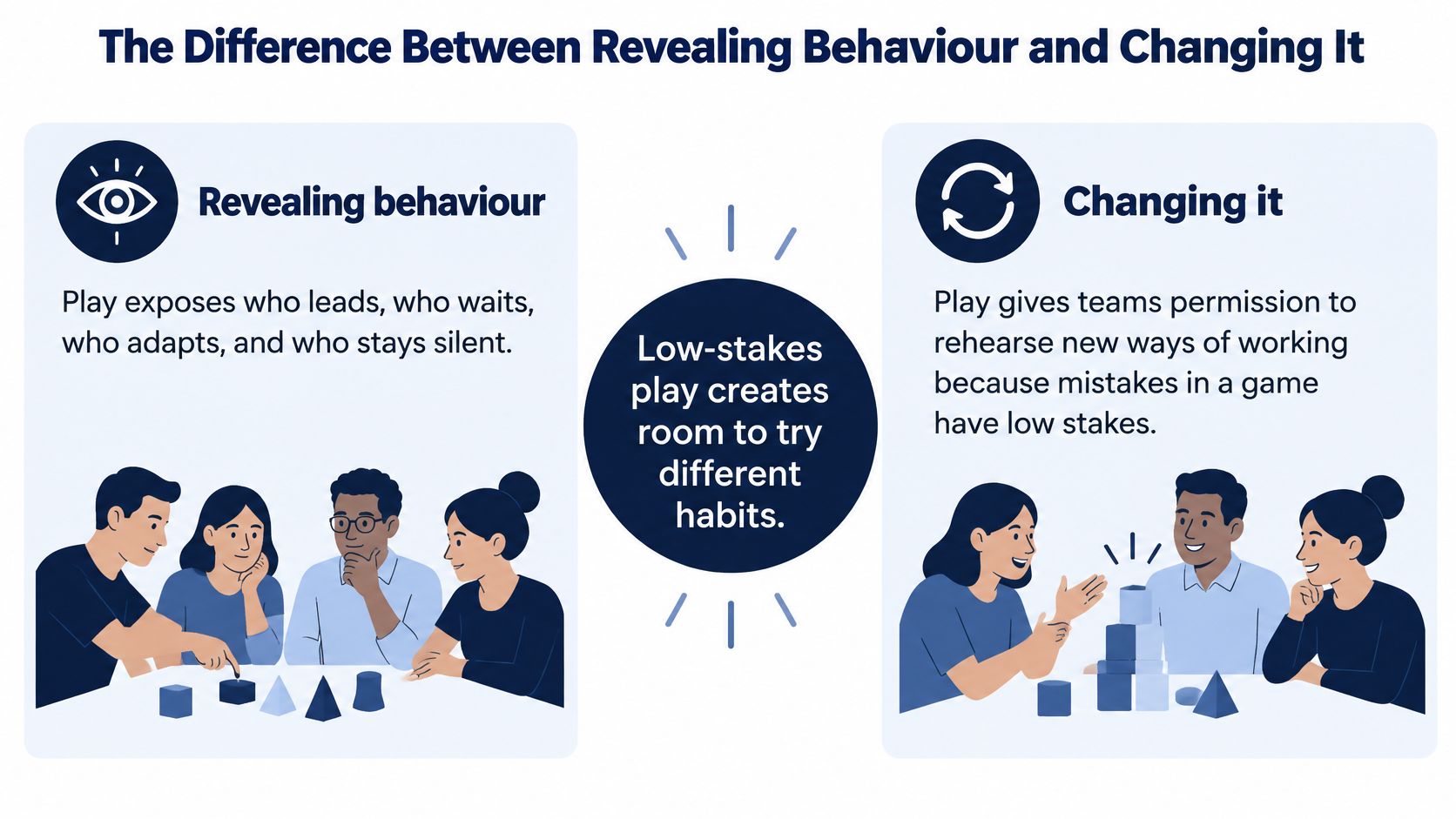
Recognition alone does not change a habit. Most teams already know something about the patterns that frustrate them. The difficulty is finding room to respond differently while the work continues to demand the familiar response.
At work, experimentation has a cost that extends beyond whether an idea succeeds. People are also considering their reputation, their relationships and the possibility of disappointing someone whose judgement affects their future. They worry about missing a deadline, disappointing a client or making a mistake in front of their manager. A leader can encourage initiative sincerely while underestimating how much someone feels they are risking by taking it. Those concerns can make familiar habits feel like the safest option, even when the team knows there may be a better way.
Play changes the consequences enough to make another response possible. A structure that falls over can be rebuilt. An unsuccessful attempt becomes part of the challenge rather than a problem that follows someone into their next performance conversation. A leader can practise asking questions before offering a solution. A team that tends to work in separate pockets can try agreeing on a shared plan before dividing the task. The team can experience what happens when it pauses to listen, shares responsibility differently or allows an idea to develop before deciding whether it will work.
That experience gives people something concrete to reflect on. They can discuss how a different behaviour affected the group, rather than relying only on what they think might happen.
In mammalian play research, there is an idea that describes play as “training for the unexpected”. The researchers proposed that the uncertainty and temporary loss of control within play help animals develop more flexible responses. I see a practical connection to teams: we keep asking people to adapt, yet they need opportunities to experience uncertainty without every response carrying the full weight of work. [1]
That freedom needs to be real. If people feel they are being watched for weaknesses, the challenge can become another situation in which they protect themselves. The opportunity comes when they are absorbed enough to explore and sufficiently at ease to risk another approach. [2] The stakes are lower, but people’s feelings still matter. Embarrassment, exclusion and frustration can all occur during an activity, so thoughtful facilitation means paying attention to those experiences and creating appropriate ways for everyone to participate.
Making hierarchy less prominent
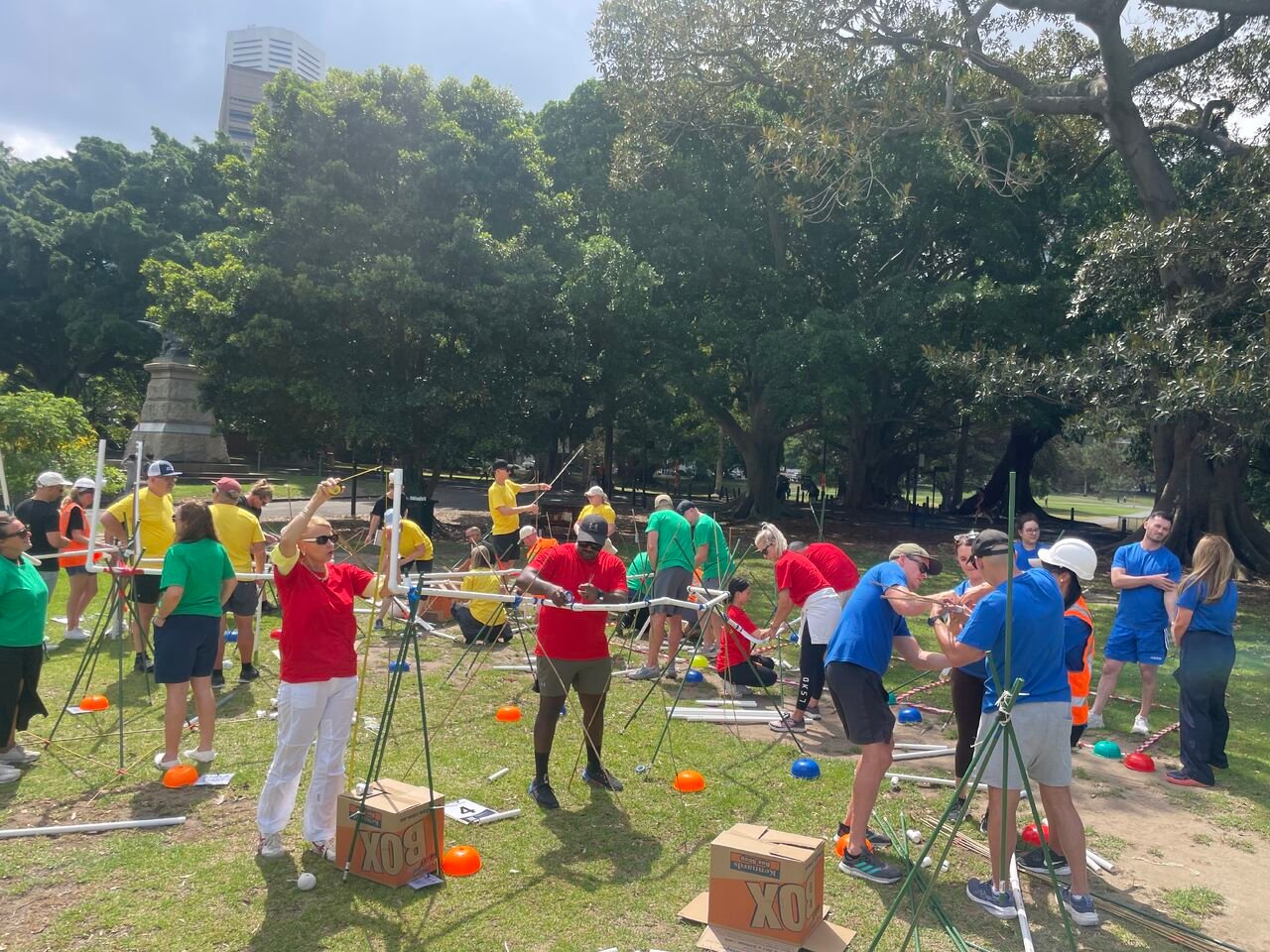
Workplace relationships are shaped by more than personality. Job titles, reporting lines, length of service and established reputations all influence how people interact. In a meeting, someone may wait for the most senior person to speak. A new employee may hesitate to challenge an assumption. A colleague may be known for one particular skill and rarely get the chance to demonstrate anything else.
Play also loosens the hold that hierarchy has on behaviour. Once the task is one nobody has done before, a job title carries far less weight, and people begin to connect beyond their usual roles. The person with the most relevant idea might be the newest member of the team. A senior leader may need to follow someone else’s instructions. A colleague whose everyday role receives little visibility may become central to the group’s success. Someone who rarely speaks up in a meeting suddenly has the opportunity to shine.
One activity cannot capture everything about a person, and participation is affected by familiarity, confidence, accessibility and many other factors. But it can create an opening to recognise a contribution that has previously gone unnoticed, and that recognition becomes valuable when it carries back into everyday work.
The conditions are personal
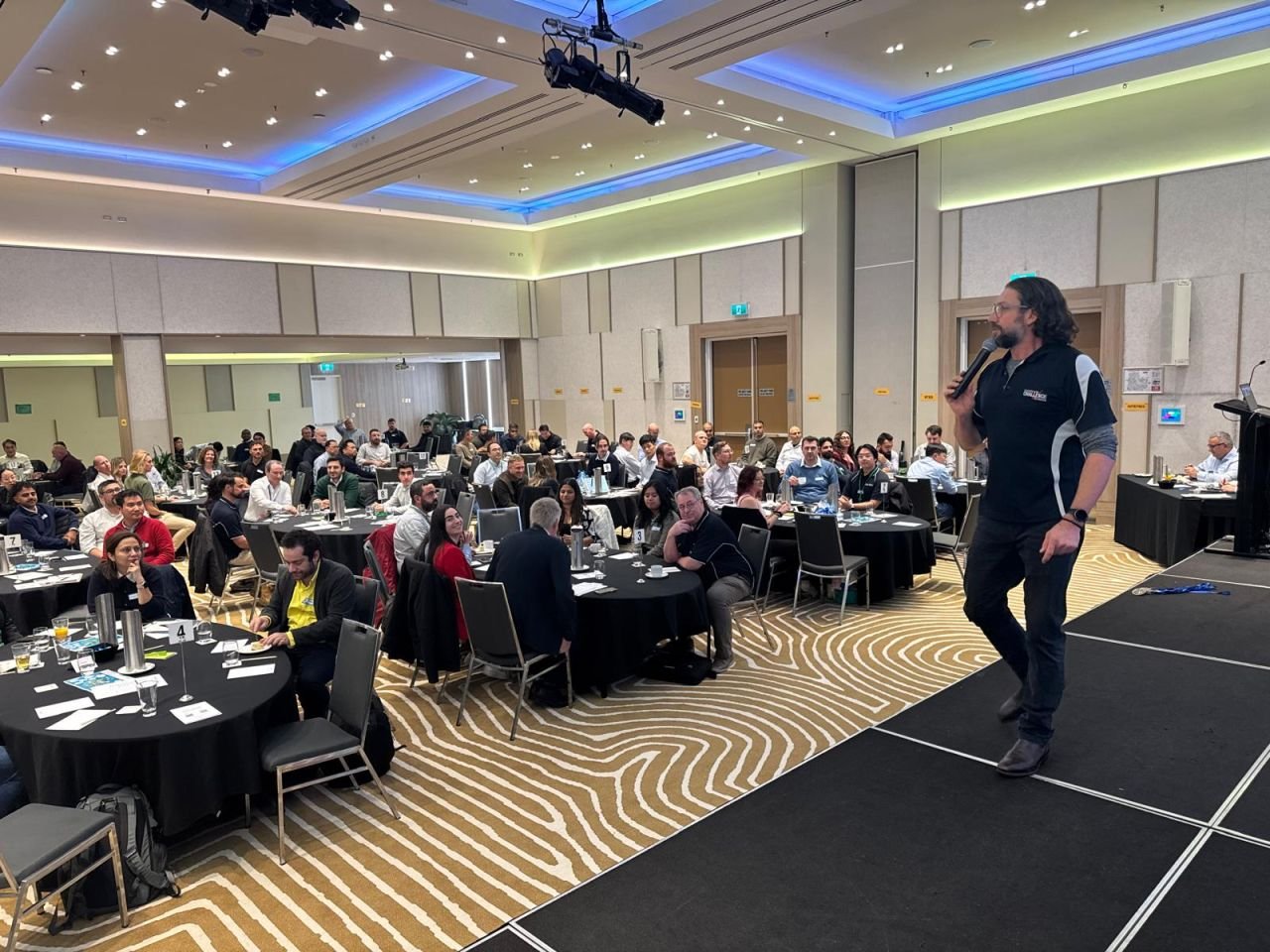
My own Play Style is a Mover. Physical movement is one of the ways I access play and bring myself to my best. Knowing that gives me something practical to work with, and it also requires me to question how readily I assume that what engages me will engage the people around me.
Every leader’s preferences influence the opportunities they offer and the responses they notice. Someone whose enthusiasm resembles ours is easy to recognise as engaged. Someone absorbed in observing or quietly working through an idea may be giving just as much of themselves, with far less visible evidence.
The Play Styles framework, developed by Dr Stuart Brown and the National Institute for Play, gives us a language for those differences. People have a blend of natural preferences through which they access play, including movement, making, discovery and imagination. Understanding that blend helps us recognise how differently people can experience the same opportunity. [3]
This is why good team-building design starts with recognising that people engage in different ways. Some enjoy movement and quick decisions. Others prefer observation, creativity, discussion or time to think. A program built entirely around speed and public performance gives a particular group of people repeated opportunities to contribute, while a broader mix of challenges requiring practical problem-solving, careful listening, imagination, planning or cooperation creates more ways for the team to succeed.
It matters because workplace culture is influenced by whose contributions receive attention. If a team repeatedly rewards whoever speaks first or acts fastest, it may miss useful perspectives. If we repeatedly create conditions that favour the same people, we should be careful about what we conclude about everyone else. A different challenge can give a colleague another way to participate, and give their team a reason to reconsider what they thought they knew. The question becomes practical: where else could we create room for this person, or this way of thinking, to contribute?
Turning experience into a conversation
Many teams already know the language of effective teamwork. They can talk about communication, trust, adaptability and collaboration. The difficulty is connecting those ideas to everyday behaviour.
A shared activity gives the team a specific experience to discuss. Instead of saying, “We need to communicate better,” someone can observe, “We changed the plan, but two people did not hear the change.” Instead of saying, “We should be more inclusive,” the group can recognise, “We asked for ideas, but started acting before everyone had a chance to respond.” Specific observations make the conversation more useful, because they help people identify an action they can repeat or adjust.
This is where facilitation matters. The activity creates the experience; the debrief helps the team make sense of it. Without reflection, participants may leave remembering a funny moment, a competitive finish or an impressive result. Those memories have value, but there is an opportunity to go further.
A useful debrief connects three things: what happened, what the team noticed and where that learning could apply. A group might recognise that it improved after pausing to clarify responsibilities, and the workplace connection could be an upcoming project where ownership is currently unclear. Another team might notice that its first unsuccessful attempt led to frustration, but its second improved once people started asking for help. That could lead to a discussion about how early people raise problems at work.
A good facilitator helps the group explore what happened without turning the discussion into blame or assigning fixed labels to individuals. Questions such as “What helped you make progress?”, “When did the plan become clear?” and “What would you try differently?” encourage reflection while leaving room for different perspectives. The team’s interpretation matters. The aim is to help people examine their experience and decide what is relevant to their work. Some moments are simply enjoyable, and there is no need to force a lesson into every interaction. The strongest discussions often come from one clear observation that the team recognises and wants to explore.
From a state of play to a more playful way of being
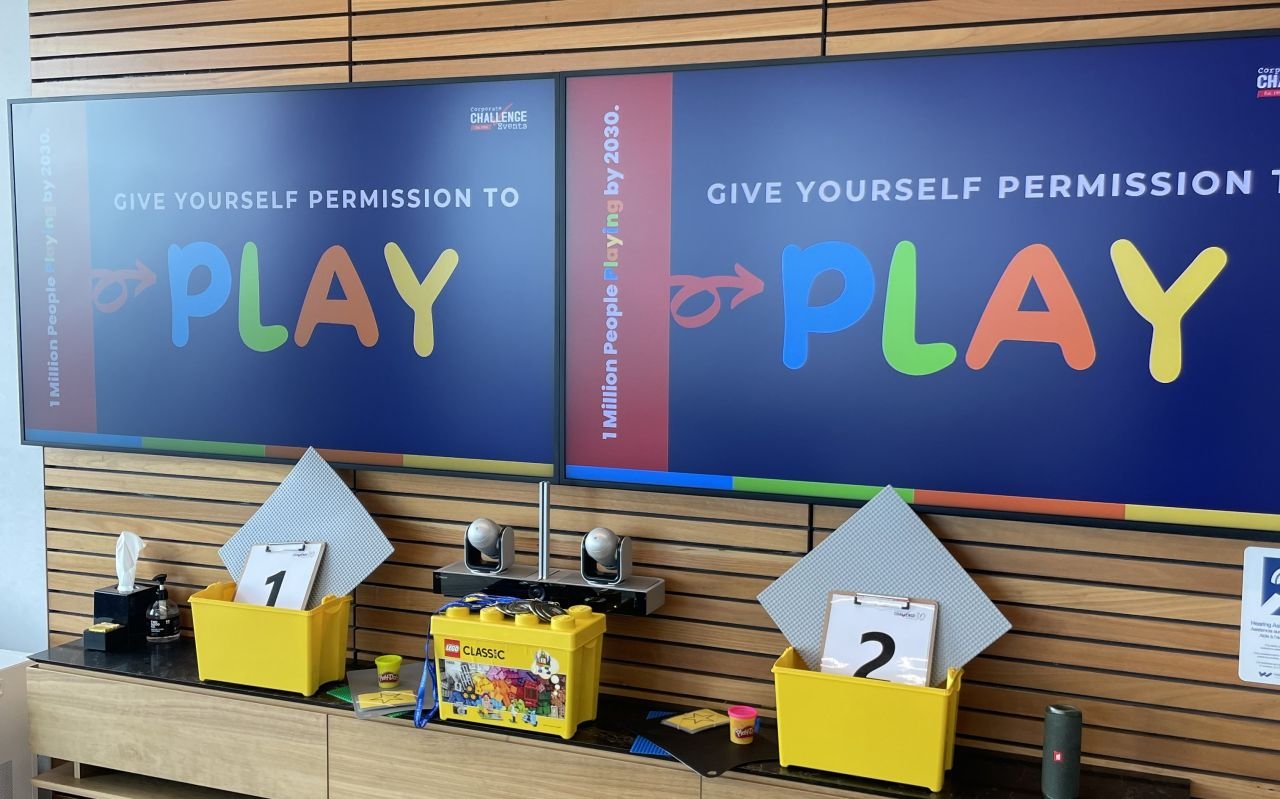
The more we play, the more familiar a playful approach becomes. Understanding the relationship between state and trait helps explain why that experience can extend beyond the activity itself.
A state of play is what we experience in the moment, when we are freely engaged and absorbed in something playful. Playfulness as a trait is a more enduring disposition that influences how we approach everyday situations. Spending time in the state can help us develop the trait, making curiosity and a willingness to explore more readily available in how we respond to the world. [4]
Neuroplasticity provides the foundation for that capacity to develop. Our brains continue to adapt and reorganise through experience and learning throughout adulthood, giving us opportunities to cultivate responses through practice. [5]
This is why I believe play deserves a continuing place at work. A team-building experience can give people an initial opportunity to experiment. Embedding play into working life gives them somewhere to keep developing that approach. Curiosity creates room to explore an idea before judging it. Enjoyment in the challenge itself can support intrinsic motivation, giving people a reason to engage beyond completing the task. With regular opportunities to practise, playfulness can become part of how the team approaches its work.
What returns to work with you
A few hours of team building will not transform your culture overnight, and I would rather say so plainly than let anyone believe otherwise. Culture is shaped through repeated experiences: how leaders respond to mistakes, how decisions are made, what behaviour is rewarded and whether people’s concerns receive attention. What an event can create is the awareness, connection and momentum needed to start making changes, and the important part is what happens when everyone returns to work. How do we take what we have discovered through play and apply it to our everyday interactions?
An organisation cannot invite people to experiment for an afternoon and then make the familiar response their only sensible option on Monday. If participants are encouraged to contribute during an activity but their ideas are routinely dismissed back at work, the event will have limited influence. If a leader discovers that the team contributes more when they leave a little space, that discovery asks something of them in the next meeting. If people find that an early request for help prevents a shared problem, they need a response at work that makes asking again worthwhile.
The most useful follow-up is often small and specific. A team that noticed people were working from different assumptions might introduce a brief check at the start of each project: what are we trying to achieve, and does everyone understand the next step? A group that benefited from hearing more perspectives might give people time to think before discussing an important decision. A leader who discovered the value of stepping back might deliberately invite the team’s ideas before sharing their own. These are easier to apply than a broad commitment to “communicate better” or “be more collaborative”, because they describe something people can actually do. It also helps to revisit the commitment: at a later meeting, the team can ask whether it tried the new approach, what happened and whether anything needs adjusting.
This is also where things get interesting. When people experience their colleagues in a different environment, they begin to recognise strengths and perspectives they might not have noticed before, and that can open the door to better communication and, through it, to stronger relationships and new ways of working together. Someone becomes easier to approach because there is now a shared experience between them, and the working relationship has more to draw on.
I want people to enjoy their team-building experience. Shared laughter, connection and the chance to step away from normal routines are valuable in their own right. I also want teams to leave with something they can use: a better understanding of a colleague, a clearer picture of how they respond under pressure, or a practical idea for making their next project run more smoothly.
That is why I believe purposeful play can be a powerful catalyst. It offers a playground where familiar patterns can emerge and different behaviours can be tested, with everyone involved in the experience. As a leader, you leave with a view of your culture that deserves more than a passing observation. You have seen how your people work together and what becomes possible when something changes, and your own willingness to keep testing those possibilities is part of what happens next.
That is where a great team-building experience becomes more than just a great day out.
At Corporate Challenge Events, we design purposeful play-based experiences that help teams discover what is possible, then support them in bringing those insights back into the workplace.

Hugh Sykes
NSW/ ACT Manager
Hugh Sykes is a facilitator at Corporate Challenge Events with 16 years of experience delivering more than 1,000 team-building events and workshops. Through purposeful play, he helps teams understand how they work together, recognise strengths in their colleagues and explore different approaches they can bring back into the workplace.