Most advice on team bonding activities Perth starts in the wrong place. It starts with the activity. Leaders get shown a list, pick the option that seems lively, and hope a few hours away from the office will somehow improve trust, communication or morale.
That approach is exactly why so many corporate team days feel pleasant in the moment and forgettable a week later.
For HR leaders, executive assistants, office managers and People & Culture teams, team bonding isn’t really a leisure decision. It’s a performance design decision. The essential question isn’t whether a Perth activity looks fun on paper. It’s whether the experience helps a team move from its current working pattern into a more useful one: more open, more energised, more collaborative, more trusting, or more willing to engage across roles.
Perth is well suited to that kind of work. The city offers outdoor, creative and purpose-led corporate formats, from Kings Park challenges to beach-based programs and collaborative workshops, which gives organisers more than one way to shape a team experience around a business outcome.
Table of Contents
The Problem with Most Team Bonding Activities in Perth
Leaders often get trapped by the same planning pattern. Someone searches for team bonding activities Perth, finds a long list of options, and chooses whatever seems easiest to approve, easiest to explain, or easiest to fit into the calendar.
That selection method is convenient, but it rarely solves the actual issue the team is facing.
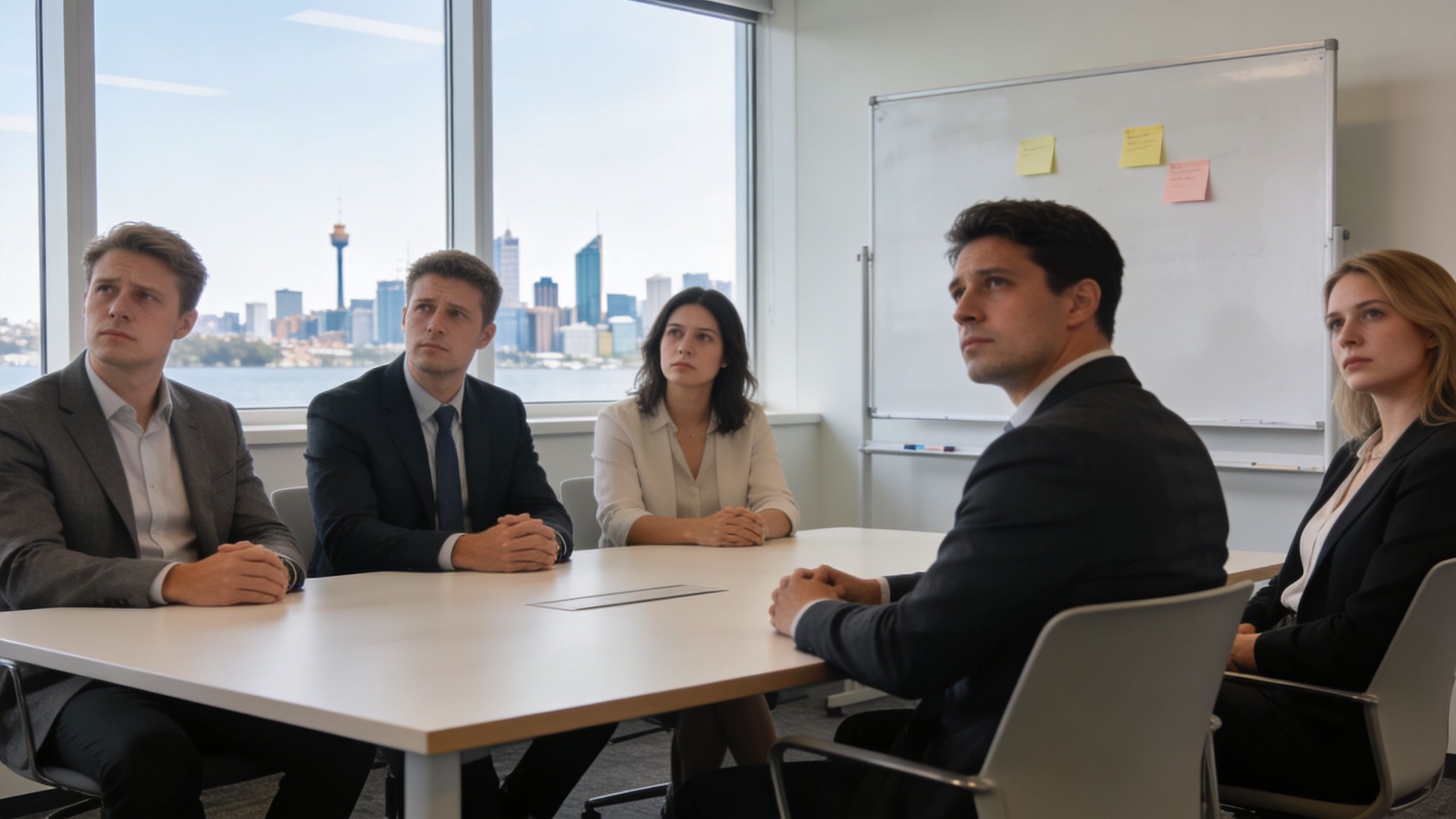
The business case for getting this right is stronger than many organisations admit. Only 20% of employees are engaged, while teams with high trust and cooperation can be up to 50% more productive, and among event planners 62% prioritise budget and 49% prioritise fun according to Australian team building statistics and event planning priorities. That combination creates a common problem. Teams need stronger connection and better collaboration, but the event brief gets reduced to “find something enjoyable that people will attend”.
Why activity-first planning falls short
An activity can be well run and still be the wrong intervention.
A sales team that’s burnt out after a demanding quarter may not need a complex problem-solving challenge. They may need renewed energy, low pressure interaction and a format that gets people talking again without making it feel forced. A newly merged leadership group may not need adrenaline. They may need a structured experience that lowers status barriers and creates room for honest conversation.
Practical rule: If the organiser can’t name the team behaviour that needs to change, the activity has probably been chosen too early.
That’s where many Perth offsites underperform. The event itself isn’t always the problem. The mismatch is. A high-energy outdoor format can lift the room but leave underlying friction untouched. A polished workshop can feel worthy but flat if the team needs momentum and human connection before any deeper work can land.
Team bonding is a culture decision
Disconnected teams don’t only create morale issues. They create slower handovers, weaker communication, more avoidable tension and less willingness to ask for help. Those are operating issues.
That’s why one-size-fits-all design rarely works, especially in varied environments such as CBD offices, conference groups, operational teams, regional WA teams and hybrid workforces. Different groups carry different pressure points, and one-size-fits-all engagement strategies fail for exactly that reason.
A useful Perth team bonding program should be selected the same way a leader would approach any other business intervention. Define the problem first. Then choose the format that can shift it.
Shift the Goal From an Activity to a Team State
A better planning question is simple. What state does the team need to be in when the event finishes?
That’s a much sharper filter than “What should the group do for half a day in Perth?” A state is the quality of interaction the team needs more of. It might be trust. It might be openness. It might be confidence, energy, willingness to collaborate, or the sense that people can approach each other without the usual friction.
What a team state looks like in practice
Most workplace teams don’t need bonding for its own sake. They need a shift in how people relate.
A cautious team may need a setting where people can contribute without fear of getting it wrong. A siloed team may need interaction that mixes departments in a natural way. A capable but tired group may need an experience that creates movement, laughter and shared attention so that people stop operating like adjacent individuals and start behaving like a unit again.
Play is useful here because it changes the conditions of interaction. In a work setting, well-designed play can lower professional barriers, lift energy, reduce overthinking and create permission for people to engage differently. That doesn’t make the process light-weight. It makes it efficient.
Play works as a social reset when it is designed with intent, not treated as a break from the real work.
That idea is especially relevant in corporate settings where roles, hierarchy and routine can harden quickly. Teams often know each other functionally but not relationally. They can complete tasks together and still lack the trust or ease needed for honest collaboration.
The right format depends on the shift required
Different states call for different types of design.
-
For trust and openness: collaborative, low-threat formats often work better than heavy competition.
-
For momentum and energy: active experiences can help teams reconnect through movement and shared challenge.
-
For confidence and voice: structured creative tasks can give quieter contributors a clearer entry point.
-
For cross-functional connection: mixed-team formats with interdependence usually outperform activities where existing groups stay clustered.
Leaders also shape whether this works. If senior people stay guarded, the rest of the group usually follows. That’s one reason permission to play is a leadership skill. The event format matters, but the behavioural cues around it matter too.
Once the desired state is clear, choosing the activity becomes easier. It stops being a menu decision and starts becoming a design decision.
Our Play Process A Framework for Real Results
Good team bonding is designed backwards from an outcome.
HR teams often get handed a brief that sounds simple: find something engaging, keep people involved, make it run smoothly. That brief is incomplete. The actual job is to define the shift the team needs, then build an experience that gives people the conditions to practise that shift together.
That is the logic behind CCE’s Play Process. It treats team bonding as an intervention, not a booking.
Start with diagnosis
Research on team-building consistently points to the same pattern. Results improve when the experience is customized, well facilitated, and tied to a clear workplace objective, as outlined in Australian guidance on customised team-building and measurable outcomes. In practice, that means the first question is not which Perth activity looks fun. It is what the team needs to do better together after the event.
That changes the conversation quickly.
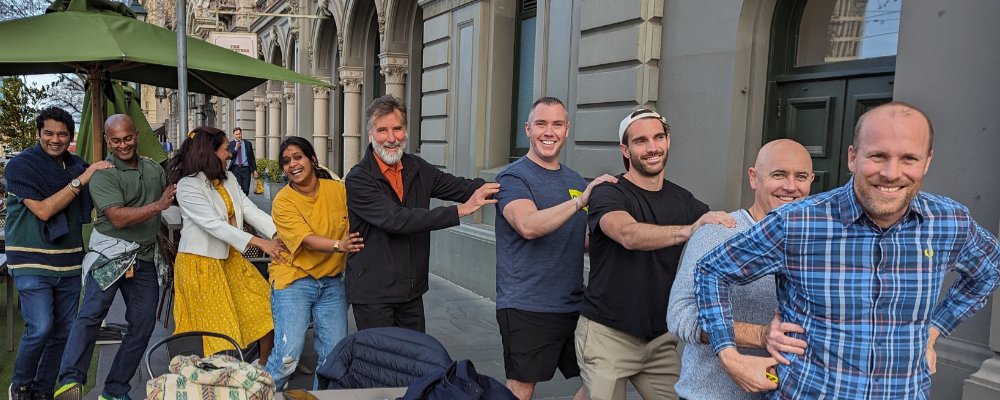
How the Play Process works in practice
Step 1: Clarify the Brief
We start with context, not logistics.
Headcount, venue and timing matter, but they do not tell us what is really happening inside the team. Is this group newly formed? Are they carrying tension after change? Are they split across functions, locations or leadership layers? Are they simply stuck in routine and needing a reset?
This early conversation helps us understand the behaviour, energy or connection you are trying to shift, so we can recommend an experience that fits the team, not just the calendar.
Step 2: Read the Team State
Surface symptoms can be misleading.
Low participation might look like disengagement, but it could also reflect fatigue, hierarchy, caution, unclear psychological safety or a few dominant voices controlling the room. A team that seems quiet may not need more energy straight away. They may need trust, structure and safer ways to contribute.
This is where facilitation matters. The way we design and lead the experience should be based on the real team state, not just the organiser’s first guess.
Step 3: Design for the Target Outcome
Once the required team state is clear, format selection becomes easier.
A collaborative charity build can create shared purpose. A problem-solving program can reveal communication habits under pressure. A creative challenge can lower status barriers and give more people a way to contribute.
Well-designed play-based team building gives people the chance to test new behaviours in real time, not just talk about them. That is where play becomes useful for workplace teams: it creates a structured space where connection, contribution and decision-making can be practised safely.
Step 4: Event Confirmation
Once your program confirmation is returned, your event date is secured and planning officially begins. You will receive a clear outline of what happens next, who you will be working with and what we need from you to help make the event a success.
Step 5: Play Strategy Session
Next, we book a 20-minute Play Strategy Session. This is where we dive deeper into your goals, confirm key details and explore how play can support your team. It is a short but important conversation that helps us turn your vision into a practical event plan.
Step 6: Event Snapshot
You will then receive an Event Snapshot that connects your goals to the experience we have designed. This includes a breakdown of the activities your team will take part in, how the program will run and what each element is designed to support.
Step 7: Event Essentials
As your event gets closer, we confirm final numbers and send through your pre-event essentials. This includes a pack to help you introduce the experience to your team, a connection deck to support engagement and simple tips for setting the tone on the day.
Step 8: Final Event Brief
Before the event, you will receive one final email with all the key details, including timings, location, facilitator information and anything else needed to keep the day running smoothly. You will also be introduced to your event lead, so you know exactly who will be guiding your team.
Step 9: Event Day
This is where the planning comes to life. Your facilitator will lead the experience, your team will step into play and everything we have prepared together will unfold. All you need to do is show up, take part and enjoy the experience.
Step 10: Post Event Recap
Within a few days of your event, you will receive an image library that can be shared with your team. We will also include a summary of the key moments we observed, including team connections, proud achievements and standout insights from the day.
Step 11: Debrief Call
After the event, we reconnect for a debrief call. This gives us the chance to revisit key observations and share practical insights that can help your team carry the experience forward. You will also receive 3 to 5 curated resources to support ongoing culture-building.
Step 12: Your Play Report
Following the debrief, we send through your personalised Play Report. This captures the key insights and recommendations discussed, giving you a simple and practical guide to help embed the outcomes into your team’s everyday rhythm.
Step 13: Beyond the Event
The support does not stop when the event ends. You will receive 12 months of support through our Play Hub, inbox resources and direct access to your event team for tailored advice whenever you need it. The goal is to help the energy, connection and learning from the day keep showing up long after the event is over.
Participants should feel the day was easy to join. The design work happened beforehand.
Corporate Challenge Events uses this process for play-based programs across Perth and regional WA, covering indoor, outdoor, charity, conference, creative, problem-solving, and custom formats.
What this process stops from going wrong
A clear process reduces four common mistakes.
-
Activity fit is judged by popularity, not purpose. The session gets good feedback on the day, but nothing improves back at work.
-
The format asks too much, too soon. Teams that need safety get pressure instead.
-
The room is under-facilitated. The concept is sound, but group dynamics go unmanaged.
-
Logistics drive the decision. The easiest option to book replaces the right option to run.
For HR leaders, that matters because internal buy-in is easier when the reasoning is visible. The event is no longer a perk dressed up as development. It is a structured way to help a team move from its current state to a better one.
Matching Perth Activities to Your Team’s Objectives
Perth gives planners unusual flexibility. The local market includes outdoor challenge formats, creative collaboration, community-focused programs and indoor conference-friendly options, which fits a city where teams may want adventure, creativity or community impact in the same offsite, as noted in this Perth guide to team building options.
That doesn’t mean every team should head outside or pick the most active option available. The activity still needs to match the objective.
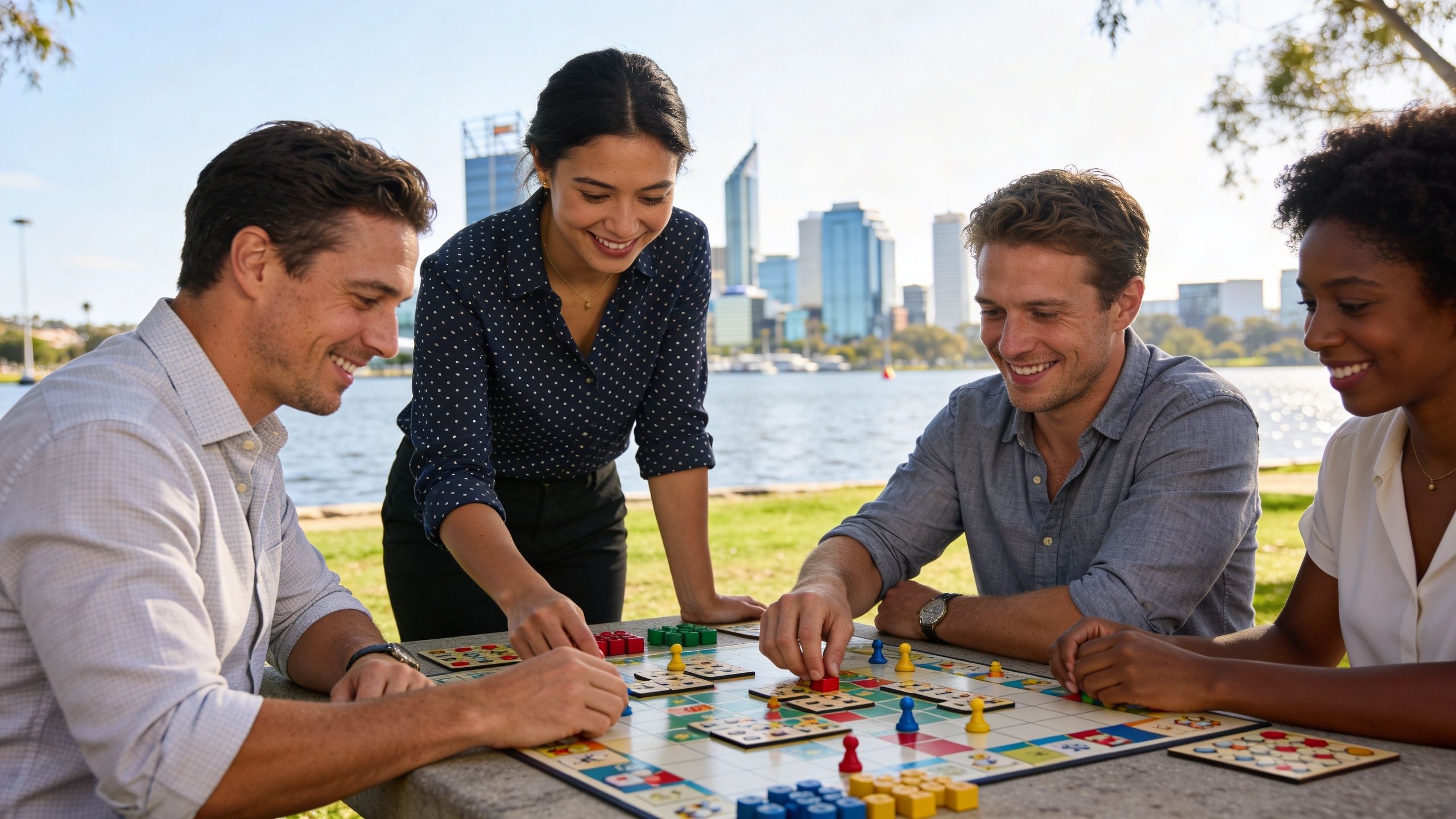
When trust needs rebuilding
Some teams need a format that reduces defensiveness rather than increasing pressure.
Charity-based and collaborative build programs often work well here because they redirect attention away from internal status and toward a shared task with visible meaning. A program such as Bikes for Tykes, Toys for Tykes or Give a Dog a Home can help teams connect through contribution, especially when the group has been through change, restructure or sustained workload pressure. The purpose gives people something to work on together without forcing emotional disclosure.
A quieter group may also respond better to creative problem-solving formats such as LEGO Legends or Out of the Box, where people can test ideas, negotiate roles and contribute visibly without the intensity of direct competition.
When energy has gone flat
Other groups don’t need caution. They need movement.
For teams that feel stale or mentally fragmented, active programs can reintroduce pace and shared momentum. Formats such as Survivor, Mini Olympics, PlayOffs, Great Race or AppVenture can work well for Perth offsites because the city’s parks, foreshore areas and outdoor venues support high-participation experiences without making the day feel overly formal.
This category suits CBD teams stepping out of conference rooms, annual kick-offs that need an energy lift, and departments that already have decent rapport but need a reset in tempo.
The right active event doesn’t just tire people out. It changes the emotional temperature of the group.
When teams need fresh thinking
Some teams are cooperative enough, but they’ve become predictable. The issue isn’t tension. It’s habit.
That’s where creative and problem-solving activities can be productive. Formats like Project Runway, Art in a Day, Safe Crack, or Mission Impossible can create different patterns of contribution, especially for teams that need more innovation, broader participation or less reliance on the same loud voices. These experiences often surface strengths that don’t show up in normal meetings.
A useful way to frame the choice is through business objective rather than activity type, which is why team building should align with business objectives.
| Team objective | Useful format style | Perth planning fit |
|---|---|---|
| Rebuild trust | Charity or collaborative creative formats | Conference venue, indoor function room, offsite retreat |
| Lift energy | Active challenge or outdoor team competition | Kings Park, foreshore, large outdoor venue |
| Improve communication | Problem-solving or mixed-team challenges | Indoor venue, conference breakout, CBD event |
| Increase cross-team interaction | Rotating team formats with interdependence | Large group offsite, conference, multi-team gathering |
For regional WA teams, the same logic applies. The activity may change according to travel, venue access and weather, but the state-based selection method still holds.
Measuring the Lasting Impact of Your Investment
A successful team day shouldn’t be judged by applause at the end of the session.
Leaders need a way to separate immediate enthusiasm from actual change. Otherwise the event gets remembered as “a good day” without any clear view of whether it improved the way people work together afterward.

A simple measurement stack
The most defensible approach is a before, after and follow-up model. Guidance on measuring team-building impact recommends a pre-event baseline, an immediate post-event pulse, and a 4–12 week follow-up to test whether behavioural change has lasted, as explained in this framework for proving the success of corporate team-building activities.
That structure is more useful than relying on post-event sentiment alone because early reactions often reflect novelty, relief or social energy.
A practical version looks like this:
-
Before the event: ask a small set of benchmark questions about trust, connection and collaboration.
-
Right after the event: repeat the same questions while the experience is still fresh.
-
In the following weeks: compare those responses with behavioural signs in the team’s normal workflow.
-
At follow-up: check whether the shift held once routine pressure returned.
What to track after the event
Not every organisation will use the same metrics, but the strongest choices are usually observable.
-
Participation signals: who opted in, who engaged, and whether quieter people entered the room more fully than usual.
-
Collaboration patterns: whether more people are interacting across functions or outside usual reporting lines.
-
Communication quality: whether meetings become clearer, more balanced or easier to move through.
-
Follow-through: whether the event created behaviours that show up again in work, not just in feedback forms.
The most persuasive ROI story is rarely “people loved it.” It’s “people worked differently afterward.”
That’s also where event design and logistics intersect. Perth organisers often need weather-friendly options, venue flexibility and facilitation that can adapt in the moment without losing the intended outcome. When those pressures are managed well, internal teams can focus on observation, stakeholder reporting and the ROI of play rather than scrambling over operational details.
Frequently Asked Questions for Perth Event Planners
How far ahead should a Perth team event be booked
As early as practical is usually the safest answer, especially for conference season, end-of-year events, leadership offsites and outdoor formats that require permits or venue coordination.
Booking early gives organisers more choice around date, format, location and weather back-up. It also creates more room to tailor the experience to the team’s needs instead of selecting from what’s still available. For regional WA teams, early planning becomes even more important because travel, accommodation and transport windows can tighten quickly.
Are outdoor formats practical in Perth
Yes, if they’re planned properly.
Perth is naturally well suited to outdoor corporate programs, but that doesn’t mean every team should default to a park-based challenge. Outdoor delivery works best when the organiser has thought through shade, movement demands, timing, accessibility, travel between points, and a clear wet-weather or heat-management alternative. CBD teams often benefit from nearby options that minimise transport friction, while larger offsites may suit broader open spaces with room for multiple activity zones.
A sensible brief asks two questions at once: does the team need the energy of an outdoor environment, and can the event still run smoothly if conditions change?
What works for mixed mobility or mixed confidence groups
The strongest programs don’t assume everyone wants the same level of physicality, competition or visibility.
For mixed groups, organisers should look for formats that allow contribution in different ways. That may mean balancing movement with strategy, building in rotating roles, or choosing collaborative tasks where success depends on planning, creativity and communication as much as speed. Inclusive design matters because people disengage quickly when they feel the format favours one type of participant.
A useful shortlist often includes:
-
Creative formats: suitable when the group needs lower pressure interaction and broader participation.
-
Problem-solving programs: effective when the organiser wants structured collaboration without heavy physical demand.
-
Charity events: often strong for mixed groups because the shared purpose shifts attention away from individual performance.
-
Custom-designed sessions: helpful when the team includes a wide spread of personalities, functions or access needs.
Can team bonding work for conference groups
It can work very well, provided it fits the conference rhythm.
Conference teams usually don’t need a long, open-ended social break. They need a high-participation session that resets attention, creates interaction between tables or departments, and reinforces the broader message of the event. Indoor formats, short active energisers, large-group challenge experiences and purpose-led conference builds can all work when they’re integrated into the day rather than treated as an afterthought.
For Perth conferences, practical fit matters. Room layout, bump-in timing, AV requirements, delegate movement, and the transition from plenary to activity all affect whether the session feels fluid or awkward.
How should success be reported internally
The cleanest way is to report against the original objective, not against generic enjoyment.
If the event was designed to improve cross-team interaction, report on signs of increased collaboration. If the priority was renewed energy after a heavy period, report on participation, engagement and observed team behaviour. If the need was trust or openness, use simple benchmark questions before and after, then note what changed at follow-up.
A concise internal summary usually works better than a long narrative. It can include:
| Reporting area | What to include |
|---|---|
| Event objective | The team state the session was designed to support |
| Participation | Attendance, engagement level, and any inclusion observations |
| Immediate response | Short pulse feedback on connection, trust or energy |
| Follow-up observations | Behaviour changes seen in the following weeks |
| Recommendations | Whether to repeat, extend or redesign the approach |
That style of reporting helps leadership see team bonding as an intentional workplace investment rather than a discretionary perk.
For organisations planning team bonding activities Perth, Corporate Challenge Events provides play-based corporate programs across Perth and wider WA, including indoor, outdoor, charity, conference, creative, problem-solving and custom formats, with end-to-end event coordination and professional facilitation shaped around team outcomes rather than generic activity lists.