
A lot of workplace leaders are in the same spot right now. The team needs an event that lifts energy, supports culture, and feels worth the budget, but another generic offsite or social catch-up won't do much beyond filling a calendar slot.
That's where charity team building programs stand out. Done well, they give people a reason to engage beyond attendance. The team builds, cooks, packs, pitches, solves, and contributes together, and the outcome goes somewhere real. For People & Culture teams, EAs, office managers, and CSR leads, the decision isn't whether a charity event sounds nice. It's which format is right for the team in front of them.
Table of Contents
What Is Charity Team Building
The best definition is simple. Charity team building is a facilitated team experience where participants work together to create, build, cook, pack, pitch, or complete something that benefits a charity or community partner.
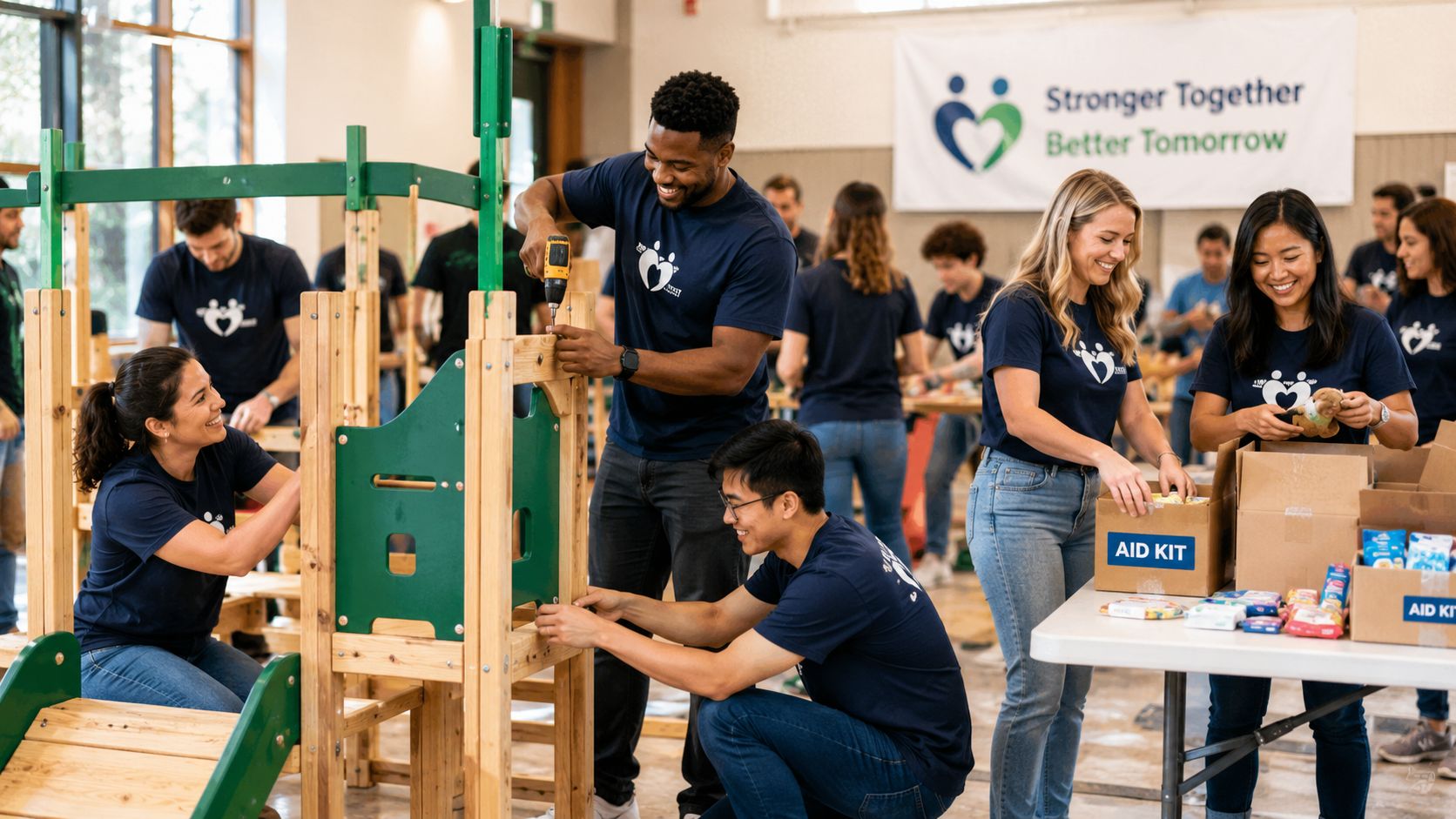
That makes it different from a simple volunteer day. A well-designed corporate charity team building experience has structure, facilitation, shared challenges, and a clear end result. Teams aren't just turning up to help. They're collaborating under time, resource, or creative constraints, which gives the event genuine team development value alongside the donation outcome.
For workplace leaders, that distinction is important. A standard social event may create a pleasant few hours. A structured team building for charity experience can strengthen communication, problem-solving, trust, and shared ownership while also serving a community need. It works particularly well when the event is planned with the same care given to any strategic offsite, conference breakout, or culture initiative. Teams already focused on planning business events effectively usually recognise this quickly. Purpose and logistics need to work together.
What the format usually includes
Most charity team building activities combine four practical elements:
A team challenge: building bikes, assembling toys, cooking meals, creating care packages, or developing a fundraising concept.
A real beneficiary: a charity, community organisation, or cause with a clear need.
Facilitated interaction: tasks that require teams to communicate, make decisions, and contribute together.
A visible outcome: donated goods, prepared meals, assembled items, raised funds, or a completed concept with community value.
Practical rule: If the activity creates team connection but no clear beneficiary outcome, it's not charity team building. If it helps a cause but gives the team no shared challenge, it's not strong team building.
Leaders looking for a more detailed view of how these experiences translate into workplace outcomes can also explore the real impact of charity team building.
Why Charity Team Building Is a Worthwhile Investment
A charity event earns its place in the calendar when it gives the team something more than a break from work. The strongest programs create shared purpose, which is often what standard team activities struggle to deliver. People don't just remember the fun. They remember what they made, who it helped, and how the team worked together to get there.
That's one reason these programs often support positive team culture better than passive experiences. They create a reason for different personalities to contribute. Practical thinkers can build. Organised people can coordinate. Creative contributors can shape ideas and presentation. The social value of the activity helps the whole group feel that the work mattered.
Why the model fits the Australian workplace context
There's also a strong Australian foundation for this kind of format. In Australia, workplace volunteering has a strong base, with the Australian Bureau of Statistics reporting 3.3 million people volunteering through an organisation in 2020 via this summary of team building statistics. That established civic habit gives charity team building a level of credibility. It aligns with something many Australians already see as normal and worthwhile.
The charity sector itself is also structured enough for this to be more than a symbolic gesture. Australian charity regulation and donor expectations have pushed organisations to think more carefully about transparency, trust, and meaningful contribution. Leaders considering a program often benefit from understanding the same principles that shape Fundl's approach to donor trust, especially when choosing causes, handling donations, and communicating outcomes internally.
What leaders should expect from the investment
A worthwhile charity team building program should deliver in two directions at once:
Inside the business: stronger connection, better communication, visible collaboration, and a lift in morale
Outside the business: a tangible contribution that a charity partner can use
That dual outcome is what makes the format stronger than a standard morale event. It also gives leadership teams a more practical story to tell when budgets are under scrutiny. Rather than defending a social activity, they're backing a culture initiative with a visible community benefit.
A useful test is whether the event can be described in one sentence without sounding vague. “The team built bikes for children” is clear. “The team had a meaningful day together” is not.
There's another reason this matters for decision-makers. Australian CSR conversations increasingly focus on proving value, not just reporting participation. That's especially relevant for leaders trying to connect team engagement to a broader people strategy. Resources on the ROI of play can help frame why shared challenge, contribution, and active participation often produce stronger outcomes than passive entertainment.
A Comparison of Charity Team Building Programs
Not all charity team building programs create the same kind of experience. Some are practical and hands-on. Some are playful and creative. Some work best for energetic groups, while others suit mixed audiences, conference settings, or teams that prefer lower physical intensity.
The best choice usually depends on five things: the type of connection the team responds to, the cause they care about, the room setup, the level of energy wanted, and what kind of end moment should stay with them after the event.
Charity Team Building Program Comparison
| Program | Best for | Energy level | Team skills practised | Community impact | Best setting |
|---|---|---|---|---|---|
| Bikes for Tykes | Teams wanting hands-on collaboration, problem-solving and a strong donation outcome | Medium to high | Collaboration, problem-solving, coordination, communication | Built bikes donated to children | Indoor function space, conference breakout, large team event |
| Lego Legends | Creative teams, playful groups and teams wanting a lighter program | Medium | Creativity, collaboration, idea sharing, communication | LEGO models donated to a children's charity | Indoor event space, conference session, mixed-energy groups |
| Give a Dog a Home | Animal-loving teams wanting an emotional, hands-on build | Medium | Teamwork, coordination, practical problem-solving | Kennels donated to dogs in need | Indoor or covered outdoor space |
| Flat Pack Frenzy | Teams that enjoy practical problem-solving and useful build tasks | Medium | Communication, planning, collaboration, task management | Furniture or useful items built for families in need | Indoor event venue, offsite, conference breakout |
| Charity Chef | Teams that connect through food, creativity and shared effort | Medium | Coordination, creativity, teamwork, time management | Meals or dishes donated to a worthy charity | Commercial kitchen venue or suitable catering environment |
| Out of the Box | Socially responsible teams wanting practical support for Australians doing it tough | Medium | Collaboration, problem-solving, shared decision-making | Essential items earned through teamwork and donated | Indoor conference venue, office, offsite |
| Toys for Tykes | Teams wanting strategy, creativity and a tangible build for children | Medium | Strategy, collaboration, creativity, communication | Toys built and donated to children | Indoor event space, conference session |
| Par for a Cause | Teams wanting inclusive participation and friendly competition | Low to medium | Coordination, communication, light competition, teamwork | Charity-linked activity outcome | Indoor or outdoor venue |
| Fill It | Teams that thrive on strategy, time pressure and creative thinking | High | Strategy, prioritisation, collaboration, fast decision-making | Trailer filled with donated goods | Large indoor or outdoor space |
| Karts for Hearts | Energetic teams that enjoy building, pitching and competition | High | Innovation, collaboration, presentation, build execution | Billy karts created for charity outcome | Large indoor venue or outdoor event space |
| Play It Forward | Confident, outgoing teams ready for public engagement and fundraising | High | Communication, initiative, confidence, teamwork | Funds or support generated through direct engagement | CBD, urban precinct, outdoor activation |
| The Pitch | Teams that enjoy innovation, planning and presenting | Medium | Strategy, planning, pitching, creative thinking | Fundraising event concepts created for charity | Indoor conference venue, workshop room |
The strongest use of a comparison like this is to match program design to the team's real behaviour, not the aspirational version of it. A quiet leadership group may say they want something high energy, but if the room usually engages through discussion and ideas, a concept-driven format such as The Pitch may land better than a competitive build challenge.
What stands out across the program mix
Three patterns usually shape the decision.
First, build-based programs such as Bikes for Tykes, Give a Dog a Home, Flat Pack Frenzy, Toys for Tykes, and Karts for Hearts suit teams that bond through practical action. They put collaboration in plain sight. People can see who organises, who solves, who supports, and who keeps the group moving.
Second, creative and concept-led programs such as Lego Legends and The Pitch work well when the team prefers imagination, idea sharing, and lighter emotional pressure. These formats can be especially useful in conference settings where attention is already stretched and leaders want broad participation without making the room feel forced.
Third, CSR-driven formats such as Out of the Box, Fill It, and Play It Forward lean more heavily into visible community contribution. For some organisations, that direct line to impact is the priority.
Teams usually engage better when the charity outcome feels concrete. “We built this” or “we earned this” is stronger than a vague sense of having supported something worthwhile.
Leaders who need a broader lens on fit can also compare event formats against organisational goals through resources on team building programs tailored to your organisation.
How to Choose the Right Charity Program for Your Team
The wrong way to choose a charity event is to ask which activity sounds the most fun in isolation. The better question is which format will create genuine connection for this team, in this setting, with this amount of time and budget.
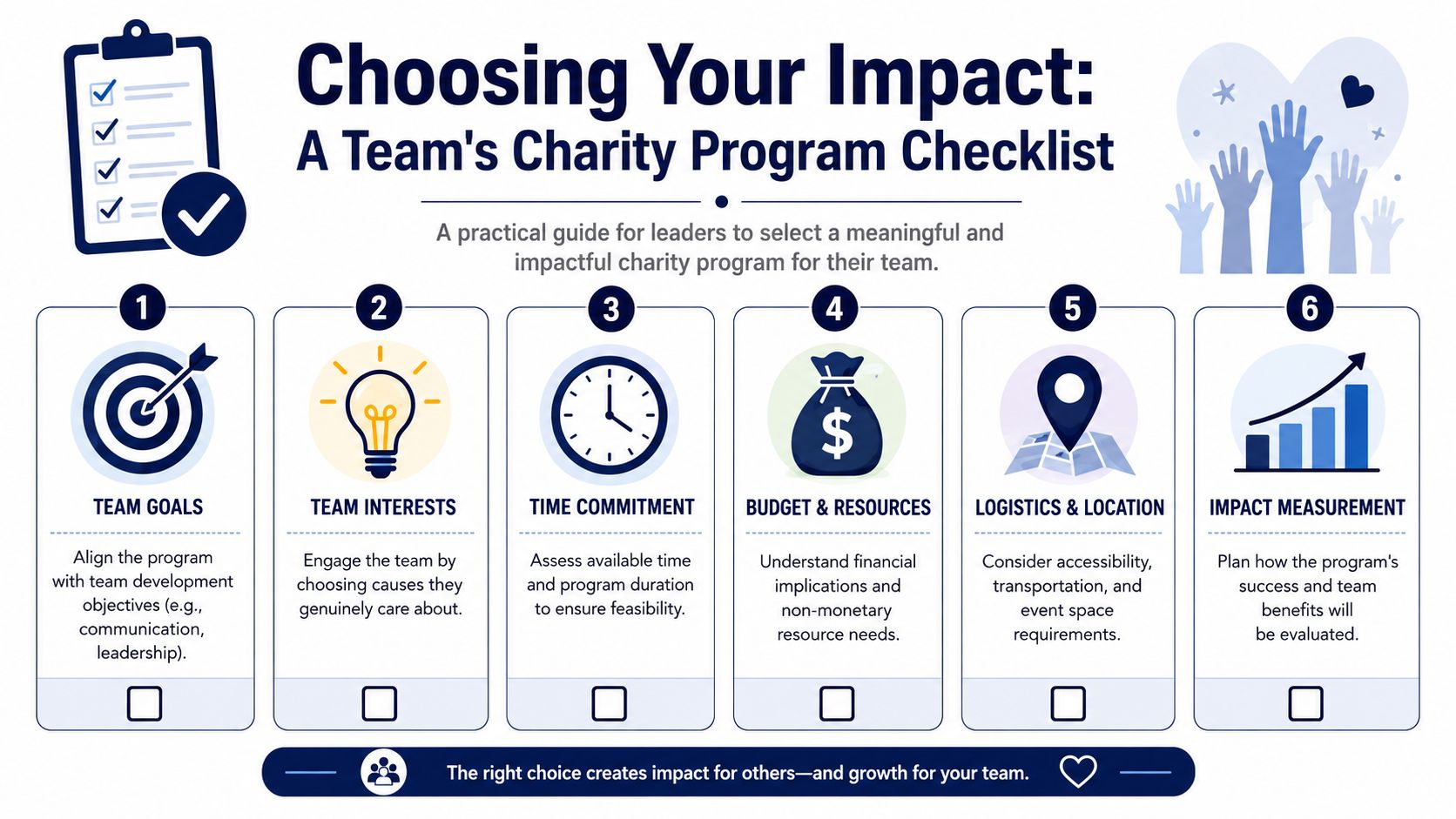
Australian CSR commentary has increasingly pushed leaders away from generic volunteer days and toward shorter, structured formats that are logistically realistic, especially for metro and regional teams managing time, access, travel, and budget constraints, as discussed in this overview of meaningful charity team building in Australia.
Start with the team outcome
A practical selection process starts with the internal goal.
If the priority is hands-on collaboration, build-based programs usually perform best. Bikes for Tykes, Give a Dog a Home, and Flat Pack Frenzy all require visible cooperation and shared execution.
If the team needs creativity, lighter invention-based formats often create better buy-in. Lego Legends gives people room to think playfully, while The Pitch suits teams that enjoy concepts, planning, and presenting.
If leadership wants friendly competition, look at Par for a Cause, Karts for Hearts, or Fill It. Those programs create momentum through challenge and comparison, which works well for sales teams, conference groups, and high-energy functions.
Then check the practical constraints
Once the desired team outcome is clear, the operational side usually narrows the field quickly.
Indoor or outdoor format: Par for a Cause can flex more easily across settings, while Play It Forward depends more on external environment and public interaction.
Large group suitability: Bikes for Tykes, Lego Legends, Out of the Box, and Toys for Tykes generally suit broader participation because they can be structured in multiple teams.
Emotional tone: Give a Dog a Home has a strong emotional link for animal-loving teams. Charity Chef creates warmth and shared effort. Fill It and Karts for Hearts feel more driven and competitive.
Cause alignment: Children's charities often pair naturally with Bikes for Tykes, Toys for Tykes, and Lego Legends. Animal welfare connects directly with Give a Dog a Home. Community support and practical relief fit Out of the Box and Flat Pack Frenzy.
The best-fit program is usually the one that matches both the team's energy and the organisation's intent. Strong alignment removes the awkwardness that can sit over poorly chosen CSR events.
One more filter is worth using. Ask what the room is likely to remember a week later. The strongest programs leave a distinct memory. It might be the bike reveal, the kennel handover, the meal preparation, the trailer-filling pressure, or the final pitch presentation. Distinct moments create stronger stories inside the business.
For leaders who also need to match event design with broader values and social impact priorities, guidance on choosing a charity partner that aligns with your CSR framework can sharpen the decision.
The Role of Play in Meaningful Team Building
Play is often misunderstood in workplace settings. In strong charity team building, it isn't decoration and it isn't a distraction from the purpose. It's the mechanism that helps people participate more openly, collaborate more naturally, and contribute without the stiffness that often sits over formal CSR activity.
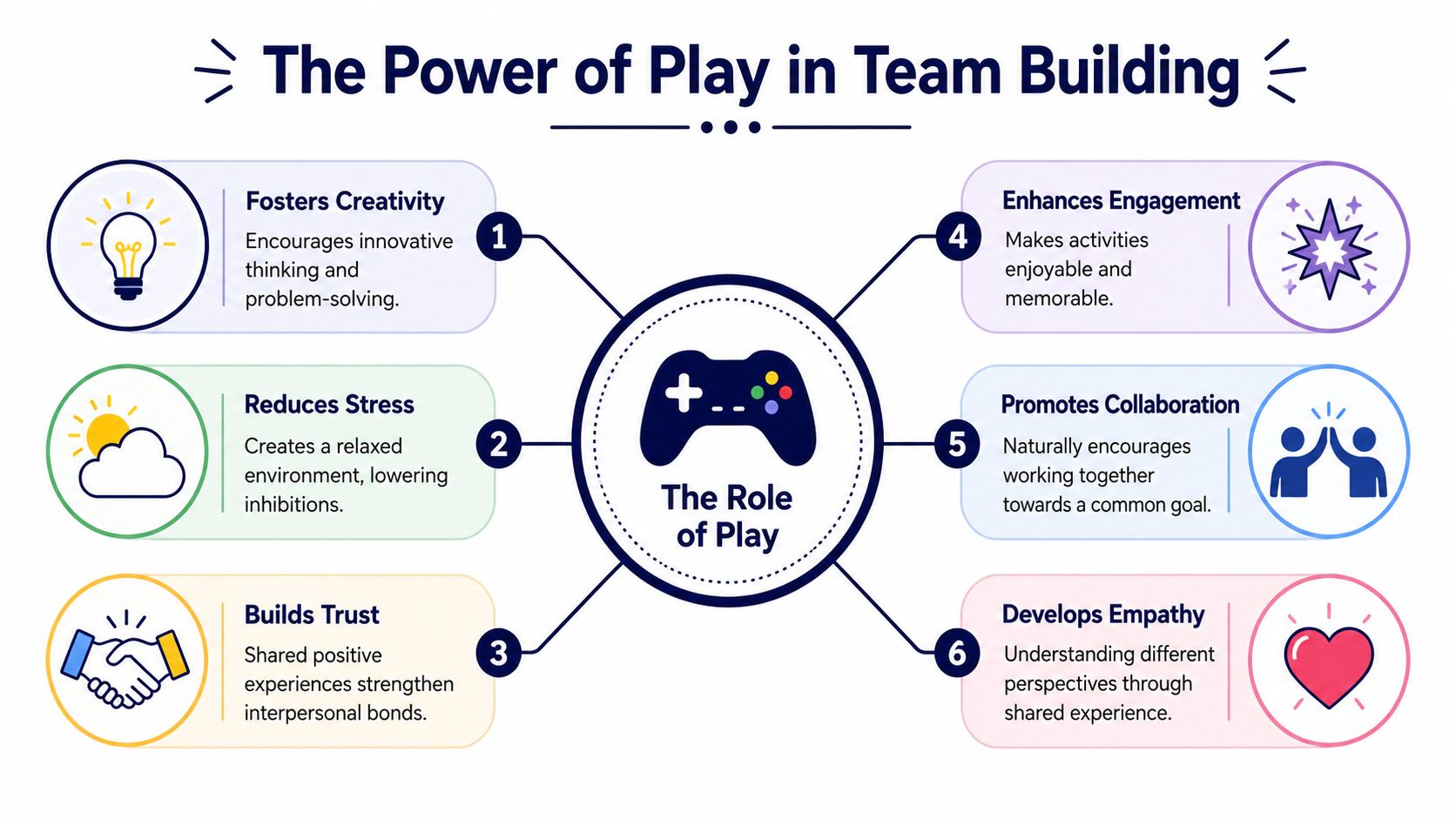
A playful format lowers barriers. People who may stay quiet in a workshop tend to engage more readily when the task has movement, challenge, invention, or friendly rivalry built into it. That changes the feel of the contribution. Instead of a transaction, the experience becomes shared effort.
Why play improves the quality of the event
This is particularly useful when leaders need to prove that a program had value beyond attendance. Australian CSR commentary has identified measurement and proving impact as a major challenge, and notes that play-based approaches can help by generating stronger engagement and more observable teamwork, as outlined in this discussion of charity team building and impact measurement.
That gives organisers more to work with after the event. They can observe communication patterns, leadership behaviours, inclusion, initiative, creativity, and problem-solving in real time. Those observations are more useful than a simple headcount.
Play as performance infrastructure
In practice, play works best when it supports the cause rather than competing with it. The challenge should help the team care more, not less. It should increase participation, not create noise for its own sake.
That's why the best play-based charity formats don't feel trivial. They feel purposeful, social, and memorable. Leaders interested in that broader philosophy can explore play with purpose, particularly when the goal is to connect culture, contribution, and team performance in the same experience.
Create Lasting Impact With Your Next Team Event
The strongest charity team building programs create a clear three-way benefit. The team connects through shared challenge. The organisation strengthens culture and purpose. The community partner receives something useful, visible, and real.
That outcome doesn't come from picking the most popular-looking activity. It comes from choosing the format that fits the team's actual needs. Some groups need a practical build. Some need creative problem-solving. Some respond to competition. Others engage best through food, public interaction, or a grounded CSR task with obvious local relevance.
For People & Culture leaders, EAs, office managers, and CSR leads, the decision is usually clearer when a few filters are applied early. What skills should the event practise. What cause will the team care about. What level of energy suits the room. What kind of impact should the team be able to point to afterwards.
When those choices are made well, charity team building activities stop feeling like a one-day gesture. They become part of how a workplace builds connection, contribution, and positive team culture at the same time.
Corporate Challenge Events delivers charity team building programs across Australia and New Zealand, helping teams connect, contribute and create lasting impact through play based team building.