
Most organisations don't have a meeting problem. They have a communication system problem.
Agenda templates, tighter stand-ups and new meeting rules can help, but they rarely fix the harder issue underneath. Teams struggle when people don't share the same norms for feedback, conflict, listening, participation and decision-making. In hybrid environments, the gap gets wider because communication now happens across chat, email, meetings and asynchronous tools, not in one room. Research cited for Australian workplaces also points to a practical blind spot: many employees want hybrid work arrangements, yet team guidance often underplays the need for explicit channel rules, response expectations and meeting etiquette across dispersed teams (Niche Academy on the communication gap in hybrid teams).
That is why communication skills in team settings shouldn't be treated as a one-off workshop topic. They need structure, shared language and repeated practice. For leaders, the strongest results usually come from combining frameworks, tools and facilitated experiences that let people test better habits in a low-risk environment.
A useful starting point is to pair formal communication development with stronger internal operating habits, such as the practices outlined in Cloud Present's guide to B2B communication. From there, the focus should shift from better meetings to better behavioural design.
Table of Contents
5. Miro digital collaboration and visual communication platform
8. Team communication charter template and facilitation guide
1. Nonviolent Communication by Marshall B. Rosenberg

Nonviolent Communication is one of the few resources that helps teams improve the quality of what they say, not just the efficiency of when they say it. Many teams can move work quickly while still leaving resentment, ambiguity and defensiveness behind them.
Rosenberg's framework pushes people away from judgement-heavy language and toward observations, feelings, needs and requests. In a sprint retrospective, that changes the tone from “operations never supports delivery” to a far more workable conversation about where handovers failed and what support was missing.
Where it works best
This book is strongest in organisations where feedback has become cautious, passive-aggressive or overly sharp. It gives managers and team members a practical script for conversations that often go wrong because people confuse interpretation with fact.
Australian employers repeatedly rank written communication, active listening and verbal clarity among the most critical workplace skills for collaboration, according to employer-focused commentary collected in WVU Marketing Communications Today on key workplace skills. NVC aligns well with that need because it strengthens listening and clarity at the same time.
Practical rule: Don't introduce NVC during the most politically charged issue on the team. Start with lower-stakes conversations so people learn the language before pressure rises.
A manufacturing team dealing with tension between production and procurement can use NVC in workshop exercises before applying it to live disputes. That sequence usually works better than asking people to suddenly become more empathetic in the middle of a deadline blow-up.
What leaders often get wrong
The common mistake is rolling this out as a “be nicer” initiative. That weakens it immediately. NVC is useful because it improves precision. It helps teams separate facts from assumptions, requests from demands, and emotion from accusation.
Play-based sessions can support that learning well. Low-stakes problem-solving activities give quieter or more cautious team members room to practise phrasing requests, naming friction and listening without preparing a defence.
2. Crucial Conversations by Kerry Patterson et al.
Some communication failures don't happen because people lack empathy. They happen because stakes rise, emotions spike and nobody knows how to stay in dialogue. That's where Cruical Conversations earns its place.
The book is practical, structured and built for moments leaders usually avoid until the damage is visible. A manufacturing supervisor raising a safety concern with a defensive peer. A leadership group arguing over priorities while pretending to agree. A customer service manager trying to address poor behaviour in a high performer. These are the situations where teams either retreat into silence or push into aggression.
Why this resource travels well across organisations
Crucial Conversations is useful because it gives leaders a repeatable process rather than abstract advice. It helps people notice when safety has dropped in a conversation and what to do next. That makes it especially helpful for managers who need to coach performance, address conflict or challenge a colleague without escalating the issue.
For teams already dealing with recurring friction, formal support can help reinforce the method. A structured conflict resolution training approach can complement the book by giving teams a live setting to practise difficult exchanges before they return to daily pressures.
Teams don't need more encouragement to “speak up” if they haven't learned how to do it without triggering defensiveness.
The trade-off to understand
This resource can feel formulaic if leaders apply it mechanically. Staff can spot a scripted conversation a mile away. The strongest use is to treat the framework as scaffolding, not performance.
A good implementation pattern looks like this:
Build trust first: Use facilitated activities or offsite exercises before asking people to tackle entrenched issues.
Create peer accountability: Pair managers or team leads to debrief difficult conversations after they happen.
Revisit language in real meetings: Use team check-ins to ask whether dialogue stayed open when stakes rose.
That last step is where communication skills in team environments either stick or disappear. If the framework only lives in the book, it won't survive the next hard conversation.
3. Belbin Team Role Assessment and Development Program
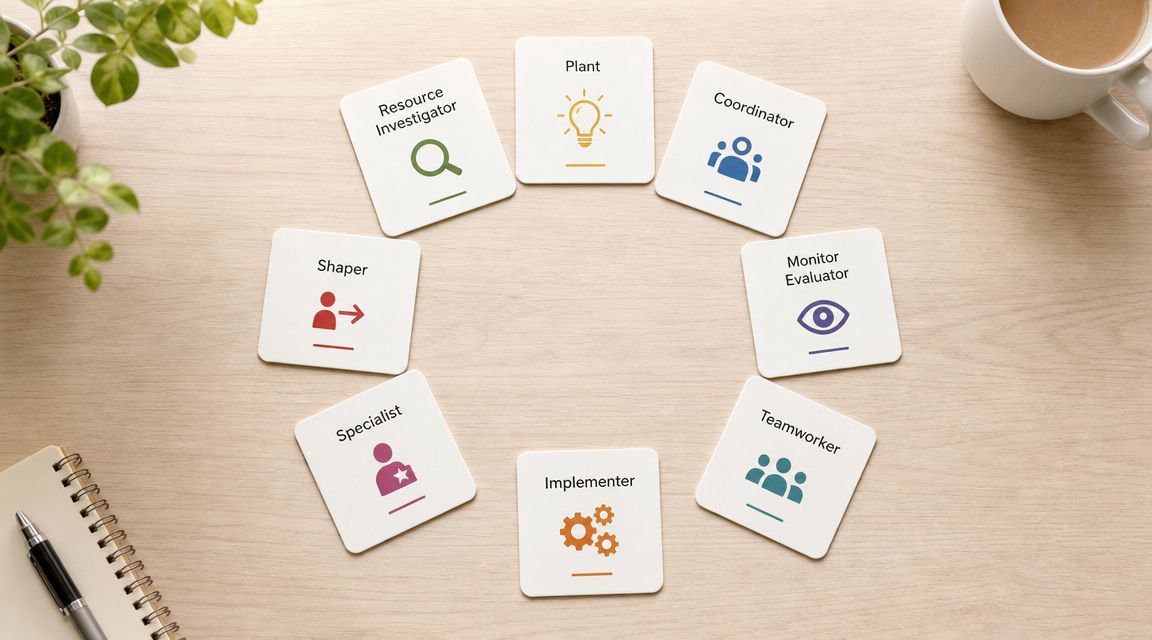
Many teams describe communication problems that are role-friction problems. One person pushes for speed, another wants more analysis, a third is trying to keep the group cohesive, and everyone thinks someone else is being difficult. Belbin helps teams name those patterns without making the discussion personal.
That is the practical value of the assessment. It reframes tension as a difference in contribution style, not evidence of low commitment or poor attitude. A project team can use Belbin insights to decide who should shape early ideas, who should test assumptions and who should drive implementation once decisions are made.
Better language for team differences
Belbin works well in executive teams, project groups and cross-functional environments where people regularly misread each other's intent. A Coordinator may think a Shaper is too forceful. A Monitor Evaluator may be seen as negative when they're reducing risk. Once those patterns are visible, meetings become easier to manage because leaders can match communication methods to team roles.
That is also why this works well alongside practical team challenges. Activities designed to test communication with DOPE can bring those role differences to the surface in a more observable way than a discussion alone. People see how they communicate under pressure, not just how they describe themselves.
Where leaders misuse assessments
The risk with Belbin is typecasting. Teams sometimes use role language as an excuse. “That's just the Shaper in me” isn't development. It is avoidance.
A better approach is to use the assessment as a communication map:
Assign work with intent: Match meeting roles and project responsibilities to contribution strengths.
Debrief visible moments: After a workshop or team event, discuss how each role helped or hindered the group.
Keep the language developmental: Focus on contribution, blind spots and adaptation, not labels.
4. The Culture Code by Daniel Coyle
Culture is often discussed as if it sits above daily communication. In practice, communication is how culture becomes visible. The Culture Code is valuable because it brings that idea down to behaviour.
Coyle's work is especially useful for leaders who already know their team has smart people and decent processes, yet still sees hesitation, guarded feedback or uneven participation. The core message is simple. Groups perform better when people feel safe to contribute, when vulnerability is modelled, and when purpose is made explicit often enough that it shapes everyday choices.
What this changes in a workplace
Leaders can read this book and immediately audit team habits. Who speaks first in meetings. How mistakes are discussed. Whether junior staff can challenge an assumption. Whether a remote participant gets the same invitation to contribute as someone sitting beside the manager.
The inclusion angle is often missing from standard communication advice. Guidance on team communication increasingly points to the need to respect cultural norms around directness, hierarchy and conflict, and to allow processing time for people who need longer before speaking, as noted in Culture Partners on essential team communication skills. That makes The Culture Code especially relevant for multicultural and mixed remote-in-person teams.
A team doesn't become candid because the leader asks for honesty. It becomes candid when people see that speaking up won't cost them status.
Pairing the book with team development
This title works best when leaders connect it to observed behaviour. A team offsite, simulation or challenge can create exactly that material. When a group experiences uncertainty, time pressure or uneven information, leaders can debrief what happened through a culture lens rather than a task lens.
A useful companion is this guide to high-performing team characteristics, which helps translate broad ideas about trust and performance into team norms leaders can reinforce.
The trade-off is that this book inspires more than it instructs. It gives a strong lens, but not a complete operating system. Leaders usually need another framework or facilitation process to turn its ideas into repeatable routines.
5. Miro digital collaboration and visual communication platform
Miro solves a modern communication problem that many leaders still underestimate. In hybrid and distributed teams, the loudest voice in the room often wins unless the process is designed differently.
A visual workspace changes that. Instead of relying on whoever speaks first or fastest, teams can contribute ideas in parallel, cluster themes, vote transparently and leave a visible trail of how a decision formed. That makes Miro particularly helpful for retrospectives, planning sessions, service design and cross-functional workshops where alignment matters more than presentation polish.
Why visual communication improves participation
Miro is often at its best with quieter contributors, newer employees and remote participants who might hesitate to interrupt in a live meeting. A digital board creates more than documentation. It creates another route into the conversation.
For many teams, that's a practical answer to inclusion. Rather than telling people to “speak up more”, leaders can design a session where written contribution, silent ideation and visual grouping carry equal weight. That is often a fairer way to improve communication skills in team settings than relying on verbal confidence alone.
The platform is also useful after live events. Facilitators can capture outcomes from team challenges, map communication norms, and turn workshop discussions into visible commitments. For leaders comparing collaboration channels more broadly, this overview of Zoom vs Microsoft Teams vs Webex can help place Miro within a wider hybrid communication stack.
The limitation leaders need to see
Miro won't rescue an unclear meeting. It can make confusion more permanent if the question, decision rule or facilitation is weak.
Use it well by keeping a few rules in place:
Define the decision before the board opens: Teams need to know whether they're brainstorming, prioritising or deciding.
Set contribution protocols: Explain when people write individually, when discussion starts and how decisions will be made.
Turn boards into working artefacts: Revisit them in follow-up meetings so they don't become digital wallpaper.
6. Retrospective activities and run-of-show templates
Not every team needs another communication theory. Many need a reliable forum where they can say what worked, what didn't and what needs to change without turning the review into blame. Retrospective formats do that well.
Start-Stop-Continue, Sailboat, Glad-Sad-Mad and Rose-Thorn-Bud are simple on the surface, but their value lies in rhythm. They give teams a repeatable structure for reflection, which is often what's missing after projects, events and busy delivery cycles. A service team can use a retrospective to trace where client communication broke down. A project team can surface unclear handovers. A cross-functional group can finally compare how each department experienced the same initiative.
Why this is more than an agile habit
Retrospectives are useful well beyond software teams. They work anywhere a group needs to learn together. The key is to keep the format blameless and action-oriented.
That is where event discipline helps. A clear run of show template for events can complement retrospective practice by making responsibilities, timings and communication handoffs visible before the work begins. Teams that plan clearly and review openly tend to improve faster than teams that do one without the other.
How to avoid the usual failure pattern
The common failure isn't poor facilitation. It is producing honest insight and then doing nothing with it.
A stronger pattern looks like this:
Choose the format to fit the team: Simpler structures suit lower-trust groups. More expressive formats work once candour is established.
Capture actions visibly: Use a shared document or digital board that survives beyond the meeting.
Rotate facilitators: That builds communication ownership across the team rather than concentrating it in one manager.
Australian skills policy has also shifted toward structured capability building. The National Skills Agreement agreed on in 2023, backed by up to A$12.6 billion in Commonwealth funding over five years, according to Pumble's communication statistics summary. In the same source, effective communication is associated with productivity gains of up to 20–25% in well-connected teams. Retrospectives fit that shift because they treat communication as an operational capability, not an assumed interpersonal trait.
7. The Communication Skills Workshop
A workshop still has value, despite the backlash against one-off training. The problem isn't the workshop format itself. The problem is poor transfer.
A good communication workshop gives teams guided practice in listening, feedback, assertiveness, conflict handling and non-verbal awareness. A poor one stays abstract, uses generic examples and sends people back to work with no rehearsal under realistic pressure. For leaders choosing training, that difference matters more than the title on the session.
What strong facilitation looks like
The most effective workshops use real workplace scenarios. A sales team practises discovery conversations. A People & Culture group rehearses difficult employee discussions. A department leadership team works through unclear delegation, competing priorities or cross-functional friction.
Expert guidance on communication training also points leaders toward outcomes that show friction is dropping, such as fewer clarification loops, faster decision cycles and stronger coordination across departments, as outlined in Pragmatic Institute's workplace communication guidance. That is a better benchmark than asking participants whether they enjoyed the session.
For practical reinforcement, this article on five tips to communicate effectively in the modern workforce provides a useful companion to workshop delivery.
The workshop should never be the intervention. It should be the rehearsal space for behaviours the team is expected to use next week.
What makes the learning stick
Workshops hold better when leaders add three things: psychological safety before the session, practice immediately after it, and follow-up conversations with managers. That's where facilitated team building can help. If people already trust the room, they'll take more risks in role-play and feedback exercises.
A customer service team, for example, may practise de-escalation in the workshop, then test listening and clarity under light competitive pressure in a team challenge, then review the behaviours together. That sequence turns training into applied learning rather than a content event.
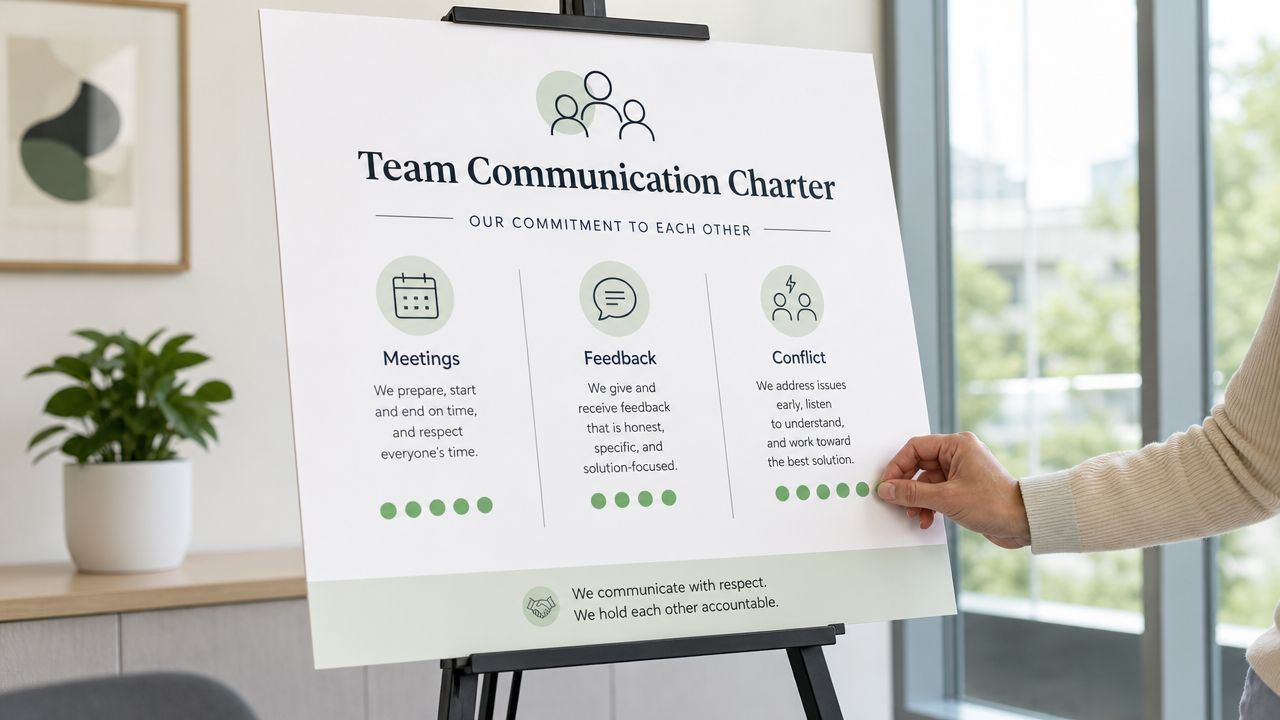
8. Team communication charter template and facilitation guide
If one resource in this list gets implemented immediately, it should be the team communication charter. Most communication breakdowns are not caused by bad intent. They come from unstated expectations.
One manager thinks chat means urgent. Another uses email for everything. One team expects immediate replies. Another protects focus time. In hybrid settings, these differences create friction quickly, especially when nobody has agreed on what belongs in a meeting, what belongs in writing, and how decisions are documented.
The charter as an operating agreement
A strong charter covers channel use, response expectations, meeting etiquette, conflict pathways, decision-making and feedback norms. It doesn't need corporate language. It needs clarity.
This is particularly useful in Australian workplaces where hybrid preference is strong and communication systems now span office, home and dispersed schedules. The point isn't to control every interaction. It is to remove unnecessary uncertainty.
A practical charter process usually works best in stages:
Start individually: Ask each person how they prefer to receive updates, raise concerns and contribute in meetings.
Draft together: Build norms in a live session so the team can debate trade-offs openly.
Refine asynchronously: Let people review wording before finalising the document.
Inclusion and accountability
Charters are also one of the simplest ways to make communication fairer. Leaders can explicitly address interruption, airtime, processing time, remote participation and how junior staff can challenge decisions. That moves the conversation away from “some people need to be more confident” and toward designing conditions where more people can contribute well.
The warning is simple. A charter that sits in a shared drive is just decoration. Review it regularly, refer to it when communication slips, and update it as the team changes. Done properly, it becomes the practical bridge between individual communication skills in team settings and the shared norms that let those skills work.
8-Resource Comparison: Team Communication Skills
| Resource | Core focus | Target audience | Key benefits | Implementation effort & cost | How it complements Corporate Challenge Events |
|---|---|---|---|---|---|
| Nonviolent Communication (Book) | Empathetic dialogue & needs-based communication | Teams seeking deeper psychological safety and conflict resolution | Transforms patterns, reduces defensiveness, improves trust | Low cost (book); Medium effort (practice + coaching) | Deepens post-play conversations; sustains trust built in events |
| Crucial Conversations (Book) | Structured skills for high‑stakes conversations | Teams facing risky or emotionally charged discussions | Clear protocols, builds confidence in difficult talks | Low cost (book); Medium effort (role‑play practice) | Converts playful trust into concrete conflict-handling skills |
| Belbin Team Role Assessment (Assessment & Program) | Role-based self-awareness and team balance | Teams/leadership wanting evidence-based composition insights | Objective profiles, improves role clarity and collaboration | Medium–High cost (assessment + facilitator); facilitator required | Directly offered by CCE; helps design events to leverage strengths |
| The Culture Code (Book) | Building cultural practices that enable safety & belonging | Leaders and culture teams aiming for lasting change | Practical rituals, leader scripts, research-backed tactics | Low cost (book); High effort to change culture sustainably | Explains why play creates safety; guides follow-up rituals after events |
| Miro (Digital Collaboration Tool) | Visual collaboration and inclusive participation | Distributed or hybrid teams needing shared artefacts | Levels participation, documents outcomes, supports async work | Subscription cost (free tier available); Low–Medium learning curve | Preserves and extends event outputs; enables blended follow-up work |
| Retrospective Activities & Templates | Structured reflection and continuous improvement | Agile teams and groups wanting regular reflection rhythms | Variety of formats, action-oriented, community‑tested | Low cost (many free); Low–Medium facilitation skill needed | Turns event insights into regular practice and measurable change |
| Communication Skills Workshop (Facilitated) | Practical practice of core communication competencies | Teams wanting experiential skill development with feedback | Immediate practice, facilitator guidance, tailored scenarios | Medium–High cost; time investment (half/full day) | Provides structured practice that consolidates play-based learning |
| Team Communication Charter Template | Co-created norms and accountability framework | Teams ready to formalise communication expectations | Makes norms explicit, builds ownership, easy reference | Low cost; Low–Medium facilitation time to create & review | Converts event energy into lasting operating agreements |
| Retrospective Run‑of‑Show (Event Planning Template) | Practical event facilitation and logistics sequencing | Event planners and facilitators running team development sessions | Clear timelines, smoother execution, supports engagement | Low cost (templates); Low effort if templates followed | Helps CCE and clients plan effective post-event reflection and logistics |
From insight to impact: making communication skills stick
Buying the book, running the workshop or introducing the platform is the easy part. The harder part is getting new behaviours to survive a busy quarter, a difficult stakeholder, an under-pressure manager or a hybrid team spread across channels.
That is why leaders should think in layers. A strong communication system usually combines a shared framework, a practical tool, a rhythm for reflection and a live environment where people can practise under manageable pressure. On their own, most resources fade into good intentions. Together, they start to shape habits.
There is also a broader business reason to treat communication this way. Australian workforce capability policy has already moved in that direction, and employers continue to place high value on written communication, listening and verbal clarity. For leadership, HR and People & Culture teams, that means communication isn't just part of culture. It is part of operating performance.
Play-based team building can strengthen that performance when it is used properly. The value isn't novelty. The value is behavioural rehearsal. A well-designed challenge creates low-stakes pressure, exposes communication patterns quickly and gives facilitators something concrete to debrief. Teams can see who dominates, who withdraws, who clarifies well, who assumes alignment too early and who helps the group reset when confusion appears.
That makes play useful as an accelerator for learning already introduced through books, assessments and workshops. A team that has discussed listening in theory can test it in a time-bound activity. A group that has drafted communication norms can pressure-test them during a collaborative challenge. Leaders can then debrief what happened in practical language, which behaviours helped, which ones created friction, and what should change back at work.
Providers such as Corporate Challenge Events can fit naturally into a broader development plan. The organisation offers play-based team building and communication-related development options that can support trust, coordination and shared reflection when paired with clearer workplace systems. Used well, that kind of intervention helps convert insight into memory, and memory into habit.
The best communication strategy is rarely dramatic. It is consistent, explicit and reinforced across meetings, tools, coaching and shared experiences. That is how communication skills in team environments stop being a talking point and start becoming part of how the organisation works.
For organisations ready to strengthen communication through structured, play-based experiences, Corporate Challenge Events offers team building, facilitated development and workplace programs that can support trust, collaboration and clearer team habits across Australian workplaces.