
Beyond the classroom, a lot of advice about team building for teachers ends up being too generic to help schools meaningfully improve staff connection. It often relies on basic icebreakers, one-off morale boosters, or activities that feel fun in the moment but do little to strengthen collaboration once teachers return to busy timetables, meetings, and shared planning responsibilities.
When school leaders search for team building for teachers, they are usually trying to solve something more practical. They want to build trust across year levels and faculties, improve communication among staff, support new teachers, reduce silos, and create a stronger culture of collaboration. In many schools, teachers work hard for students every day but have limited structured time to strengthen how they work with each other.
The better approach is to treat team building as part of professional culture, not as a standalone social event. The strongest activities help teachers communicate more clearly, solve problems together, build trust, and reflect on how they collaborate under pressure. Done well, these experiences can carry over into co-planning, mentoring, student support, whole-school initiatives, and staff wellbeing.
For school leaders weighing options, corporate team building events can offer useful ideas when the focus shifts from entertainment to capability-building. The ideas below explore that shift through play-based formats that can help teaching teams work better together and bring those behaviours back into school life.
Table of Contents
3. Communication and Trust Activities Built on Play Mechanics
4. Leadership Development Through Play Observation and Facilitation
5. Creative Collaboration Challenges for Cross-Functional Alignment
6. Energy and Culture Activation at Conferences and Large Gatherings
7. Play-Based Onboarding and Integration Programs for New Teams
1. Play-Based Problem-Solving Challenges

For school teams, problem-solving challenges work best when they are not treated as light relief. They should be used as live practice for how staff handle ambiguity, shared decision-making, and time pressure together. That is why activities like Out of the Box, LEGO Legends, Mission Impossible, and Pipeline can offer more value than another meeting about collaboration.
A teacher may be highly effective in their own classroom but still find shared planning or cross-team collaboration difficult. Play-based challenges make those patterns visible quickly. One person may dominate the task, another may hold back useful ideas, and another may solve a different problem from the one the group is tackling. These are often the same habits that affect planning meetings, moderation sessions, and school improvement work.
Why this format works for school staff
What Works Best 2025 collaboration guide makes a useful point for school leaders. High-quality collaboration needs shared focus and carefully organised structures, not just time together. That principle applies directly to teaching teams, especially when schools expect teachers to plan, review, and improve practice together.
A well-run challenge creates those structures. It builds interdependence, makes roles visible, and gives staff something concrete to reflect on beyond personality.
Practical rule: If the group cannot explain how it made decisions during the activity, the debrief has not gone deep enough.
A strong option is to pair these sessions with play-based learning approaches that help leaders connect the activity to curiosity, experimentation, and team performance rather than novelty.
What to watch in the debrief
The winning team is rarely the most interesting one. The real value sits in patterns like these:
Decision speed: Did the group move too fast and miss key information?
Voice distribution: Did the same people lead every step while others stayed on the edge?
Constraint handling: Did the team adapt when the first plan stopped working?
Transfer back to school: Can teachers name a current team task where these same habits are helping or hurting?
In schools, this format is especially useful before curriculum planning days, cross-faculty projects, or the start of a new school year.
2. Charity-Integrated Team Building with Community Impact

Not every teaching team responds well to competition for its own sake. Some groups engage more fully when the activity leads to an outcome that helps others. That is where charity-integrated programs such as Bikes for Tykes, Toys for Tykes, Give a Dog a Home, Karts for Hearts, and Santa for a Day can stand out.
These formats shift the emotional centre of the event. Instead of competing for points that disappear when the session ends, staff are building, assembling, packing, or contributing to something with a clear purpose. For many teachers, that aligns naturally with why they do the work they do.
Purpose improves participation
This category is particularly useful when a school wants team building to support both staff culture and community values. It can also work well for teachers who are sceptical of activities that feel disconnected from their everyday sense of service.
Corporate Challenge Events has engaged 760,000+ participants across Australia and New Zealand through 40+ play-based programs over 30 years, with more than 26,000 people participating in 2025 alone.
A charity format often changes the room. People stop asking whether the activity is worth their time and start asking who the outcome helps.
A useful reference point for leaders exploring values-led program design is teaching the next generation about social responsibility, particularly when the goal includes both culture and contribution.
Best fit for school teams
This style works well when the staff team is:
Recovering from change fatigue: A shared external purpose can cut through internal friction.
Bringing together mixed experience levels: Service-based tasks often reduce hierarchy quickly.
Running a broader community or wellbeing event: Charity activity can connect teachers, support staff, and leaders around a common goal.
Looking for stronger follow-up stories: Community outcomes give schools a credible way to share impact with staff and families.
The caution is simple. If the charitable element feels bolted on at the last minute, staff will notice. The cause, logistics, and debrief need to be integrated from the start.
3. Communication and Trust Activities Built on Play Mechanics
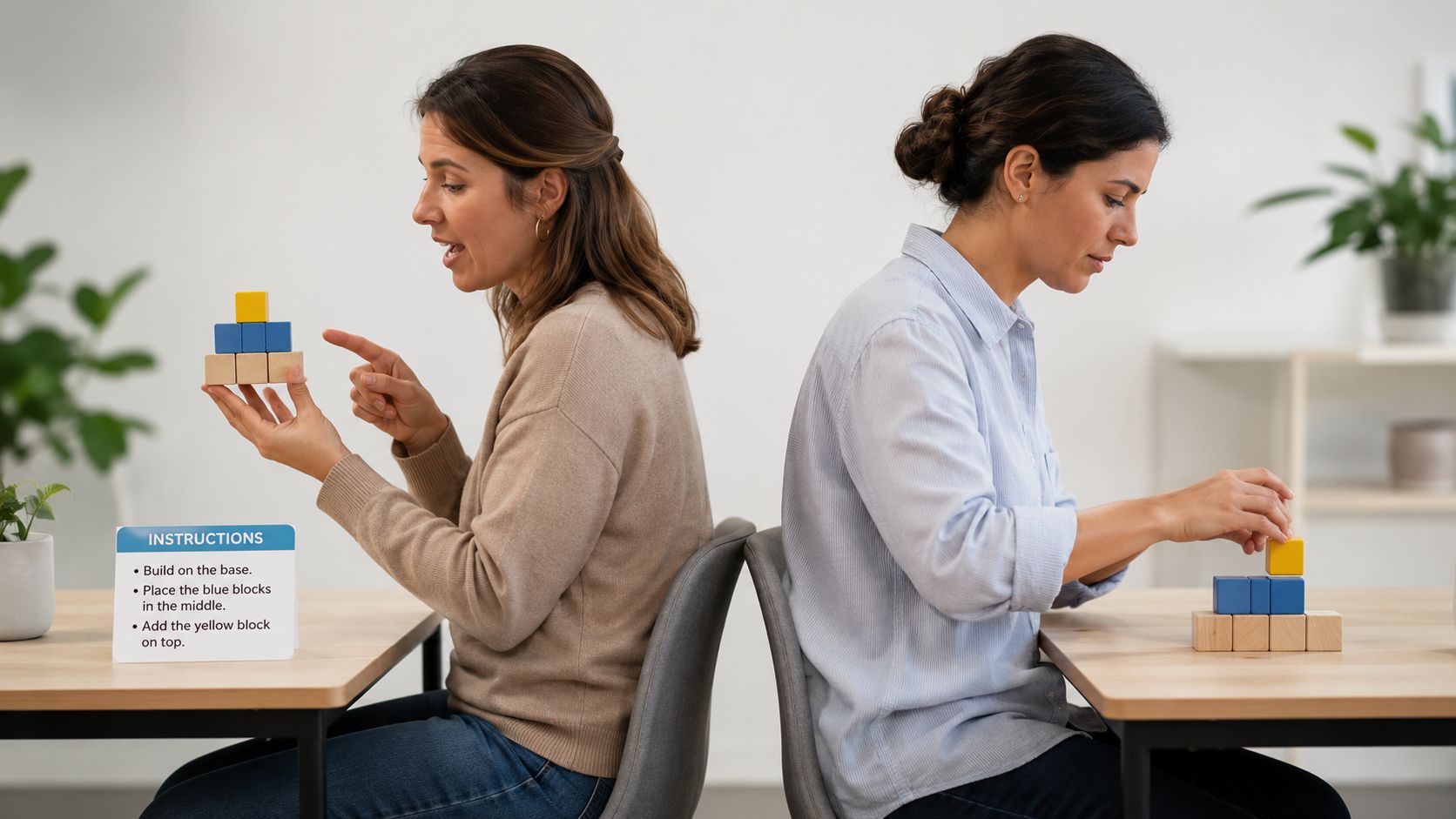
School staff rely heavily on communication quality. Teachers coordinate with year-level teams, faculty leaders, wellbeing staff, aides, and leadership. They share students, reporting requirements, parent concerns, assessment schedules, and whole-school priorities. If communication is unclear, the impact spreads quickly.
That is why trust activities built on play mechanics are often more useful than traditional trust exercises. Formats like Survivor, City Scramble, AppVenture, and Fugitive create situations where incomplete instructions, weak listening, or poor message discipline immediately hurt performance. The lesson lands because participants feel the cost of unclear communication in real time.
Clarity becomes visible quickly
One of the strongest aspects of this approach is that it avoids abstract discussion. Staff do not sit in a room talking about communication in theory. They have to coordinate under pressure, often with limited information, time constraints, and changing conditions.
That makes hidden assumptions visible. It also surfaces a common issue in schools. Teachers often assume that because they understand the context clearly, others do too. Activities that rely on precise description quickly show where that assumption breaks down.
For leaders wanting a behavioural lens during the debrief, the Dope Bird personality test and collaborative classroom discussion can help prompt conversations about style differences without reducing colleagues to labels.
How to make the learning stick
The debrief should stay anchored to observable moments. Who checked for understanding. Who asked clarifying questions. Who moved ahead without group alignment. Who noticed confusion and stepped in early.
Leader's note: Trust does not improve because people say they value it. It improves when teams repeatedly experience clear communication under manageable pressure.
A practical use case is a year-level or faculty team preparing for a major term rollout, assessment cycle, or parent communication period. For dispersed teams, AITSL's guide on connecting rural, regional and remote professionals also stresses the need to create inclusive collaborative spaces and help colleagues build strong professional networks.
Leadership Development Through Team Challenges
Teachers often move into leadership because they are strong educators, trusted colleagues, or subject-matter experts. However, leading adults requires a different set of skills, including delegation, communication, decision-making, and keeping a group aligned when pressure builds.
Play-based team challenges give emerging and established leaders a practical way to exercise those skills. Programs such as Top of the Class, Survivor, and City Scramble place participants in situations where they need to clarify roles, make decisions, listen to others, adapt their approach, and help the group maintain momentum.
Leadership becomes visible through action
Rather than discussing hypothetical leadership scenarios, participants experience how their approach affects the team in real time. A leader may discover that they give instructions without checking understanding, take on too much themselves, avoid difficult decisions, or move ahead before the group is aligned.
These moments create useful material for reflection because the feedback is tied to something the group has just experienced. The goal is not to judge individual performance, but to help participants recognise the leadership behaviours that support trust, clarity, and contribution.
Where this works best in schools
This approach can be especially useful for:
Teachers moving into year-level, faculty, or team leadership
Instructional leaders and mentors developing their coaching skills
Project leads responsible for whole-school initiatives
Leadership teams working to improve delegation and communication
High-potential teachers preparing for future leadership roles
The debrief should connect the activity directly to school life. Leaders can reflect on how they involve others, respond when plans change, communicate expectations, and create enough clarity for colleagues to contribute confidently.
5. Creative Collaboration Challenges for Cross-Functional Alignment
Schools rarely run on one neat line of communication. Teachers depend on wellbeing staff, aides, specialist teachers, curriculum leaders, admin teams, and school leadership. That makes cross-functional friction one of the biggest barriers to smooth student support and school improvement.
Creative collaboration challenges help because they bring those differences into the open. Project Runway, Out of the Box, Art in a Day, and LEGO Legends ask groups to create something under constraints. The task is visible, the clock is running, and people cannot hide behind role boundaries for long.
Silos show up quickly in creative work
A faculty leader may push for consistency. A classroom teacher may push for practicality. Wellbeing staff may focus on student needs. Admin staff may focus on timing and process. None of those instincts are wrong, but they can slow progress if people do not understand the pressures others are carrying.
Team building for teachers becomes strategically useful when it helps staff do more than get along. It helps them understand how to combine teaching expertise, student support, and operational reality in the same room.
A related example sits outside schools but reinforces the same idea. In multidisciplinary healthcare teams, outcomes depend on different specialists aligning around a shared objective rather than protecting their own lane. The same is true when school staff work across functions.
A stronger choice than a generic staff session
The strongest version of this activity does three things well:
Uses real constraints: time, resources, student needs, or school priorities
Assigns perspectives on purpose: participants represent the actual pressures they manage at school
Debriefs for transfer: the group names where collaboration slowed and what would improve it in real work
Cross-functional alignment does not improve because people spend more time together. It improves when they understand each other's constraints clearly enough to make better decisions together.
6. Energy and Culture Activation at Conferences and Large Gatherings
Not every school needs a half-day intensive. Sometimes the immediate challenge is simpler. The room is flat, the agenda is heavy, and staff are listening passively instead of connecting with the purpose of the day or with each other.
Short-format play-based activations can help when they are designed for culture, not filler. Minute to Win It, Mini Olympics, Trivia, Snapshot, Beach Olympics, and Survivor-style sessions work because they break passive attention and create shared participation quickly.
Short format can still have impact
This category matters because many schools run staff development days, induction events, planning conferences, and leadership retreats. A good activation can model how to move a group from passive listening to active engagement without losing control of the day.
When schools get this wrong
The failure mode is predictable. Leaders squeeze a quick activity into a packed agenda with vague instructions, little relevance to the day, and no facilitation support. Staff comply, but the mood of the room does not really change.
Better design choices are straightforward:
Place the activation strategically: before a keynote, after lunch, or before team discussion
Keep instructions simple: mixed groups need clarity fast
Tie it back to the day's purpose: culture, values, collaboration, or connection
Use visible outputs: scores, photos, shared moments, or reflection prompts for the next session
When these sessions are built well, they can energise staff while also strengthening a school's understanding of adult engagement.
7. Play-Based Onboarding and Integration Programs for New Teams
The weakest staff onboarding experiences overload new teachers with information and underinvest in connection. New staff learn policies, timetables, systems, and expectations, but they do not always learn quickly how the team communicates, makes decisions, or supports one another. That is where play-based onboarding can do work that slide decks cannot.
Formats such as Top of the Class, LEGO Legends, City Scramble, Fugitive, and Survivor-style team challenges can help new teachers and newly formed teams build shared reference points early. This is especially useful for schools that want strong collaboration before routines harden.
Connection should start early
For school leaders, this is one of the strongest uses of team building for teachers. A new teacher may arrive with excellent classroom skill and still need help understanding the culture of the staff team. Early shared experiences can make that transition easier.
A helpful example of this onboarding mindset appears in team building to start the school year. The direct setting differs, but the practical idea carries over well. Start relationship-building before habits settle.
What structured onboarding can learn from education research
Australian education research offers a useful lesson here. A Randomised Controlled Trial of the Quality Teaching Research program found statistically significant improvements in teaching quality and teacher morale, alongside overwhelmingly positive teacher perceptions, in a collaborative team framework described in the Building Capacity for Quality Teaching in Australian Schools final report. The takeaway for schools is clear. Structured collaboration improves quality and morale more reliably than leaving people to integrate informally.
A sound onboarding session should help new staff experience:
How the team communicates under pressure
What questions are welcomed
How experienced staff support rather than test newcomers
Which behaviours signal trust, contribution, and initiative
Comparing 7 Teacher Team-Building Approaches
| Activity | Implementation complexity | Resource requirements | Expected outcomes | Ideal use cases | Key advantages |
|---|---|---|---|---|---|
| Play-Based Problem-Solving Challenges | Medium-High (requires challenge design and skilled facilitation) | Facilitators, materials or props, space, reflection prompts | Better collaboration, stronger trust, visible problem-solving patterns | Planning days, cross-faculty work, school improvement projects | High engagement, useful debrief material, reveals team habits quickly |
| Charity-Integrated Team Building with Community Impact | Medium (logistics and community coordination) | Supplies, partners, venue logistics, facilitation | Increased sense of purpose, stronger morale, visible community impact | Values days, wellbeing events, community-focused staff sessions | Reinforces school values, creates meaningful outcomes, supports storytelling |
| Communication and Trust Activities Built on Play Mechanics | Medium (needs clear activity design) | Facilitators or observers, simple materials, flexible spaces | Clearer communication, stronger trust, reduced misunderstandings | New teams, leadership groups, faculty collaboration | Reveals communication gaps quickly, builds shared language |
| Leadership Development Through Play Observation and Facilitation | High (requires observation and feedback skill) | Skilled facilitators, reflection time, small-group rotation | Stronger leadership habits, better delegation, more confidence | Middle leadership, aspiring leaders, mentoring programs | Low-risk leadership practice tied to real behaviour |
| Creative Collaboration Challenges for Cross-Functional Alignment | Medium-High (works best with authentic constraints) | Mixed staff groups, materials, facilitation, time | Greater empathy across roles, clearer dependencies, improved teamwork | Whole-school initiatives, wellbeing planning, curriculum reviews | Exposes silos, builds respect across functions, strengthens coordination |
| Energy and Culture Activation at Conferences and Large Gatherings | Low-Medium (simple design, strong facilitation) | Large space, facilitators, AV support, minimal props | Better energy, stronger focus, improved participation | Staff days, conferences, retreats, large meetings | Fast activation, scalable, useful for culture and connection |
| Play-Based Onboarding and Integration Programs for New Teams | Medium (timing and modelling matter) | Facilitators, mixed staff groups, materials, follow-up support | Faster belonging, clearer norms, reduced onboarding stress | New teacher induction, new teams, post-restructure support | Helps staff connect early, creates shared reference points |
Build a Stronger Staff Culture Through Play
Investing in team building for teachers is really an investment in how a school works together. Teachers, leaders, support staff, and specialist teams all shape school culture through their daily interactions. When collaboration is strong, schools are better placed to support students, manage change, and create a healthier staff environment.
That is why generic activity selection often falls short. School teams need more than a pleasant shared moment. They need experiences that strengthen communication, improve trust, reduce silos, and help colleagues reflect honestly on how they work together.
Play-based methods can be especially effective because they let adults practise challenging team behaviours in a safe and human way. Staff can see who takes over, who withdraws, who brings calm, who creates confusion, and who helps a group recover when things go wrong. Those patterns matter because they reappear later in planning meetings, parent communication, wellbeing discussions, moderation tasks, and school improvement work.
The strongest options also respect trade-offs. A charity build can deepen shared purpose, but only if the cause is integrated properly. A communication challenge can improve trust, but only if the debrief stays behavioural rather than superficial. A conference energiser can lift a room, but only if it connects to the purpose of the day. A leadership activity can create meaningful feedback, but only if participants feel supported rather than judged.
For principals, deputy principals, instructional leaders, and organisers of staff development, the practical question is not whether to use play. It is where play will create the most useful transfer back into school life. For some teams, that may be problem-solving before a curriculum change. For others, it may be onboarding support at the start of the year, or a cross-functional challenge before a major wellbeing initiative.
Corporate Challenge Events has operated for 30 years, engaged 760,000+ participants across Australia and New Zealand, and delivers 40+ play-based programs nationwide, with more than 26,000 participants in 2025 through its team experiences. For schools that want team building to support culture, collaboration, and staff connection, that kind of play-based design may be worth exploring.
The next step is simple. Match the activity to the school need, not just the slot in the calendar.
For schools ready to strengthen collaboration and staff culture, Corporate Challenge Events offers play-based programs for planning days, staff events, charity activities, onboarding, leadership development, and team building across Australia and New Zealand.