
Most advice about school team building starts in the wrong place. It treats teamwork as something students will absorb if they're placed in groups often enough. Schools already do that every day. Students share tables, complete projects, rotate through practical tasks and work in house groups. Yet plenty of young people still struggle to listen, lead, speak up, recover from mistakes or work productively with peers outside their usual circle.
That gap exists because collaboration isn't learnt through instruction alone. Students don't just learn teamwork by being told to work together. They learn it by experiencing it.
Well-designed school team building creates those experiences on purpose. It gives students low-pressure, structured situations where communication has a real use, leadership can be tested safely, and problem-solving happens in real time rather than on a worksheet. That's why teamwork is recognised as a core part of school learning, not an optional extra. Investigator College describes teamwork as essential to both individual and collective success in schools, reflecting a broader educational emphasis on collaborative capability across Australian learning settings in The importance of teamwork in schools.
Play-based programs are especially effective because they shift teamwork from theory into action. Students have to make decisions, adapt, contribute and reflect while doing something together. That's where confidence, responsibility and connection start to become visible.
Table of Contents
1. School EDventure Real-World Navigation and Independence Learning
3. Picture Perfect Creative Collaboration and Visual Communication
4. Survivor Adventure-Style Challenges and Resilience Building
5. Risk Reward Strategy, Decision-Making and Calculated Risk
6. Safe Crack Problem-Solving and Evidence-Based Communication
8. Leadership Programs for Teachers Building Staff Team Culture and Professional Connection
1. School EDventure Real-World Navigation and Independence Learning
School EDventure works because it moves team building into a setting where decisions have immediate consequences. Students use a custom-built app, travel between geo-locked checkpoints, answer trivia, complete creative photo tasks and solve location-based challenges as a team. That creates a practical version of teamwork where navigation, timing and communication all affect progress.
For school leaders planning incursions, camps or year-level events, this is one of the clearest examples of experiential learning in action. Students don't just discuss collaboration. They have to listen carefully, read directions, share local observations and make choices together while moving through a real environment.
School EDventure also supports independent travel learning through real-world use of public transport. Under the Travel Education Framework, students are expected to build the skills, knowledge and confidence to travel independently using public transport, and this program gives schools a practical way to support that goal. By providing a safe, engaging and educational environment, School EDventure helps students develop essential confidence and everyday travel capability while taking part in a team building adventure with plenty of twists and turns.
Why it works outside the classroom
School EDventure is especially useful for older primary students and secondary groups preparing for excursions, camps or broader independent learning. Teams can rotate roles so different students take turns reading directions, tracking time, checking the map or responding to the creative brief. That structure helps quieter students contribute through observation and helps confident students learn to lead without dominating.
Play gives students a safe place to practise the human skills they will need in school, work and life.
The strongest results usually come when schools brief students well before the start. A short orientation on navigation basics, behaviour expectations and checkpoint rules reduces confusion and gives the challenge a clear frame. Debriefing afterwards matters just as much. Asking which communication breakdowns happened, who stepped into leadership and how teams recovered turns the activity into actual learning, not just a busy day out.
A practical use case is a leadership camp where mixed teams are sent through an unfamiliar local area, supported by facilitators and app tracking. Another is a year-level bonding day where students discover landmarks around the school community and build confidence in teams beyond their friendship group. The format also suits staff professional learning because teachers can experience the same process students do, then reflect on what made the teamwork effective.
2. Mini Olympics: Active Team Competition and School Spirit
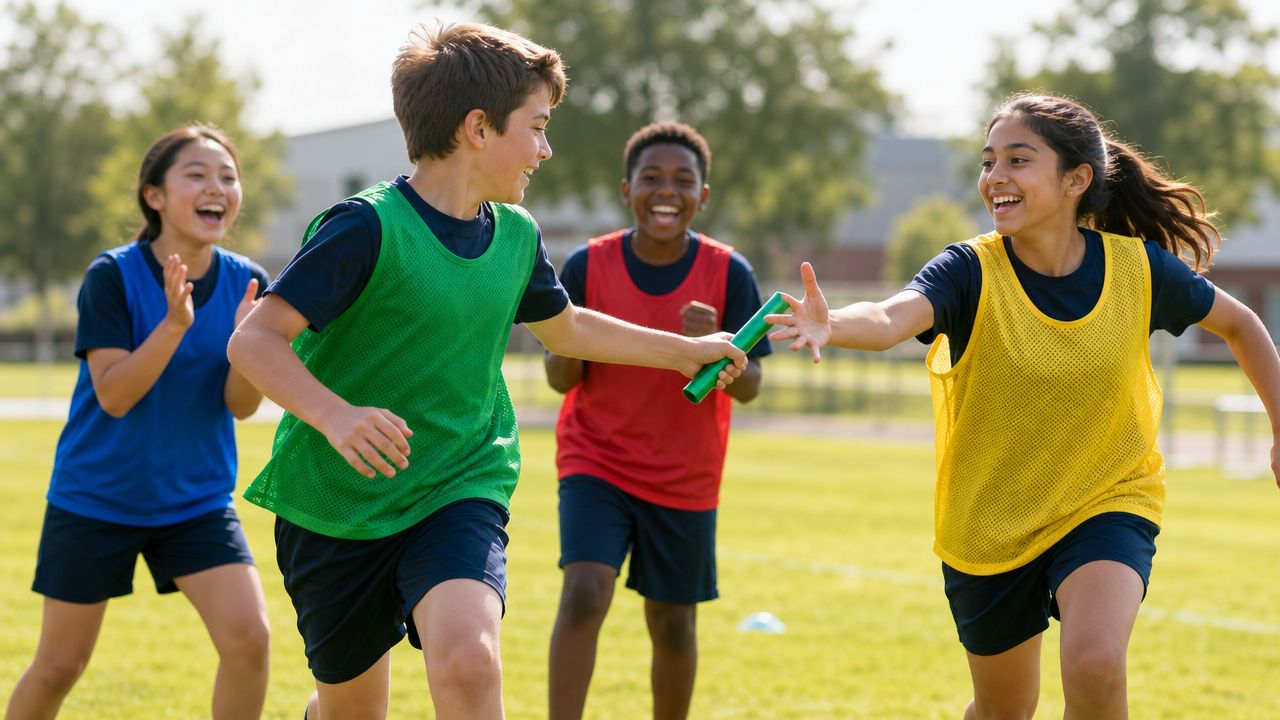
Mini Olympics gives schools a way to use competition without letting competition take over. The program is built around short, energetic team challenges that reward coordination, encouragement, strategy and movement. That makes it a strong fit for sports carnivals, house events and active year-level days where schools want energy and inclusion at the same time.
Traditional school sport can narrow contribution to the most athletic students. Mini Olympics works differently when the event design requires teams to share roles across multiple stations. A relay might favour speed, but another challenge may reward balance, timing, observation or calm communication. That broader design helps more students feel useful.
Where competition helps and where it can go wrong
Competition is valuable when it teaches students how to win well, lose well and support each other in public. It becomes less useful when the structure allows one student to carry the group or when scoring overshadows behaviour. Schools get the best outcomes when facilitators celebrate strategy, effort and teamwork alongside results.
A practical planning approach includes:
Rotate participation: Make sure students move through different stations so contribution is shared.
Reward team habits: Acknowledge encouragement, role clarity and recovery after mistakes.
Mix the groups: Use cross-house or mixed friendship teams if the goal is bonding rather than rivalry.
Practical rule: If an activity lets one student do all the work, it isn't strong team building.
Mini Olympics can also support student leadership activities when older students help run stations, guide younger teams or model positive competition. For schools refining event design, the principles behind getting team dynamics right in Olympic-style environments are useful. The key trade-off is simple. High energy lifts engagement, but only a thoughtful structure turns that energy into learning.
3. Picture Perfect Creative Collaboration and Visual Communication
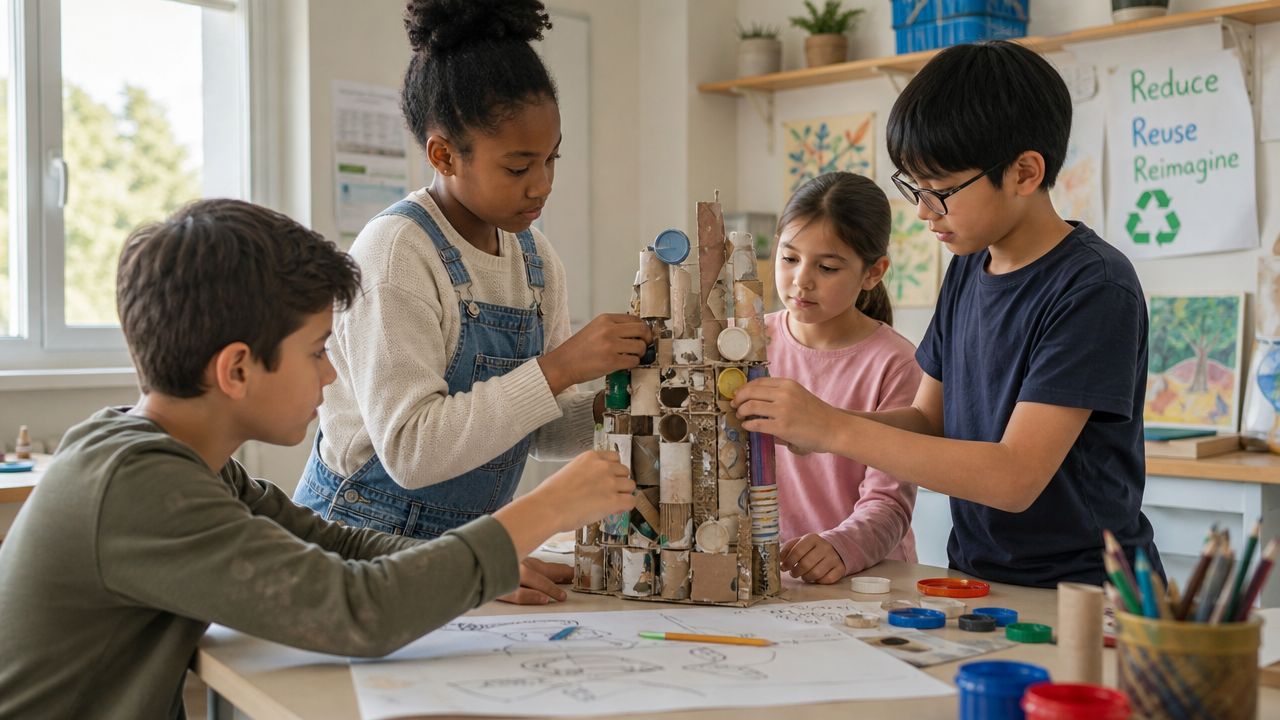
Picture Perfect is often where schools see a different set of students come forward. Instead of relying on physical speed or verbal confidence, the program uses creativity, observation and collaborative interpretation. Teams respond to a brief, create something visual and present or reflect on what they made together.
School team building activities often default to loud, active formats. Those can work well, but they don't always reveal the full range of student strengths. A creative brief invites contribution from students who think visually, notice detail, work carefully with materials or connect ideas in unexpected ways.
How creative tasks draw in different contributors
Picture Perfect works best when the brief is clear but open enough to allow discussion. Students need to interpret the task, agree on a direction and decide who will take which role. In that process, communication becomes visible. Some students generate ideas quickly. Others refine, question or spot practical issues that save time later.
Schools often use this format during leadership camps, wellbeing days and mixed year-level bonding sessions. It can be especially helpful for groups that need a gentler entry point into team building for students who feel anxious in highly competitive settings.
Useful facilitation choices include:
Set behavioural goals early: Name the habits being practised, such as listening, collaboration and respectful disagreement.
Give planning time: Teams usually work better when they pause to think before making.
Value the process: Ask what decisions were difficult and how the group resolved them.
A practical extension is to use the image or photo component to build a short reflection artefact after the event. Schools exploring visual storytelling tools may find how to make a movie from photos useful as a simple way to turn team outputs into a shareable recap. The educational value sits less in the final product and more in how students negotiated meaning together.
4. Survivor Adventure-Style Challenges and Resilience Building
Survivor is one of the strongest leadership camp activities for schools that want challenge with purpose. It places teams into adventure-style tasks that require physical effort, problem-solving and persistence under pressure. Students need to communicate clearly, adapt when a plan fails and keep moving when the first answer doesn't work.
That's where resilience starts to become practical rather than abstract. Many students are told to persevere, but they need structured chances to experience setback, regroup and try again in a supported environment. Survivor creates those moments when the facilitation is done well.
Challenge needs structure to build resilience
A hard activity on its own doesn't automatically build resilience. If the challenge is too easy, students don't need each other. If it feels impossible or poorly explained, they disengage or panic. The sweet spot sits in tasks that stretch the group while still leaving room for success through better teamwork.
Schools usually get the most from Survivor when facilitators debrief after each stage. Questions such as what happened, what changed under pressure and who contributed in a less obvious way help students recognise that leadership isn't only about volume or confidence. It can also look like calming a teammate, spotting a detail, reframing a failed attempt or organising the group.
Struggle is useful when students have support, clear boundaries and a chance to reflect.
This format is particularly effective for senior student leadership groups, year-level challenge days and camp programs that want more than passive entertainment. For organisers comparing options, outdoor team building approaches can help clarify which environments and challenge styles suit different cohorts. The trade-off is worth naming openly. Adventure programs can create powerful learning, but only when safety, warmth and thoughtful facilitation are stronger than the pressure of the task itself.
5. Risk Reward Strategy, Decision-Making and Calculated Risk
Risk Reward shifts school team building away from simple cooperation and into decision-making. Teams earn points through challenges, then choose whether to protect what they've built or invest for a higher return. That makes the conversation inside the group just as important as the activity itself.
This is often where student leadership activities become more revealing. Some students push for bold moves. Others want caution. Some notice hidden costs. Others focus on momentum. The value of the program sits in getting those different instincts into the open and helping students make a decision together.
Decision-making becomes visible
Risk Reward suits older students particularly well because it mirrors real-world judgment. Teams rarely have perfect information. They have to weigh the possible upside, the possible downside and the group's appetite for uncertainty.
The strongest facilitation keeps attention on the process, not only the scoreboard. A team that takes a risk and loses may still have worked exceptionally well if everyone understood the decision, concerns were voiced and the group stayed composed afterwards. A team that wins by chance but excludes quieter members may need a harder conversation.
Helpful prompts during debrief include:
How did the team decide: Was the process rushed, shared or dominated?
Whose view carried weight: Were quieter students heard before the final call?
What happened after a setback: Did the team blame, recover or reassess?
There's also a practical wellbeing benefit in normalising that unsuccessful choices aren't personal failure. They're information. That mindset gives students a healthier way to approach leadership, exams, sport and future work situations where uncertainty is unavoidable. For schools planning decision-focused sessions, Risk Reward usually works best when paired with reflection rather than packed into a timetable that leaves no room to unpack what happened.
6. Safe Crack Problem-Solving and Evidence-Based Communication
Safe Crack is one of the clearest examples of play based team building that still feels intellectually serious. Teams solve puzzles, find clues and test theories together, but the essential learning happens in how they share information. Students quickly discover that holding onto an idea, assuming others know what they know or talking over evidence slows the whole team down.
That makes Safe Crack especially useful for analytical groups, STEM-focused cohorts and mixed-ability classes where students need a structure that rewards careful thinking rather than speed alone. It also suits incursions because the challenge can be run onsite with a clear beginning, middle and end.
Good thinking depends on shared information
The best puzzle-based team building for students gives each participant a reason to contribute. If all the clues sit with one person, the exercise turns into performance rather than collaboration. Strong design spreads information across the team so students must speak, listen, compare and revise their assumptions together.
This kind of activity is also a practical reminder that communication isn't just expression. It's evidence-sharing. Students need to say what they've noticed, explain why they think it matters and stay willing to change direction when another clue challenges their theory.
Observation: The loudest answer in a puzzle task often isn't the best one. The team that solves it usually shares information earlier and tests ideas more calmly.
Schools wanting to strengthen collaborative classroom habits can connect this style of challenge with broader communication frameworks such as building collaborative classrooms with the DOPE Bird personality test. Safe Crack then becomes more than a puzzle session. It becomes a rehearsal for how students discuss evidence, disagreement and reasoning in everyday learning.
7. Bikes for Tykes Charity Team Building and Shared Purpose
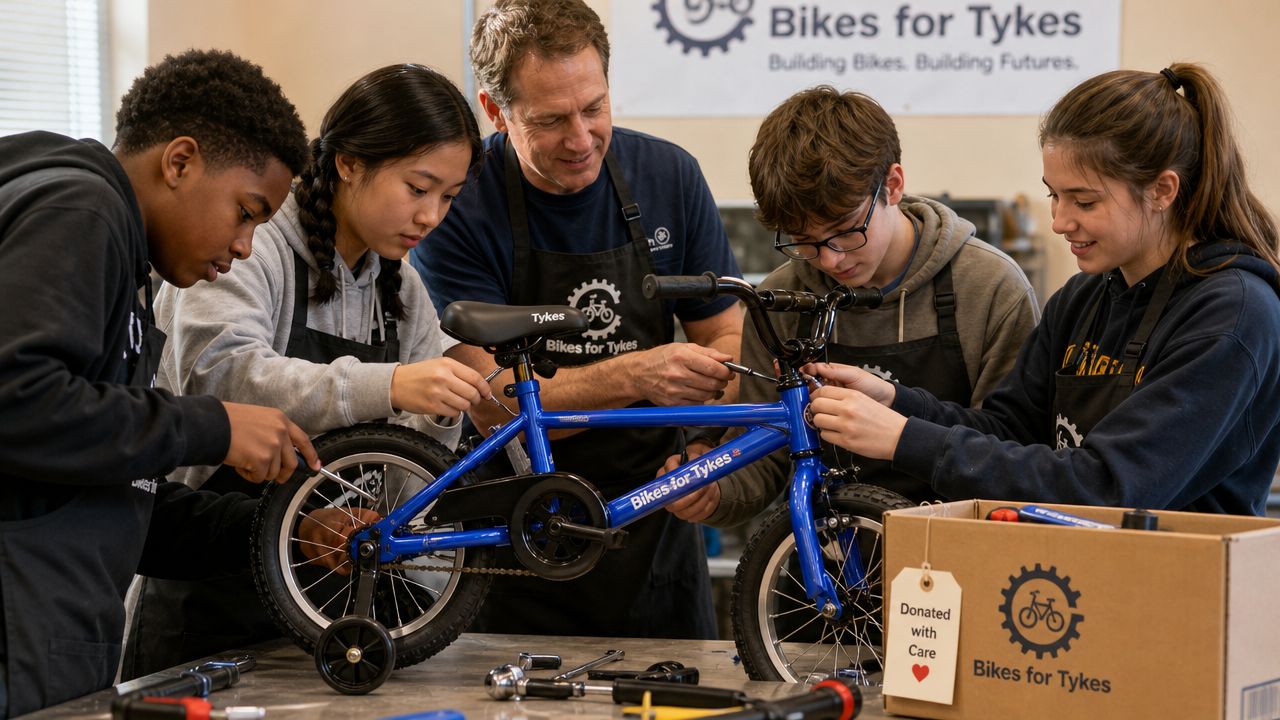
Bikes for Tykes changes the emotional tone of school team building because the work has a clear purpose beyond the group itself. Students build bikes, tricycles or ride-on toys together, then those items are donated to children in need through community channels. The activity still develops communication, coordination and role sharing, but purpose adds another layer of meaning.
That's why charity-based programs often land differently. Students aren't just trying to complete a task for points or recognition. They're building something that will matter to someone else. That tends to sharpen care, responsibility and quality checking in ways that generic activities sometimes don't.
Purpose changes how teams behave
Bikes for Tykes works particularly well for community days, leadership programs, end-of-year events and school-wide initiatives that want a service element. It also gives a natural role structure. Some students read instructions carefully, some assemble components, some quality check, and some support organisation and presentation. Different strengths become useful very quickly.
This style of shared achievement has parallels in broader team settings. The 2024 PwC Corporate Challenge in Papua New Guinea involved over 1,400 participants from 54 organisations and raised K170,000 for charity, showing how challenge-based events can combine connection, collaboration and community impact at scale. In schools, the same principle applies qualitatively. A meaningful external beneficiary often lifts commitment inside the team.
A few practical choices improve the experience:
Explain the beneficiary clearly: Students work with more care when they understand who will receive the bikes.
Share assembly responsibility: Rotation prevents one capable student from doing everything.
Debrief the purpose: Ask how building for someone else changed the way the team worked.
For schools wanting students to connect teamwork with social responsibility, this remains one of the most purposeful formats available. Further context on that broader educational idea appears in teaching the next generation about social responsibility.
8. Leadership Programs for Teachers Building Staff Team Culture and Professional Connection
Student programs get most of the attention, but staff culture shapes whether school team building has lasting impact. Teachers and support staff also need structured opportunities to build trust, communicate across silos and solve problems together outside the pressure of daily operations. That's why staff versions of Survivor, Risk Reward and Safe Crack can be more than a morale exercise. They can strengthen how adults work together inside the school.
Corporate Challenge Events offers hands-on school team building experiences for primary and secondary schools across Australia, with programs for teachers and students and options suited to age, ability, group size, budget and time requirements in School Team Events across Australia. That long operational history matters because facilitation quality often decides whether a staff session feels purposeful or superficial. Corporate Challenge Events offers over 40 programs for more than 30 years and engaged 760,000+ participants across Australia and New Zealand through its broader play-based event work, with a stated goal to inspire 1 million people to play by 2030 on the same page.
Staff culture shapes student culture
The best staff team building programs don't try to mimic student activities exactly. They adapt the challenge to adult context and create space for reflection on collaboration, school culture and leadership. A professional development day can include a problem-solving session that surfaces communication habits. A leadership retreat can use strategy-based activities to explore decision-making under pressure. A wellbeing event can focus on connection and shared experience rather than formal outcomes.
There's good reason to treat structured activity as more than a break from routine. A study of a four-month workplace physical activity challenge found reduced psychological distress, with the benefit sustained eight months after the program ended in this Global Corporate Challenge research paper. That doesn't mean every school event should aim for the same outcome, but it does support the broader idea that structured shared challenges can have effects beyond the session itself.
Schools planning staff sessions can also align them with broader professional growth priorities through leadership development training and practical resources such as this guide for L&D leaders on skill-building. When adults experience purposeful team building themselves, they're often better placed to recognise what students need from it.
8-Program School Team-Building Comparison
| Title | Implementation complexity | Resource requirements | Expected outcomes | Ideal use cases | Key advantages |
|---|---|---|---|---|---|
| School EDventure: Real-World Navigation and Independence Learning | Moderate, needs app setup & safety planning | Mobile devices, data/coverage, safe outdoor routes, supervisors | Improved independent travel, real-world navigation, communication | Leadership camps, year-level bonding, practical outdoors learning | Builds genuine independence and contextual teamwork |
| Mini Olympics: Active Team Competition and School Spirit | Low–Moderate, station setup and facilitation | Large indoor/outdoor space, sports equipment, facilitators | Increased engagement, teamwork under pressure, school spirit | Sports carnivals, bonding days, high-energy breaks | Rapid engagement; inclusive competitive format |
| Picture Perfect: Creative Collaboration and Visual Communication | Low, materials prep and brief facilitation | Art/recycled materials, indoor space, display area | Enhanced creativity, visual communication, inclusive participation | Wellbeing programs, creative bonding, leadership arts tasks | Allows quieter/creative students to lead and contribute |
| Survivor: Adventure-Style Challenges and Resilience Building | High, complex scenarios and strict safety management | Outdoor/large space, specialised equipment, qualified facilitators | Resilience, problem-solving under pressure, leadership | Senior leadership camps, intensive team development | Deep bonding through intense, memorable challenges |
| Risk Reward: Strategy, Decision-Making and Calculated Risk | Moderate, clear rules and scoring needed | Multiple stations, scoring system, skilled facilitators | Improved strategic thinking, group decision-making, risk literacy | Senior students, decision-making workshops, simulations | Teaches collective decision-making and risk assessment |
| Safe Crack: Problem-Solving and Evidence-Based Communication | Low–Moderate, puzzle design and facilitation | Puzzle materials, controlled space, facilitator guidance | Strong information-sharing, logical reasoning, collaboration | STEM-focused groups, analytical leadership programs | Encourages evidence-based communication and persistence |
| Bikes for Tykes: Charity Team Building and Shared Purpose | Moderate, logistics and community coordination | Assembly materials/kits, storage/space, donation logistics | Purpose-driven teamwork, practical skills, community connection | Whole-school community days, service-learning projects | Tangible outcomes and heightened team motivation |
| Leadership Programs for Teachers: Building Staff Team Culture | Moderate, adaptation for adults and scheduling | Adapted program materials, facilitators skilled in adult dynamics | Stronger staff cohesion, facilitation skills, applied learning | PD days, leadership retreats, staff culture initiatives | Builds staff empathy, professional connection, transferable skills |
Play Helps Students Learn by Doing
Effective school team building isn't about filling a timetable with activities that keep students occupied. It's about giving them structured experiences where teamwork becomes visible. In the classroom, schools can explain collaboration, assign group work and encourage respectful behaviour. All of that has value. But many students still need a safer, more active setting to test what those behaviours look like under pressure, in motion and in relationship with others.
That's why play-based team building works so well. It gives students a practical environment where leadership, communication, problem-solving, confidence and connection have a job to do. A navigation challenge asks them to trust directions and make decisions together. A creative task asks them to interpret, listen and build on each other's ideas. An adventure challenge asks them to recover when the first attempt fails. A charity build asks them to collaborate for a purpose beyond themselves.
The strongest school team building activities also recognise that students contribute differently. Some lead verbally. Some notice patterns. Some keep the group calm. Some bring energy. Some organise the practical details that help the whole team function. Good facilitation makes those differences visible and valuable. That's often when schools see real change in student bonding and confidence, because young people get to contribute in ways ordinary classroom settings don't always reveal.
There's also a wider educational reason to take this seriously. Teamwork is already embedded in how schools prepare students for life beyond school. Corporate Challenge Events describes play as a practical driver of performance and culture in teams. The same principle carries across into education when it is applied carefully. Play isn't a distraction from learning. Used well, it's a way of helping students practise human skills they'll need later in work, relationships and community life.
For school leaders choosing between formats, the most useful question usually isn't which activity sounds the most exciting. It's what students need to practise. If the priority is independence and real-world confidence, School EDventure makes sense. If the group needs active connection and school spirit, Mini Olympics is often a strong fit. If the goal is calmer collaboration, Picture Perfect or Safe Crack may be more suitable. If the school wants challenge, resilience or service, Survivor, Risk Reward and Bikes for Tykes each bring something different.
Schools that want to capture and extend learning from these programs may also find value in practical operational tools beyond the event itself, including platforms such as tutoring center software when coordinating broader student support systems. The central lesson remains simple. Students don't build teamwork by hearing about it once. They build it by doing it, reflecting on it and carrying it back into school life.
Corporate Challenge Events delivers school team building experiences across Australia, helping students and teachers build leadership, communication, confidence and positive school culture through play-based team building.
Corporate Challenge Events helps schools turn team days, incursions, camps and staff development into purposeful play-based learning. Explore Corporate Challenge Events for school team building programs that build leadership, communication, confidence and connection through well-facilitated shared experience.