
A workplace can have strong people, clear goals and solid systems, yet still feel flat. Energy drops, conversations become transactional and people begin moving through the day without bringing much of themselves to the work.
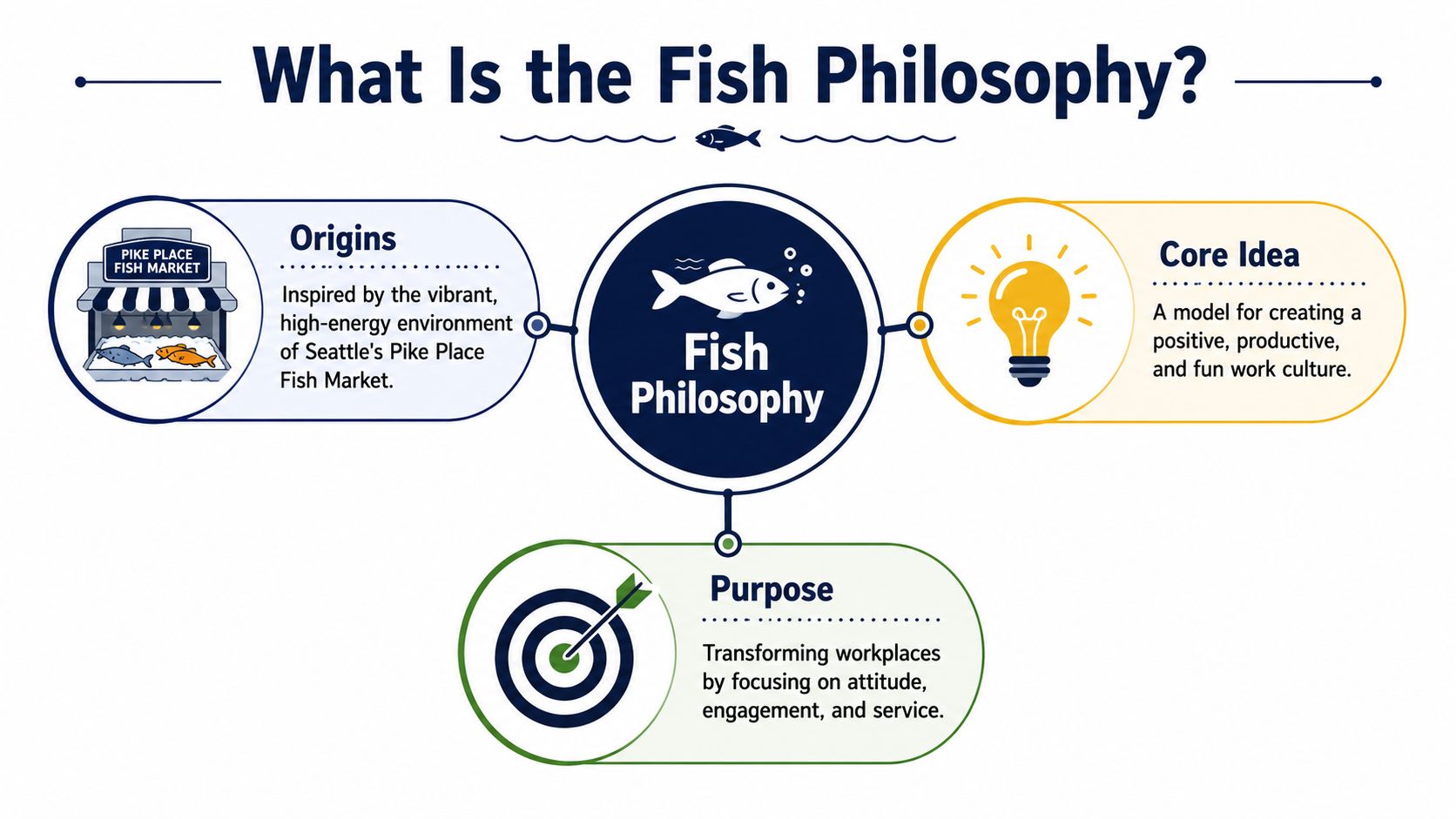
The FISH! Philosophy was created to challenge that pattern. Inspired by the energy, connection and customer focus of the fishmongers at Seattle’s Pike Place Fish Market, it shows how people can make deliberate choices about the way they approach their work and the experience they create for others.
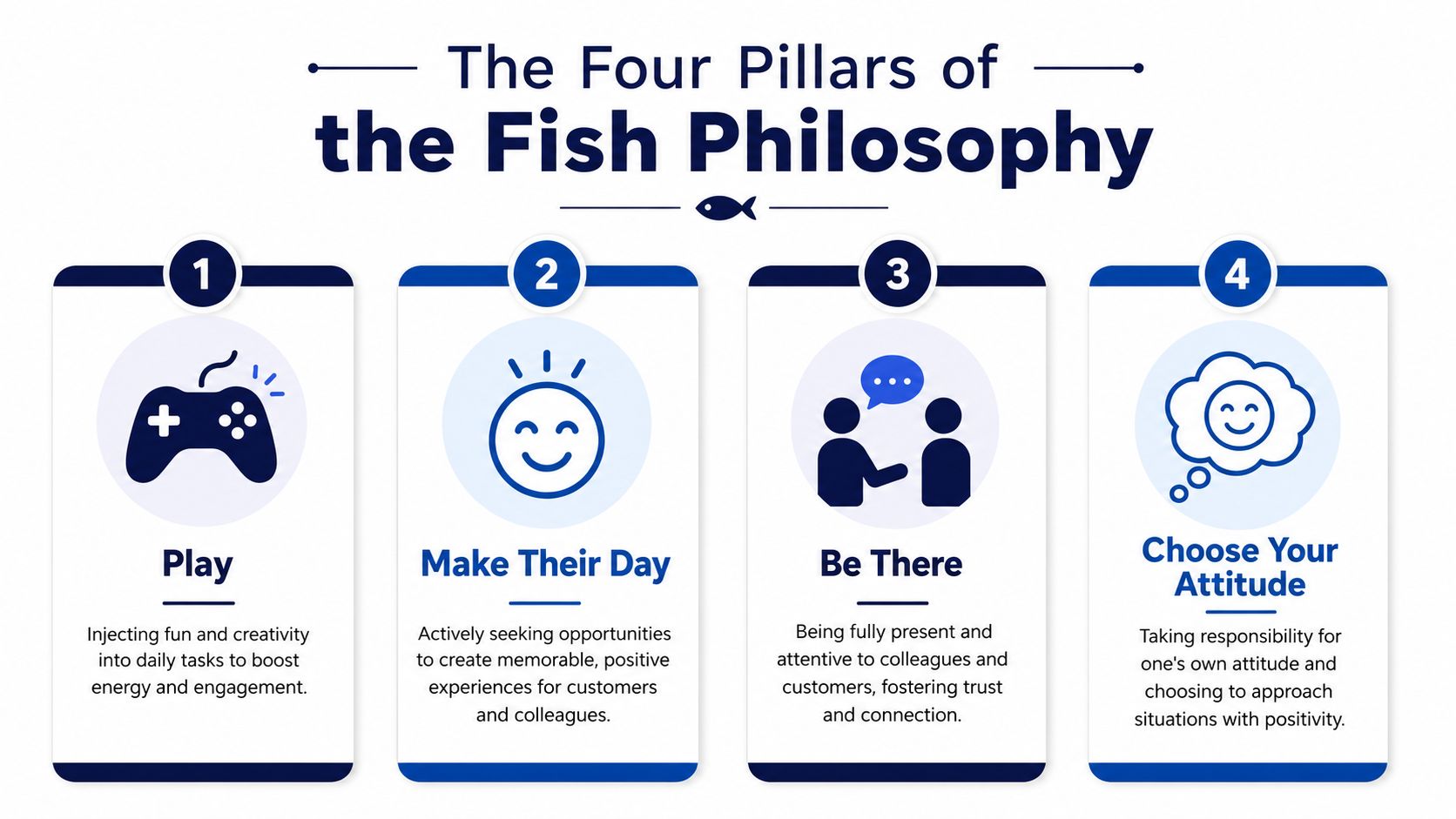
Built around four practical principles, Play, Make Their Day, Be There and Choose Your Attitude, the philosophy gives teams a simple framework for strengthening engagement, relationships and workplace culture. It is not about forcing fun or ignoring pressure. It is about creating an environment where people are more present, more connected and more willing to contribute.
In this article, we explore where the FISH! Philosophy came from, why it makes commercial sense, how each of the four principles works and the simple ways teams can begin putting it into practice.
The Origin of the FISH! Philosophy
The FISH! Philosophy began in one of the busiest and most demanding workplaces imaginable: Seattle’s Pike Place Fish Market.
The fishmongers worked long hours in cold, physical and repetitive conditions, yet the market had become known for its remarkable energy. Staff joked with customers, involved people in the experience and famously tossed fish across the stand. What could have been an ordinary transaction became something memorable for employees, customers and visitors alike.
In 1997, filmmaker John Christensen visited the market and was struck by the way the fishmongers approached their work. Their environment was not energising because the job itself was easy or glamorous. It was energising because the team had made deliberate choices about how they would show up, treat one another and create an experience for every person who approached the counter.
Christensen captured their approach in the film FISH! Catch the Energy. Release the Potential, which helped translate what was happening at Pike Place into a practical workplace philosophy.
The model was eventually shaped into four principles: Play, Make Their Day, Be There and Choose Your Attitude. Together, they demonstrate that while employees cannot control every pressure, task or change they encounter, they can influence the energy, attention and experience they bring to their work.
That is what makes FISH! relevant far beyond the market where it began. It is not a lesson about throwing fish or manufacturing enthusiasm. It is a framework for helping people make purposeful choices about how they work together.
Why the FISH! Philosophy Works in the Workplace
The strength of the FISH! Philosophy lies in its simplicity. Rather than relying on complex culture models or one-off engagement initiatives, it focuses on four everyday behaviours that people can understand, practise and recognise in one another.
Each principle addresses something that directly influences how a workplace feels and performs. Play encourages curiosity and fresh thinking. Make Their Day strengthens recognition and service. Be There improves attention and trust. Choose Your Attitude builds personal responsibility for the energy each person contributes.
Together, these behaviours can influence more than morale. They shape the quality of communication, collaboration and customer experience. As Sparkle Training explains in its discussion of why the FISH! methodology makes good commercial sense, employees who are present, appreciative, engaged and constructive are better positioned to create positive experiences for both colleagues and customers.
The philosophy also works because it does not depend on having an easy job or perfect working conditions. Its central idea is that people may not control every task, pressure or workplace change, but they can make choices about how they respond and how they affect the people around them.
That does not mean asking employees to ignore genuine problems or maintain constant positivity. It means helping teams recognise the influence they have over everyday interactions. The FISH! Philosophy leadership model places that responsibility on both individuals and leaders, particularly through the way they model presence, appreciation, playfulness and constructive responses under pressure.
Because the principles are practical and observable, they can become part of normal workplace routines rather than remaining values written on a wall. Over time, those repeated choices can help create a workplace where people are more energised, connected and willing to contribute.
The Four Principles of the Fish! Philosophy
The FISH! Philosophy is built around four principles that shape how people approach their work, their colleagues and the experience they create for others. Each one is simple enough to remember, but powerful when practised consistently.
Play
It is probably no surprise that Play is our favourite of the four FISH! principles.
At Corporate Challenge Events, we have spent more than 30 years seeing what changes when adults are given genuine permission to play. People become less guarded, different personalities emerge, communication feels more natural and teams begin interacting beyond their usual roles, titles and routines.
Within the FISH! Philosophy, Play does not mean avoiding serious work or filling the day with games. It is about approaching work with curiosity, creativity, humour and a willingness to experiment. It helps people become more open to ideas, more flexible in their thinking and more connected to those around them.
That matters because teams rarely produce their best thinking when they feel tense, overly monitored or afraid of making a mistake. When the environment feels psychologically safer and more playful, people are more likely to contribute an unfinished idea, ask a different question or explore an unconventional solution.
There is also neuroscience behind why play can be so effective. Play is connected with brain systems involved in motivation, reward, learning, social connection and adaptability. It can help interrupt the rigid thinking that often develops under prolonged stress and create the conditions for greater cognitive flexibility, which is the ability to shift perspectives, respond to change and generate new approaches.
Shared play can also strengthen social attunement. As people laugh, move, solve problems and respond to one another, they practise reading social cues, adapting their behaviour and building trust through experience. This is one reason a playful interaction can sometimes achieve what another formal discussion cannot. It gives people a different way to relate.
For us, this is where the FISH! principle becomes particularly powerful. Play is not an escape from performance. It can support the human conditions that make stronger performance possible, including energy, connection, creativity and a greater willingness to participate.
In practice, Play might involve introducing movement into a meeting, using an imaginative challenge to explore a problem, allowing humour to emerge naturally or creating space for people to test ideas before they are fully polished.
Leaders are central to whether this principle succeeds. When leaders show curiosity, laugh at themselves and respond constructively when an idea does not work, they signal that experimentation is welcome. When they treat every interaction as formal, urgent or high stakes, people quickly learn to protect themselves instead.
Play works best when it is purposeful, inclusive and appropriate to the team. It should never feel forced. The goal is not to manufacture fun, but to create an environment where people feel more able to think, connect and contribute as human beings.
Make Their Day
Make Their Day is about creating a positive impact through the way we notice, acknowledge and respond to other people.
Within the FISH! Philosophy, this principle goes beyond being friendly or offering generic praise. It is about paying attention to what matters to someone and choosing an action that helps them feel valued, supported or recognised.
In the workplace, people can quickly begin to feel that their effort is expected but rarely noticed. Deadlines are met, problems are solved and extra work is absorbed, yet the next task often arrives before anyone pauses to acknowledge what was contributed.
Make Their Day helps interrupt that pattern.
It might involve thanking someone for the way they supported a colleague, recognising the preparation behind a successful project, offering help during a difficult week or remembering something that matters personally to a team member. The action does not need to be large. In many cases, the most meaningful moments are specific, timely and genuine.
This principle also has a direct connection to customer experience. When employees feel seen and appreciated, they are often better placed to extend that same level of attention to clients, customers and partners. A culture of recognition can influence not only how people feel internally, but also how they represent the organisation externally.
The key is specificity. Saying “great job” may create a brief positive moment, but explaining exactly what someone did and why it mattered gives the recognition greater meaning.
For example, a leader might say:
“Thank you for staying calm during that client conversation. The way you listened and clarified the issue helped us reach a much better outcome.”
That kind of recognition reinforces the behaviour, shows that the effort was genuinely noticed and helps others understand what good contribution looks like.
Make Their Day does not require expensive rewards or formal recognition programs. It can be built into everyday interactions through thoughtful feedback, peer acknowledgement, small acts of support and a willingness to celebrate contributions that might otherwise go unseen.
When practised consistently, it creates a workplace where appreciation becomes part of how people work together rather than something reserved for annual reviews or major achievements.
Be There
Be There is about giving people your full attention and being genuinely present in the moment.
In a workplace filled with notifications, competing priorities and back-to-back meetings, presence can easily become fragmented. People may be physically in the room while checking messages, planning their response or thinking about the next task.
The FISH! Philosophy reminds us that attention is one of the clearest ways we show respect.
Being there means listening to understand rather than listening only to reply. It means noticing what someone is saying, how they are saying it and what may be sitting underneath the conversation. It also means resisting the urge to divide attention when the moment requires focus.
Trust is built through repeated experiences of being heard and taken seriously. When people feel ignored, rushed or only partially listened to, they are less likely to speak openly, raise concerns or contribute ideas. When they feel that someone is fully present, communication becomes clearer and connection becomes stronger.
In practice, Be There might mean putting devices away during an important conversation, giving someone time to finish their point, asking a thoughtful follow-up question or creating space for quieter team members to contribute.
It is also particularly important during difficult conversations. Presence does not remove disagreement, but it can make disagreement more constructive. A leader who stays calm, listens carefully and responds to what was actually said creates a very different experience from one who becomes defensive or distracted.
Be There is not about giving every conversation unlimited time. It is about being intentional with the time available. Even a short interaction can feel meaningful when the other person has your full attention.
When practised consistently, this principle helps create a workplace where people feel respected, communication improves and important conversations are less likely to be lost in the noise.
Choose Your Attitude
Choose Your Attitude is about recognising the influence we have over the way we approach our work and the effect that approach has on others.
It does not mean ignoring frustration, pretending every situation is positive or accepting problems that need to be addressed. The FISH! Philosophy is not asking people to suppress genuine emotions. It is asking them to take responsibility for how they respond.
Every workplace includes pressure, setbacks, difficult conversations and decisions people may not agree with. While employees cannot control every circumstance, they can influence the energy, language and behaviour they bring into the room.
That choice matters because attitudes are rarely contained to one person. Frustration can spread through a team, but so can calm, curiosity, generosity and a willingness to find a way forward.
In practice, Choose Your Attitude might mean pausing before reacting to a difficult email, raising a concern constructively rather than allowing resentment to build, or entering a challenging meeting with the intention to listen and contribute rather than simply defend a position.
For leaders, this principle carries even greater weight. Teams take cues from the way leaders respond when plans change, pressure rises or mistakes occur. A leader who reacts with blame or visible frustration can quickly make people more cautious. A leader who remains honest, steady and solution-focused creates more space for the team to respond productively.
Choosing your attitude is not about maintaining constant optimism. It is about making a conscious decision about the kind of colleague, leader or team member you want to be in that moment.
When practised consistently, this principle strengthens accountability and helps teams move away from automatic reactions. It creates a culture where people can acknowledge what is difficult while still choosing a response that supports the work and the people around them.
Start This Monday: Simple Ways to Put FISH! into Practice
| Principle | Simple application ideas |
|---|---|
| Play | Add movement to a meeting, use a creative prompt during brainstorming, introduce humour where appropriate, or let teams test ideas before judging them. |
| Make Their Day | Recognise a specific contribution, thank someone for how they supported the team, celebrate small wins, or check in when someone is under pressure. |
| Be There | Put devices away during important conversations, listen without interrupting, ask thoughtful follow-up questions, and create space for quieter voices. |
| Choose Your Attitude | Pause before reacting, name challenges constructively, focus on what can be influenced, and model a calm, solution-focused response. |
Bring the FISH! Philosophy to Life in Your Workplace
The FISH! Philosophy is simple, but its impact comes from how consistently the four principles are understood, experienced and applied.
At Corporate Challenge Events, we deliver accredited FISH! Philosophy workshops that help teams move beyond the theory. Through practical discussion, shared experiences and play-based learning, participants explore what Play, Make Their Day, Be There and Choose Your Attitude look like in their own workplace.
The result is not another set of values to display on a wall. It is a shared language teams can use to strengthen connection, improve everyday interactions and create a more energised workplace culture.
Ready to bring the FISH! Philosophy to your team? Explore our FISH! Philosophy program or speak with Corporate Challenge Events about creating a session for your workplace.
For organisations exploring accredited Fish Philosophy training and play-based culture programs, Corporate Challenge Events offers information on FISH! training, workplace culture development, and team experiences designed for conferences, offsites, and broader People & Culture initiatives.