The request usually lands at the worst possible time. Budgets are under scrutiny, calendars are packed, sales targets are live, and leaders are trying to protect output. That’s why team building approval so often stalls. Not because anyone dislikes culture, but because the organiser has to prove the event will help the business, not interrupt it.
That changes the pitch. The goal isn’t to argue that people need connection in some abstract sense. The goal is to show that a well-designed team moment solves a current operating problem, supports employee engagement, and gives leadership a sensible reason to get team building approved now rather than later.
Table of Contents
The Real Reason Team Building Gets Pushed Back
Team building usually gets pushed back when leaders cannot see a clear operational reason for it.
That does not mean they dismiss culture. Most leaders understand that team connection matters. The problem is that, under pressure, they are trained to protect time, budget and delivery. When a request is framed as a fun activity, a morale boost or a chance to get people away from their desks, it can sound separate from the work leaders are trying to protect.
That is where the approval problem begins.
Leaders are not only asking whether people will enjoy the experience. They are weighing whether the time, cost and disruption will return enough value to the team and the business. If that value is not clear, delaying the decision feels safer.
This is why the first job of the organiser is not to describe the event. It is to define the reason the event is needed.
A team building request becomes stronger when it is connected to a real working condition. A newly merged team may need to build trust before collaboration can happen properly. A hybrid team may need to rebuild the informal interaction that no longer happens by default. A leadership group may need to create alignment before a period of change. A busy team may still be delivering, but with more friction, caution or rework than the business can afford to ignore.
These are not abstract culture issues. They are conditions that influence how work moves. They affect how quickly people share information, how clearly decisions are made, how safely concerns are raised and how well the team responds when pressure increases.
This is where well-designed team building earns its place. It creates a structured setting where the team can practise the human side of work in real time. People are not just talking about communication, trust or collaboration. They are experiencing the conditions that make those things easier to access.
The approval case becomes much stronger when the request is grounded in that logic.
Before choosing the activity, the organiser needs to answer a more important question: what pressure is the team carrying, and what does the business need to shift?
Start With the Business Pressure Not the Activity
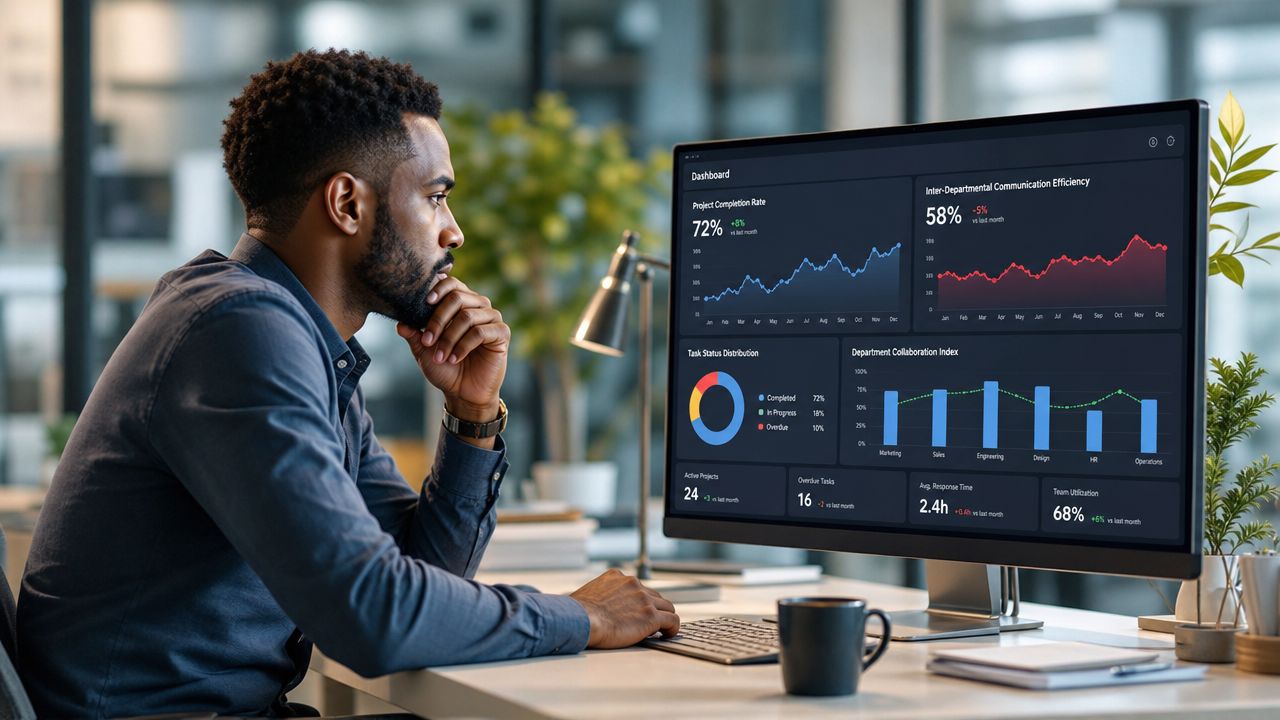
The fastest way to lose team building approval is to lead with the format. Don’t start with the scavenger hunt, the conference energiser, the charity build, or the offsite concept. Start with the operating pressure the team is already feeling.
In Australia, that pressure frequently exists within varied work patterns. According to the context provided by the Australian Bureau of Statistics in the cited team culture statistics, 17.9 million people were employed in Australia in 2022, and by 2023, 31.2% of employees typically worked from home at least part of the time. By 2026, many teams still lack regular connection by default, necessitating deliberate efforts to foster interaction across distances, schedules, and organizational divisions.
Diagnose the problem in business language
Leaders respond better to observable team issues than to broad culture language. Useful starting points include:
-
Remote drift: people work alongside each other, but not really with each other
-
Communication friction: updates are happening, but understanding is patchy
-
Low energy: the team is showing up, but not bringing much discretionary effort
-
Silo behaviour: cross-functional work feels slower and more guarded
Those aren’t “soft” concerns. They affect handovers, trust, speed, and rework.
A better opening line for the proposal
Use language like this:
The team doesn’t need a break from work. The team needs a structured opportunity to reconnect around how work gets done.
That’s also why proposals tied to real business needs tend to land better than generic activity lists. A useful benchmark is team building that aligns with your business objectives, because it reflects the discipline leaders expect. Objective first. Format second.
Turn the Ask Into a People Investment
The language around the request decides whether leadership hears cost or capability. “A team day” can sound nice to have. “A structured people investment” sounds like management.
That wording isn’t cosmetic. It tells decision-makers that the organiser has thought beyond logistics and is focused on the conditions that help the team perform.
Copy-ready language for the approval conversation
Use phrasing such as:
-
For time objections: “This is not time away from work. It is a structured people moment that supports how this team works together.”
-
For budget objections: “The investment is in connection, communication, and team energy, because those conditions shape day-to-day performance.”
-
For sceptical leaders: “This is not about entertainment. It is about creating a better working state for the team.”
“We are not asking for time away from performance. We are recommending one focused people moment that supports connection and communication so the team can work better together.”
Keep the proposal connected to people strategy
If the organisation already talks about retention, engagement, or culture capability, anchor the event there. A proposal sits more comfortably with leadership when it supports an existing people agenda rather than appearing as a standalone request. That’s the same logic behind employee retention strategies, where the value sits in the work environment people experience, not just in policy.
For leaders aiming to improve managerial skills in these discussions, a tool like this tool can also aid in fostering better internal language and consistency. The goal remains unchanged: position the request as a component of how the organization cultivates healthier, more effective teams.
Use the State of Work as Your Evidence
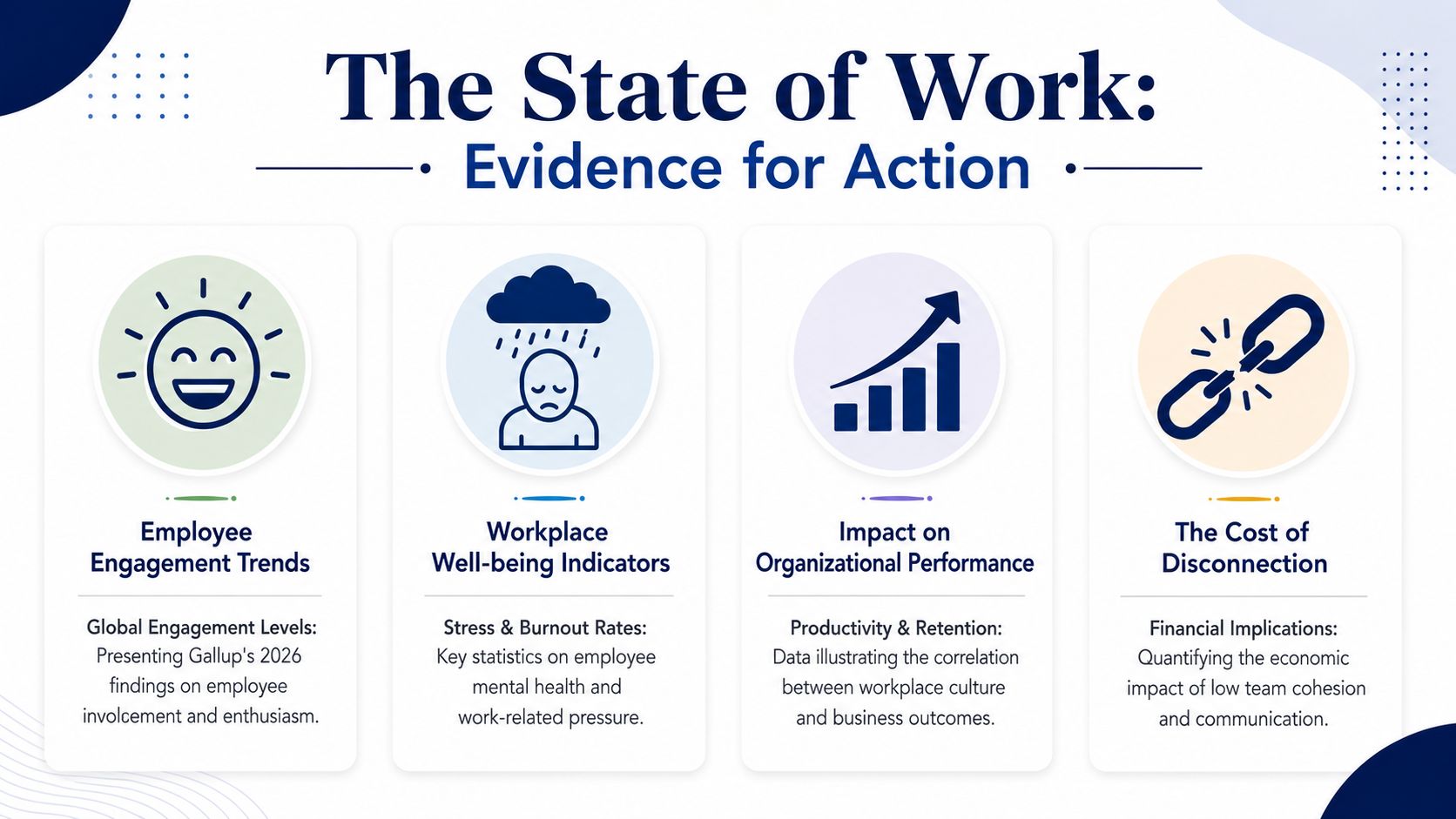
If leadership wants a reason to prioritise the event, the strongest argument is that people pressure is already affecting business performance. Team building approval becomes easier when the organiser can point to a work environment that is clearly under strain.
Gallup’s 2026 report found that global employee engagement fell to 20% in 2025. That is the lowest result since 2020, and the second year in a row that engagement has declined.
Globally, the engagement picture looks like this:
-
20% of employees are engaged
-
64% are not engaged
-
16% are actively disengaged
Gallup also estimates that low engagement cost the global economy US$10 trillion in lost productivity in 2025, which is equal to 9% of global GDP. So while engagement can sometimes sound like a people-and-culture metric, Gallup is very clearly linking it to productivity.
The wellbeing numbers are also mixed.
Globally:
-
34% of employees are thriving
-
56% are struggling
-
9% are suffering
What that means for an approval discussion
Those figures don’t prove that one event fixes engagement. They do something more useful. They help establish that leaders are already operating inside a costly people problem. That shifts team building approval away from discretionary spend and toward a practical intervention.
A concise way to present it:
| Team reality | Leadership implication |
|---|---|
| Low engagement is already present in the wider workforce | People moments need to earn their place |
| Disengagement carries a measurable productivity cost | Approval should be tied to business outcomes |
| Teams under pressure don’t reconnect automatically | Organised connection becomes a management decision |
Use evidence without overloading the slide
One paragraph is enough in most proposals. Something like this works:
Current work conditions already put pressure on communication, morale, and engagement. In that environment, a structured team experience is easier to justify when it is designed to support how people collaborate and re-engage.
For leaders who want broader context on workplace conditions, the state of work in 2026 can sit alongside the proposal as supporting reading. The key is to use evidence to support urgency, not to bury the decision-maker in data.
Explain Why Play Belongs in the Business Case
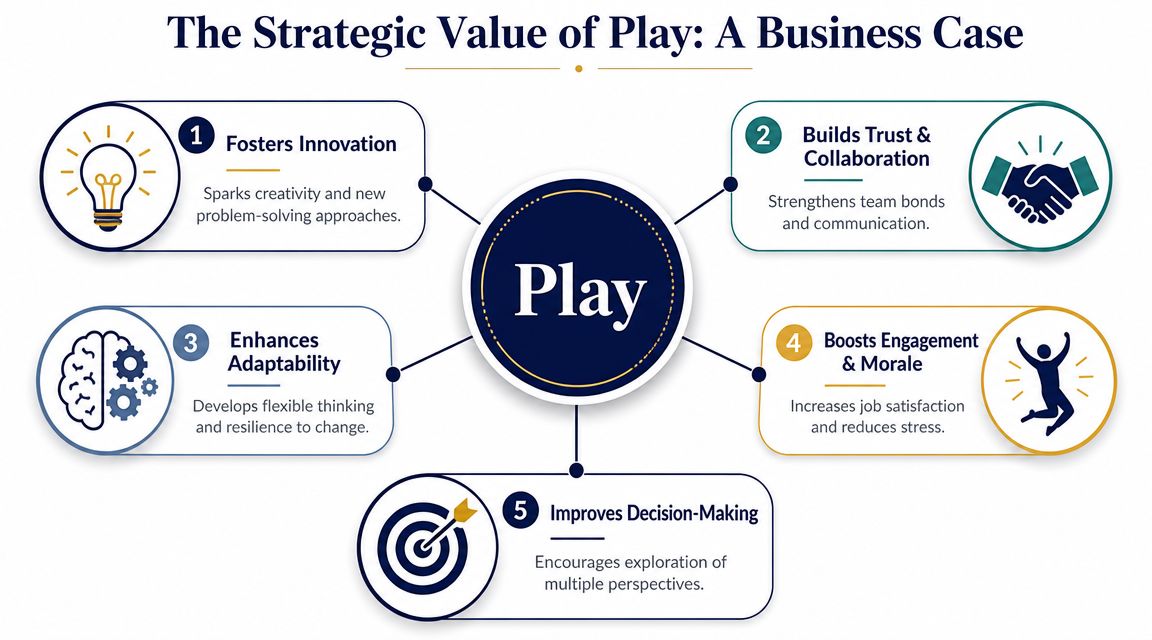
The word “play” still creates resistance in corporate settings because many leaders associate it with games, novelty, entertainment or forced participation. That misunderstanding weakens otherwise strong proposals, because it frames play as something separate from serious work.
Through our exclusive Australasian partnership with the National Institute for Play, Corporate Challenge Events translates decades of play research into workplace experiences designed for team performance. The research shows that play is not simply an activity. It is a biological state that changes how people engage with challenge, uncertainty and each other.
In a play state, the brain and nervous system operate differently. Deep play circuits are activated, stress reactivity can reduce, self-monitoring can soften and the brain becomes more available for learning, adaptation and connection. Play is also linked to neuroplasticity, which is the brain’s ability to form and strengthen pathways through experience.
For teams, that has practical value. Under pressure, people often become more guarded, more rigid and more reliant on familiar patterns. They may keep working hard, but the conditions for open communication, curiosity and flexible problem-solving can narrow.
Play based team building helps shift those conditions. It creates a structured, lower-risk environment where people can experiment, read social cues, make decisions, recover from mistakes and adjust to others in real time. The team is not just talking about collaboration. They are practising the human capacities collaboration depends on.
That is why play belongs in the business case. It is not a soft add-on, entertainment or a reward after the real work is done. Used well, play becomes performance infrastructure. It works with human biology to support the social, cognitive and emotional conditions teams need to connect, adapt and solve problems together.
Use measurable outcomes, not vague promises
The science gives leaders a credible reason to take play seriously, but an approval case also needs outcome language.
According to this BambooHR article on company bonding benefits, 63% of leaders observed better team communication following team-building activities, and 61% noted improved morale. This is valuable as it highlights team building through tangible outcomes that leaders prioritize. Those figures help move the approval conversation away from vague promises and toward outcomes leaders already recognise: communication, morale and the way people work together.
The point is not to claim one event fixes every culture or engagement challenge. The stronger claim is more practical: when team building is designed around the science of play, it can improve the quality of interaction during the experience and give teams something useful to carry back into work.
Play isn’t the opposite of serious work. In the right format, it is one way teams access the human state serious work depends on.
What good play based team building looks like
Not every team accesses play in the same way, so approval should go to formats that are designed with care. Good design usually includes:
-
Choice: people need more than one way to participate
-
Variety: physical, creative, strategic, and collaborative elements shouldn’t all look the same
-
Clear facilitation: leaders need confidence that participation will feel safe and purposeful
-
A real objective: the experience should support team connection, communication, or energy, not just fill time
For organisations trying to articulate that value more clearly, the ROI of play is a useful framing device. The point isn’t to make play sound trendy. The point is to explain why this method can shift team dynamics in a way the business can use.
Build Your Approval Case in Five Questions
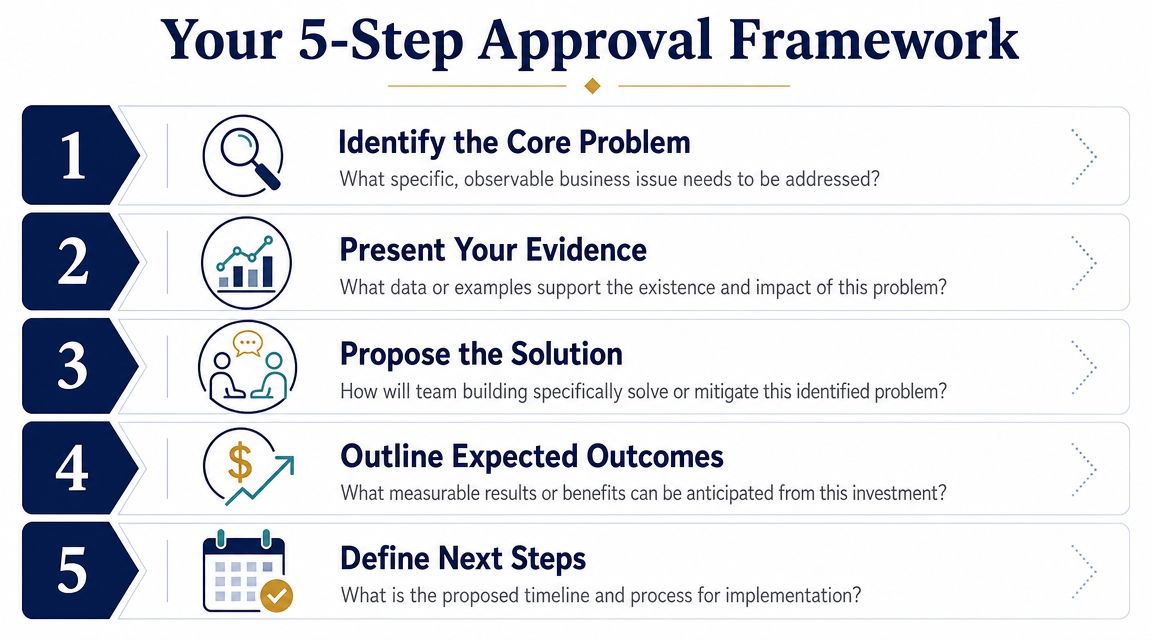
Most approval requests fail because they describe the event but not the case. A stronger proposal answers five leadership questions in order.
Question one asks what is happening in the team right now
This is the diagnosis. Keep it specific and observable.
Example answer: the team is delivering, but cross-functional communication feels strained, newer staff are less connected, and remote work has reduced informal interaction.
Avoid generic phrases like “morale could be better.” Name what people can see.
Question two asks what it costs to leave the issue alone
The organiser links team conditions to business exposure. The cost might show up as slower collaboration, more friction between functions, or a drop in team connection that managers are already noticing.
A short answer works best. There’s no need to overstate it.
Decision lens: If the issue already affects communication or energy, inaction is also a choice with a cost.
Question three asks what people need to experience together
This is not about what they need to learn on a slide. It’s about what the group needs to feel and practise in the room.
Example answer: the team needs to experience low-pressure collaboration, shared problem-solving, and a more open style of interaction across roles.
That language helps leadership picture the value of the event, not just the run sheet.
Question four asks why play based team building is the right format
Now the organiser explains the method. A useful answer might be that the team doesn’t need another meeting about collaboration. It needs a facilitated experience where collaboration becomes easier to access and more visible in real time.
That’s where play based team building often outperforms discussion-only formats. It lets people interact rather than merely agree that interaction is important.
Question five asks how success will be judged
Here, many proposals become too vague. Success doesn’t need a complex dashboard, but it does need a clear line of sight.
Use a mix of simple measures such as:
-
Participation signals: attendance, engagement during the session, willingness to contribute
-
Post-event feedback: what people say about connection, morale, and communication
-
Manager observations: whether the team seems more open, energised, or collaborative afterwards
-
Follow-up actions: whether the event leads to clearer team habits or agreed ways of working
For organisers who want better language around evaluation, resources on mastering event ROI with insights can help sharpen the measurement conversation. The principle is simple. If leadership can see how value will be judged, team building approval feels safer.
What to Say to Leaders Who Say You Are Too Busy
The strongest response to “we’re too busy” is not to argue. It’s to agree with the pressure and then reframe it.
Try language like this:
That’s exactly why this needs attention. The team is under pressure, and this gives people a structured chance to rebuild the connection and communication that help them do the work.
That answer respects the concern instead of dismissing it.
Practical scripts for common objections
-
When the issue is deadlines: “The workload is real. That’s why the format needs to be tight, purposeful, and tied to how the team works together.”
-
When the issue is revenue pressure: “This isn’t separate from performance. It supports the trust and coordination performance depends on.”
-
When the issue is perception: “This is not about making work less serious. It is about helping the team operate in a better state.”
A rushed team often needs team connection more, not less. Busy periods expose gaps in trust, communication, and energy. They don’t erase them.
Make the Investment Easier to Approve
A cautious leader is more likely to approve a proposal that feels low risk, well scoped, and professionally thought through. That means reducing uncertainty before the decision-maker has to ask for it.
What should be in the approval pack
Include these elements:
-
A clear objective: choose one main purpose, such as communication, reconnection, or morale
-
A time-appropriate format: match the design to the team’s real workload
-
A credible facilitation approach: explain how the session will be guided and why participation will feel purposeful
-
Simple success measures: define what feedback or observations will be collected after the event
A practical checklist on getting maximum value your team building event can support this kind of preparation.
Don’t ignore inclusion and accessibility
One of the most common gaps in team building approval is the failure to address who might be excluded by the format. That’s a serious miss. The ABS context cited in this article on blind design and inclusion notes that 1 in 5 Australians had a disability in 2022, so approval should include checks for accessibility risk, duty-of-care, and participation equity.
That means asking practical questions before sign-off:
| Approval check | What leadership wants to know |
|---|---|
| Accessibility | Can people with different needs participate meaningfully |
| Inclusion | Will the format work for mixed personalities, abilities, and responsibilities |
| Delivery risk | Is the experience organised well enough to feel safe and worthwhile |
When those questions are answered early, the proposal feels easier to back.
The Question Is Not Whether the Team Has Time
The final approval conversation usually sounds like a time decision. It isn’t. It’s a priority decision about whether connection, trust, and team energy are being treated as operating conditions or as optional extras.
That’s the more useful frame for team building approval. Leaders don’t need to pretend the calendar is clear. They need to decide whether the current pressure on the team is a reason to delay connection or a reason to support it properly.
A better closing line for the proposal is simple: the question isn’t whether the team can spare the time for one structured people moment. The question is whether the business can afford to keep team connection at the bottom of the list.
If you need to make team building feel worth the time, budget and effort, Corporate Challenge Events can help shape the right people moment for your team. Their play based team building experiences are designed with clear objectives, expert facilitation and lasting impact in mind.