
Every November, the same email thread starts up in HR inboxes and EA calendars across the country: venue, catering, band or DJ, open bar or ticketed bar, 7pm start. It’s a template that’s been run so many times it barely gets questioned. But it’s worth questioning this year, because the evidence now says the template is quietly failing the very people it’s meant to celebrate.
The night-time, alcohol-anchored end of year party isn’t broken because people don’t want to celebrate. It’s broken because the format no longer matches what a modern, hybrid, values-conscious workforce actually wants from a celebration. If you’re the person planning this year’s event, that’s not a small footnote: it’s the whole brief.
The data nobody wants to admit
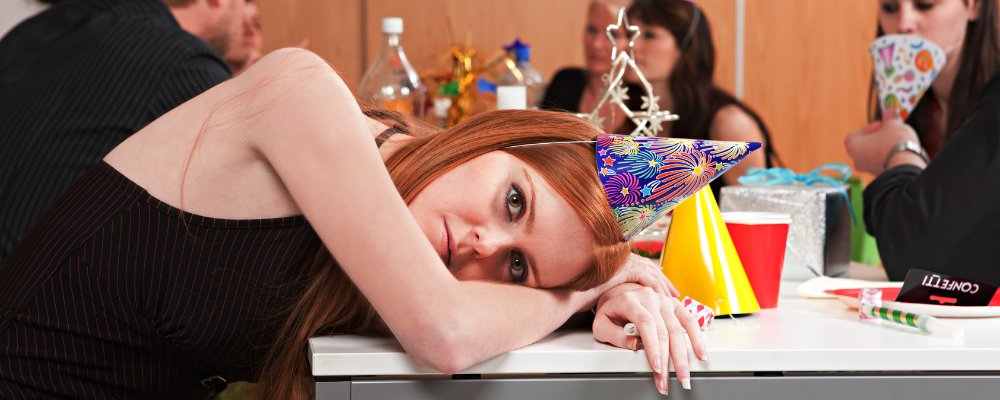
The most compelling case against the traditional night-time party doesn’t come from a wellness blog or a HR trend piece. It comes from one of the largest workplace socialisation studies ever conducted. The Compass/Mintel 2024 Power of Socialisation survey, based on over 30,000 respondents across 21 countries, found that only 49% of employees attended work events held outside work hours. Read that again: half your organisation, on average, simply isn’t in the room. Family commitments, caring responsibilities, sport, travel time, or the plain fact that people have lives that don’t pause at 5pm: all of it works against an evening event before the first canapé is served.
Then there’s the assumption that alcohol is the glue that makes a corporate party work. The same survey found that only 25% of respondents said alcohol was something they wanted at workplace social events. Three in four employees are not asking for an open bar. They’re asking for something else entirely: connection, food, experience, inclusion, and the traditional party format has been quietly optimised for the wrong 25%.
This isn’t a minor shift in preference. It’s a structural mismatch between what event budgets have historically prioritised and what today’s workforce actually values. And it has real consequences: when only half the company shows up, and a chunk of the room doesn’t want what’s on offer, you’re not hosting a celebration, you’re hosting a cost centre that doesn’t land.
This matters more than it used to because the backdrop has changed. Gallup’s most recent State of the Global Workplace research puts global employee engagement at just 21%, one of the lowest readings since it began tracking the measure, with disengagement costing the world economy hundreds of billions of dollars in lost productivity each year. Against that backdrop, an end of year event isn’t a nice-to-have on the culture calendar, it’s one of a handful of moments each year where an organisation can actually move the needle on connection. Wasting it on a format that half the business skips is a genuinely expensive mistake, not just an awkward one.

What the modern workforce is actually asking for
If a night-time, drinks-led party isn’t the draw it once was, what is? The signals are consistent, and they point the same direction across multiple sources.
First, inclusivity has moved from “nice to have” to baseline expectation. Employees increasingly expect events that work for people regardless of whether they drink, have caring responsibilities, or need to get home safely and on time. A daytime event solves several of these barriers by default: no babysitters, no late trains, no choosing between the office party and picking up the kids.
Second, purpose matters more than production value. Industry analysis of 2026 corporate event trends notes that Australian companies are moving toward purpose-driven, people-first events with clear goals, rather than gatherings for the sake of the calendar, and that EAs are increasingly being asked what the objective of an event actually is. The era of “we always do a party in December” is giving way to “what is this event actually meant to achieve?”
Third, sustainability is now table stakes, not a value-add. The same trend analysis points to a shift where discernible guests can spot performative sustainability efforts, and where genuine credentials (seasonal menus, reduced waste, thoughtful sourcing) are what actually build trust. That extends down to the physical details most planners overlook. Even something as unglamorous as catering packaging has become a visible signal of whether a company’s environmental claims are backed by follow-through, with hospitality guidance now treating sustainable food packaging as a core operational decision rather than an afterthought, given how directly it shapes both cost and brand perception.
Put together, these three threads describe an employee who wants to belong, wants their time respected, and wants to see their employer’s stated values show up in the small print of an event, not just the invitation.
Reframing the event, not just the time on the clock
Here’s where a lot of organisations get the strategy half right. They hear “employees want daytime events” and translate that into “let’s do the same party, just earlier.” That’s a missed opportunity. Moving the clock without moving the concept just gives you a smaller, quieter version of the same thing, and it doesn’t solve the deeper question of why you’re gathering people at all.
The more useful reframe is this: an end of year event isn’t just a reward for the year that’s been. It’s one of the few times all year the whole business is in a room together, unstructured by hierarchy or department. That’s genuinely valuable, but only if the format lets people actually use it that way.
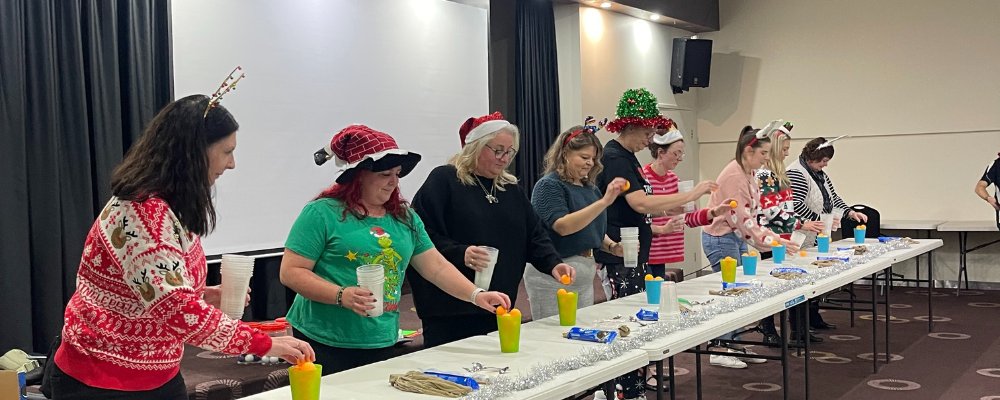
This is where play-based team building earns its place, not as a forced fun bolted onto a party, but as the mechanism that does double duty: celebration and business outcome in the same activity.
Consider what the research says about organised social connection at work. Employees who take part in organised social moments report far stronger understanding of their organisation’s strategy, stronger connection to senior leadership, and a clearer sense of career progression than those who don’t. A seated dinner with speeches doesn’t create that kind of interaction. A well-designed, play-based activity does, because it puts people from different teams and levels on the same footing, working toward something together, without the usual scripts of “who reports to whom.”
That’s the case for treating play as strategy rather than decoration. Done well, a daytime, activity-led event:
-
Removes participation barriers. No late finish, no alcohol pressure, no missed evening commitments, which directly addresses the attendance gap the data shows.
-
Creates genuine cross-team connection. Structured, collaborative challenges break down the silos that a cocktail hour rarely touches, because people are working alongside colleagues they don’t normally sit near.
-
Signals values, not just budget. A thoughtfully run, inclusive, lower-waste event says more about a company’s culture than an expensive open bar ever could.
-
Delivers something to point back to. Leaders can tie the event directly to culture and engagement outcomes, rather than defending a line item that’s hard to justify against attendance and ROI.
Planning it: the practical shift
If you’re the one holding the brief this year, the planning conversation looks a little different from the usual venue-and-catering checklist.
Start with objective before logistics. Before booking anything, get clear on what you want people to walk away with (stronger cross-team relationships, recognition of the year’s wins, a genuine sense of belonging) and let that shape the format, not the other way around.
Then size it intentionally. A tightly run, well-designed event for the whole company during work hours will usually outperform a sprawling evening affair that half the business skips. Smaller, considered gatherings also make it easier to build in the kind of structured connection that a large, loosely run party never achieves.
Choose activities that do the work of both celebration and culture-building. This is where a genuine team building partner, rather than a generic venue and DJ, changes the outcome. At Corporate Challenge Events, over 30 years of research and delivery have gone into understanding how play drives team performance, not just team fun, which is precisely the ingredient a daytime event needs to feel like more than a scaled-down party.
Finally, sweat the inclusive details: dietary variety, non-alcoholic options given equal billing, accessible activities, and yes, sustainable serviceware and catering choices that back up whatever your organisation says publicly about its environmental commitments.
The question worth sitting with
None of this means the night-time party is inherently wrong, or that every organisation needs to abandon it overnight. But the data is hard to ignore: half your people aren’t showing up to evening events, three-quarters aren’t asking for alcohol to be the centrepiece, and the workforce is increasingly judging events on purpose, inclusion, and follow-through rather than production value.
So here’s the question worth putting to your leadership team before you sign off on this year’s plan: if only half the business is going to attend the traditional format, and most of them don’t want what it’s built around, is a night-time event actually the people-first choice, or is it simply the familiar one?
Moving your end of year celebration into daylight hours isn’t a downgrade. Done with the right activities behind it, it’s a more strategic, more inclusive, and genuinely more human way to close out the year, one where everyone can actually be in the room, and where the time together does more than fill a calendar slot.
A well-designed daytime event can help a team celebrate, connect and finish the year with more energy than an evening function often allows. For organisations that want a corporate celebration built around connection, culture and practical delivery, Corporate Challenge Events offers play-based formats that turn an end of year event into something people want to attend. Teams planning a more active or purpose-led option can also explore Christmas team building activities for ideas that fit a modern workplace.