
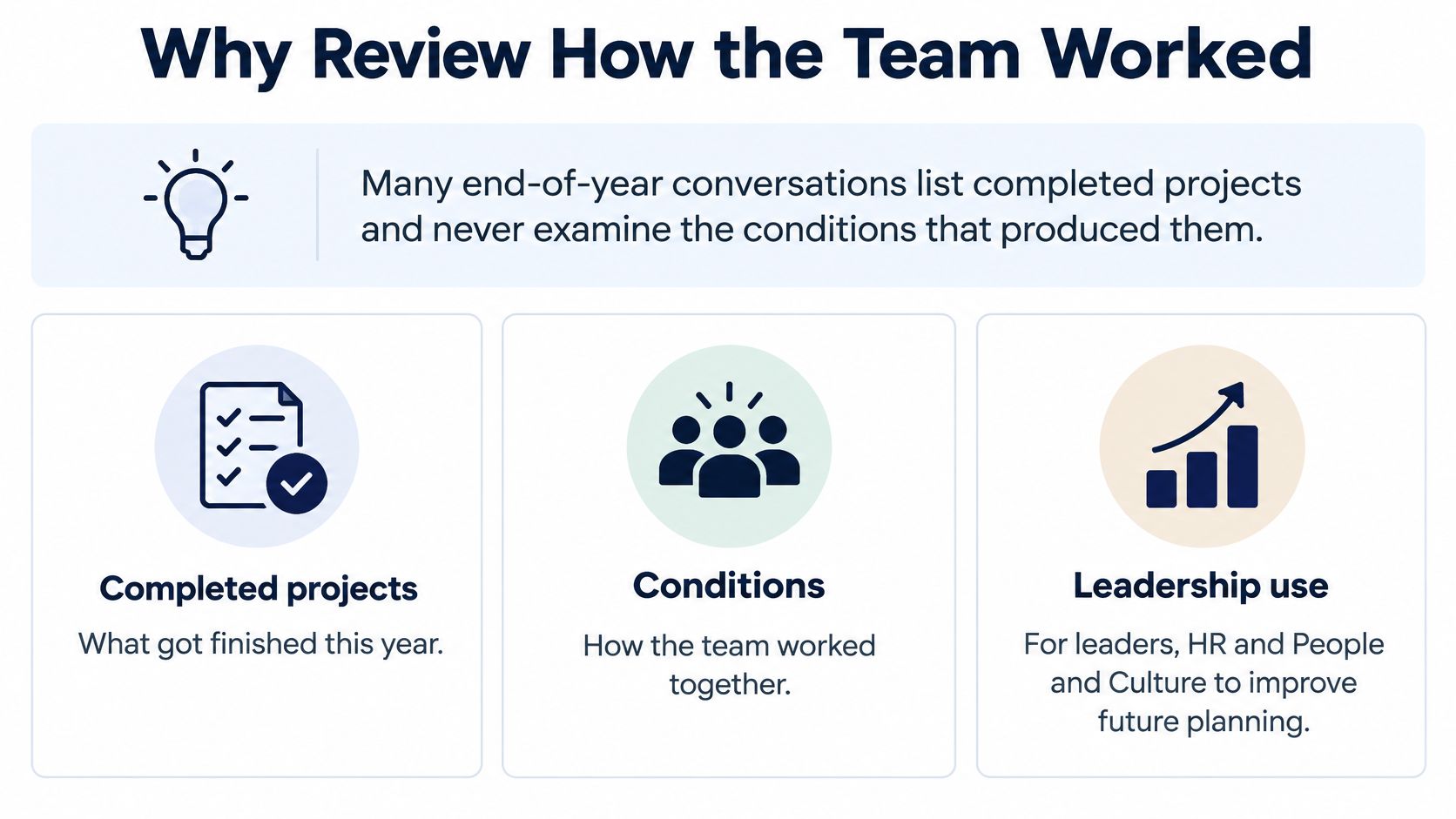
A team can deliver its targets while relying on unclear handovers, hidden overtime or a colleague who continually rescues stalled work. By December, those workarounds can feel so familiar that they barely feature in the conversation about how the year went.
Before you ask your team what it wants to achieve in 2027, give people an opportunity to reflect on how they achieved this year’s results. What helped them work well together? What took more effort than it should have? What would they like you, as their leader, to understand?
This end-of-year team reflection gives you a 45-minute meeting template, with a playful way into the conversation and a clear process for agreeing what happens next.
Look beyond what the team delivered
Achievements deserve recognition. They also deserve a closer look at the working relationships and everyday choices that made them possible. A demanding project may have brought colleagues together, while another success depended on effort the rest of the team never saw.
In late 2024, Gartner’s Australian research on workplace culture recorded positive employee perceptions at just 26.2%. Your team’s experience needs its own conversation, including perspectives that may differ from yours.
There is also evidence for making time to reflect together. A review of research into team reflection found positive overall effects on team performance and performance-related behaviours. Our 45-minute format is a practical starting point for that discussion.
As Hugh Sykes explores in his article on what shared experiences reveal about a team, familiar patterns become easier to examine when people have something specific to discuss. That is the purpose of this meeting: understanding the experiences behind the results, then choosing something worth changing.
Before you bring everyone together
Tell people what the meeting is for and give them the questions beforehand. Ask them to bring a real moment from the year that captures something about working together.
You will need paper and pens, a timer and somewhere to collect ideas. For a hybrid meeting, use a shared digital space everyone can access. Plan for four to eight people; with a larger team, use smaller groups for the sharing stage.
Consider what changed during the year. Whether yours is an established department or you are building a team as the business grows, ask whether your working habits have kept pace with changes in the team.
Your 45-minute team reflection agenda
| Time | Focus | What to do |
| 0 to 5 minutes | Set the purpose | Explain what you want the team to learn and how the conversation will work. |
| 5 to 12 minutes | Create a postcard | Give everyone quiet time to capture a moment from the year and a hope for next year. |
| 12 to 22 minutes | Share the stories | Invite each person to explain their postcard briefly, with the option to pass. |
| 22 to 37 minutes | Explore the patterns | Use the questions below to understand what helped and what needs attention. |
| 37 to 45 minutes | Agree what happens next | Choose one or two actions, record ownership and book a review. |
Open by explaining that you want to learn about how the team worked together. Acknowledge that people may have experienced the same year differently, and that your own approach is part of the conversation.
A playful reflection activity: a postcard from our team
Invite each person to create a postcard that captures a real experience of working with the team this year. On the front, they can draw a scene, use a few words or give the experience a title. On the back, ask them to finish this sentence:
“Next year, I’d like us to make more room for…”
The postcard could capture something they appreciated or a situation they would like the team to approach differently. People choose what to share and how to express it. There is no competition or requirement to perform for the group.
This introduces imagination into the reflection. Instead of producing another list of project updates, people have room to choose a moment and represent what it meant to them. A colleague’s image or title may give others a different way to understand an experience they shared.
After seven minutes, invite everyone to share one postcard in about a minute. As the leader, share yours after others have contributed. With larger teams, ask small groups to bring back one theme each.
Listen for connections between the stories. When several people describe last-minute help, explore whether they experienced strong cooperation, avoidable pressure or a mixture of both. Ask before drawing a conclusion.
The intention is to offer another way into the discussion. Giving people choice in how they participate is part of our approach to helping teams engage through purposeful play.
Team reflection questions worth exploring
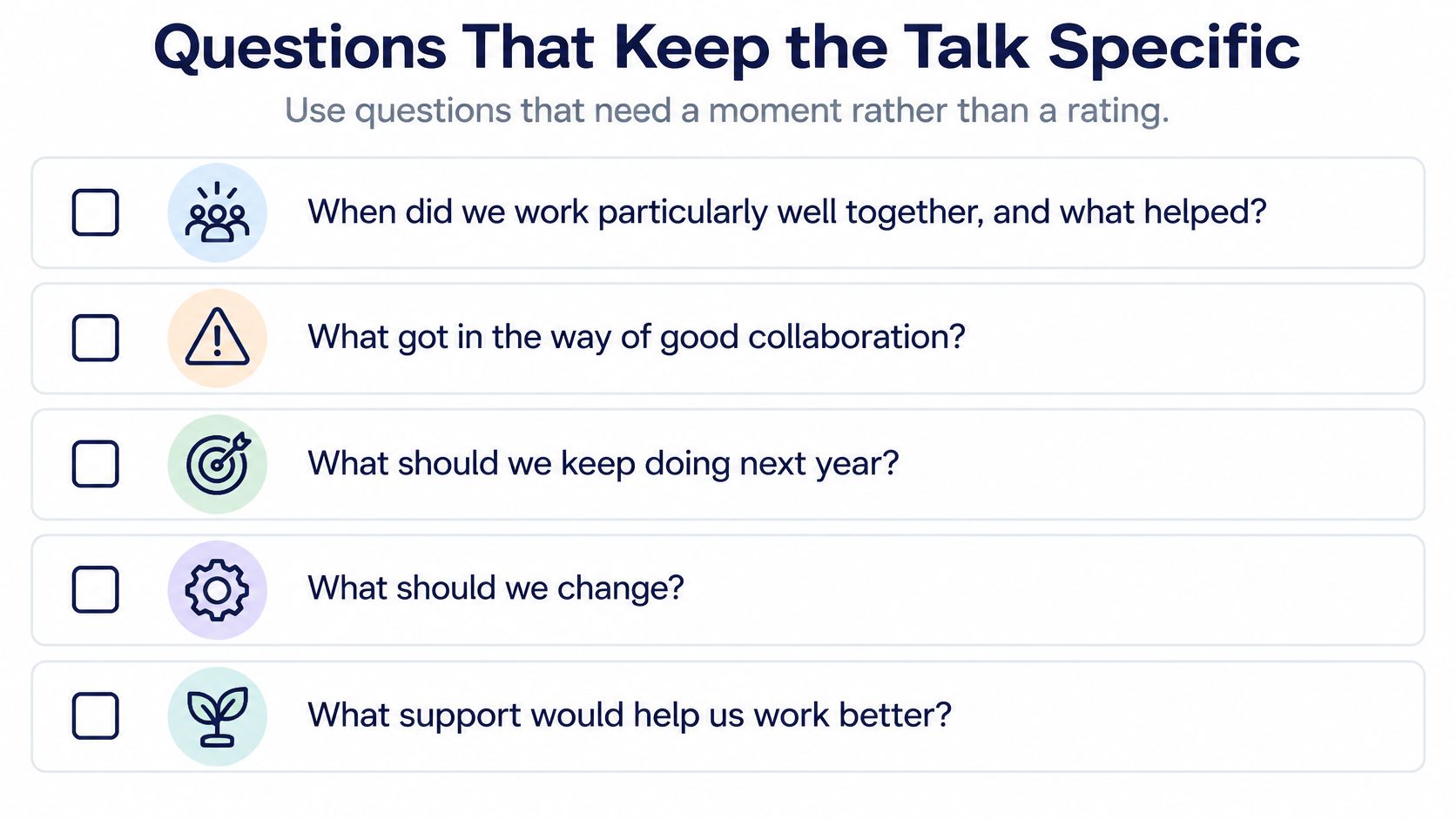
Choose the questions that fit what people have shared. Leave enough time to understand an answer before moving on.
-
When did we work particularly well together, and what helped? Explore what people actually did, so the team can recognise a behaviour worth repeating.
-
What have we learned to work around that we should address? Look for recurring difficulties that have become accepted parts of the working week.
-
Which contributions or strengths did we come to appreciate? Give attention to work that may have made someone else’s success possible.
-
What should we make more room for next year? Ask what would help people contribute, learn or enjoy working together more.
-
What do we need from each other, including our leader, to make that happen? Bring your own decisions and responses into the discussion.
If you adapt the prompts or draw on other questions that help colleagues understand one another, keep the conversation connected to real experiences. “Communication needs to improve” becomes more useful when someone can explain which information arrived late and what happened as a result.
Make room for an honest answer
An invitation to speak is only the beginning. Your response when someone offers an uncomfortable observation will influence whether they continue.
Ask a question before defending a decision. Give people thinking time when the room goes quiet, and offer a private conversation when something needs more care. Our guide to creating the conditions for people to speak openly explores this leadership responsibility further.
SafeWork NSW’s guidance on genuinely involving people in workplace decisions reinforces the importance of a two-way conversation. If concerns about workload or working relationships emerge, acknowledge them and arrange appropriate follow-up.
Turn the conversation into something the team can use
Use the final eight minutes to agree on one or two actions. A useful commitment describes something people can do differently within the work they already have.
For example, “improve handovers” leaves plenty of room for different interpretations. Agreeing to record outstanding decisions before Friday’s finish gives the team something specific to try.
| Record | Example |
| Agreed change | Add a short Friday handover note covering outstanding decisions and the next step. |
| Owner | Name the person responsible for coordinating the note. |
| Leader’s contribution | Make space for the handover during working hours. |
| Sign of progress | Colleagues spend less time chasing decisions when work resumes. |
| Review date | Book a date that works around the team’s leave and return. |
Share the agreed actions promptly. Explain how personal comments will be handled before collecting them, and circulate shared themes rather than sensitive individual details. SafeWork NSW’s practical advice on protecting private information during consultation can help you plan that part of the process.
When you revisit the actions, ask what the team tried and whether it helped. Our guide to recognising meaningful changes in team performance can help you choose a useful sign of progress. If an idea cannot proceed, explain why and keep the team informed.
Take a clearer understanding into 2027
An end-of-year team meeting can give you something valuable to bring into planning: a fuller understanding of the people doing the work and the conditions that help them succeed together.
Give that understanding a place in your decisions. When people see their experience influence how the team works, reflection has a purpose beyond the meeting itself.
For more conversations and practical resources on leading teams through the power of play, explore The Play Lab.