Corporate events are under more pressure to justify the time, budget and effort behind them. Event professionals are managing rising expectations, tighter timelines and increasingly complex logistics, while organisations expect each gathering to deliver a clear return through stronger engagement, better communication or measurable business outcomes.
The data reflects that shift. Event planning statistics from Sweap show that 89% of event professionals consider events critical to achieving key business objectives, while attendee engagement remains one of the most important measures of success. At the same time, 2026 event planning statistics from SchedulingKit highlight the operational demands behind delivery, including vendor coordination, timeline management and the challenge of managing multiple moving parts without missed deadlines.
For Australian HR leaders, People and Culture teams and event organisers, the message is clear. A corporate event cannot rely on a polished venue or a packed agenda to create value. It needs a defined purpose, thoughtful programming and a structure that helps people connect, participate and carry something useful back into the workplace.
The strongest event planning practices connect every logistical decision to the outcome the organisation wants to create. Play-based team building, conference energisers, charity activities and leadership offsites should therefore be selected with the same care applied to budgets, procurement and governance.
Table of Contents
1. Define Clear Event Objectives Aligned to Organisational Outcomes
2. Select Programming That Matches Team Dynamics and Development Stage
3. Engage Professional Facilitation and Partner with Experienced Providers
4. Incorporate Meaningful Debrief and Workplace Application Planning
6. Align Event Timing and Format to Organisational Context and Rhythm
8. Design Events That Balance Competition, Collaboration and Celebration
9. Communicate Event Purpose and Expectations to All Participants
10. Plan Charity and Purpose-Driven Events That Create Dual Impact
1. Define Clear Event Objectives Aligned to Organisational Outcomes
The best events start with a business question, not an activity idea. If the organisation wants stronger cross-team communication, better onboarding, higher trust, or sharper leadership alignment, the event should be built around that outcome from the start. That approach fits event planning best practices because it keeps every decision tied to a result, not a vibe.
A useful planning conversation sounds like, “What do we want this group to be better at after the event?” That question pushes leaders past vague goals and into behaviour, which is where workplace value lives. A sales leadership offsite might need sharper decision-making. A merged department might need a format that creates shared language and reduces distance between subcultures.
Practical rule: if the objective can't be explained in one sentence, it isn't ready for the briefing.
Turn objectives into design filters
Once the objective is clear, it can shape the whole program. A team that needs better listening won't get that from passive entertainment alone. A team that needs psychological safety usually needs collaborative activities, not a format that rewards the loudest voices.
A short internal planning note helps here. Document the objective, then share it with the facilitator so the event design is intentional, and not just organised. Use manager observations, post-event feedback, or a culture survey to track whether the event supported the outcome.
For corporate planners, the internal brief should also be shared with the right stakeholders. HR, People & Culture, department leadership, and the facilitator all need to understand the same end state. That creates alignment before anyone starts discussing venues, catering, or transport. Corporate Challenge Events has a useful internal resource on team building that aligns with your business objectives, and the logic is sound, objective first, activity second.

2. Select Programming That Matches Team Dynamics and Development Stage
Not every team needs the same kind of challenge. A newly formed leadership group usually needs something very different from an established department that already knows each other well but has hit communication friction. Good event planners read the room before they book the program.
A merger integration team, for example, often benefits from trust-building and connection-focused work that helps people from separate histories interact without defensiveness. A mature team under pressure may need collaborative problem-solving that surfaces how decisions are made under stress. When the program matches the team's development stage, people are more willing to engage because the event feels relevant to their real working life.
Match intensity to readiness
A common mistake is assuming higher energy means better results. Sometimes it does. Sometimes it just overwhelms the group. Teams with low trust or recent conflict usually need psychological safety before they need competition or high disclosure. Other teams want to be stretched, challenged, and put under light pressure in a way that reveals how they collaborate.
That's why discovery conversations matter. Ask a facilitator or provider to speak with department leadership first, then be honest about what's happening inside the team. If there's a recent restructure, a leadership transition, or a lot of remote working, the program should reflect that reality. A program like Corporate Challenge Events' team bonding options can be useful when the brief is connection, but the deeper point is the fit between team need and activity design.
Experienced planners don't ask what format is most popular, they ask what will help this specific group work better on Monday.
Physical comfort, competitiveness, and vulnerability also need to be considered. A high-performing team might enjoy a mix of adventure and competition. A team with communication silos might need activities that force active listening and perspective-sharing. The best programs create relevance, not just entertainment.
3. Engage Professional Facilitation and Partner with Experienced Providers
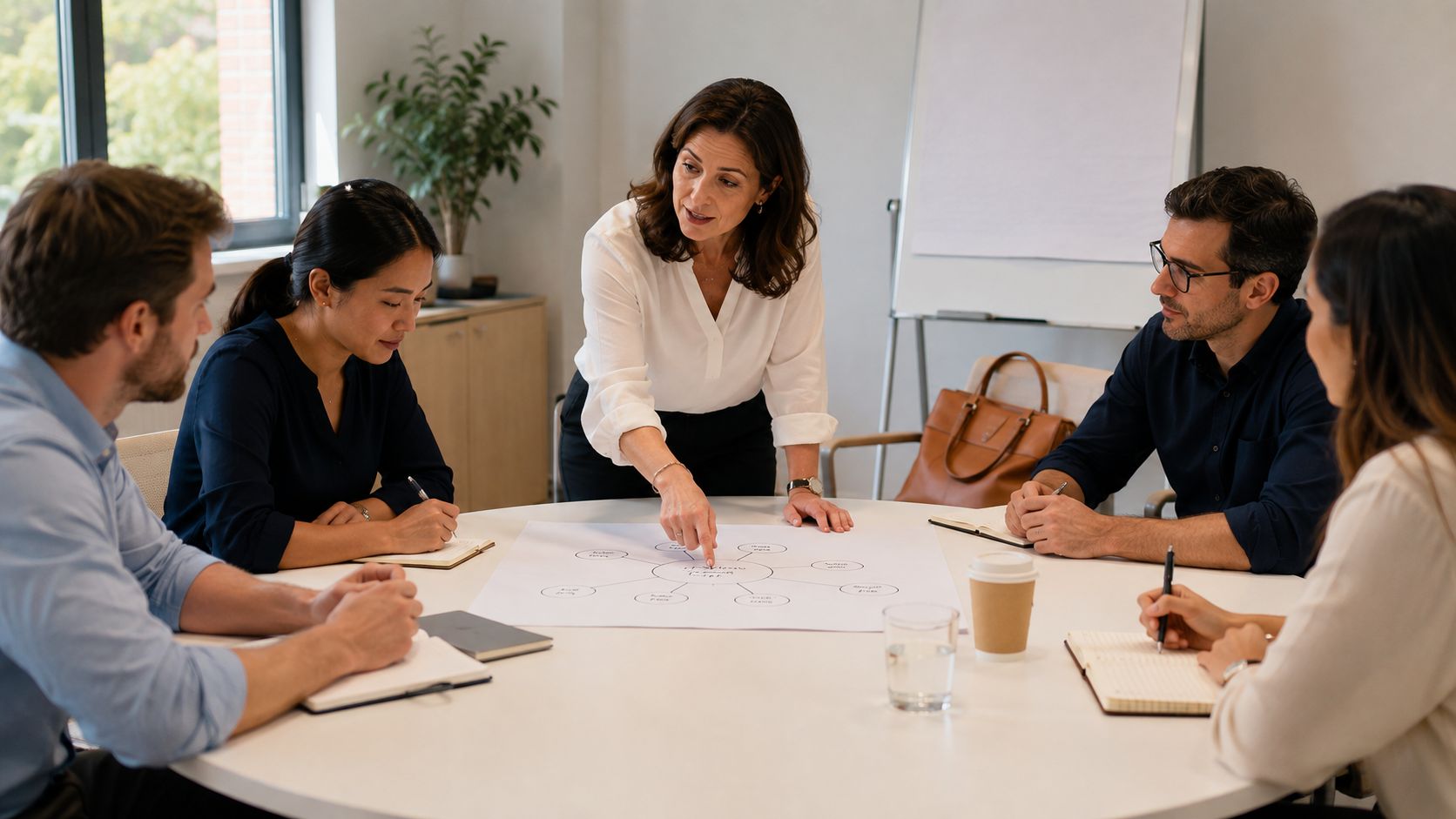
A strong event agenda can still fall flat without skilled facilitation. Logistics get people into the room, but facilitation shapes what happens once they're there. The provider has to read dynamics in real time, protect participation, and make the learning relevant to work.
That's where experience shows up quickly. A facilitator who notices a quieter participant pulling back can create another way to contribute, especially if the event combines strategic, creative, and physical moments. A coordinator who has seen enough event days can move a group indoors when weather changes without turning the experience into a scramble. Those details separate a pleasant session from a programme with real follow-through.
Ask for the thinking behind the program
The strongest providers don't just offer activities, they offer assessment and adaptation. They should be able to explain how they recommend programs, how they handle mixed comfort levels, and how they create psychological safety. They should also be able to brief leadership, manage logistics, and support post-event reinforcement.
A useful provider conversation covers a few essentials.
Facilitator background: Ask what training the facilitator has and how they manage group energy.
Context awareness: Share team history, recent change, or current tension so the program can be adapted.
Contingency handling: Ask what happens if weather, injuries, or timing changes disrupt the plan.
Post-event support: Check how the provider helps the organisation reinforce learning after the event.
A provider's value is not just in running an activity. It's in helping the organisation move from “everyone had a good day” to “the team is now talking differently.” That's why some teams ask providers about industry experience, while others ask for references and evidence of measurable outcomes. The right questions are practical because the event itself is practical. Corporate Challenge Events' own guidance on how to find an event planner that's a good fit reflects that same logic. For teams that need multilingual participant support, a comparison like compare event language options can also help when planning inclusive corporate communication.
4. Incorporate Meaningful Debrief and Workplace Application Planning
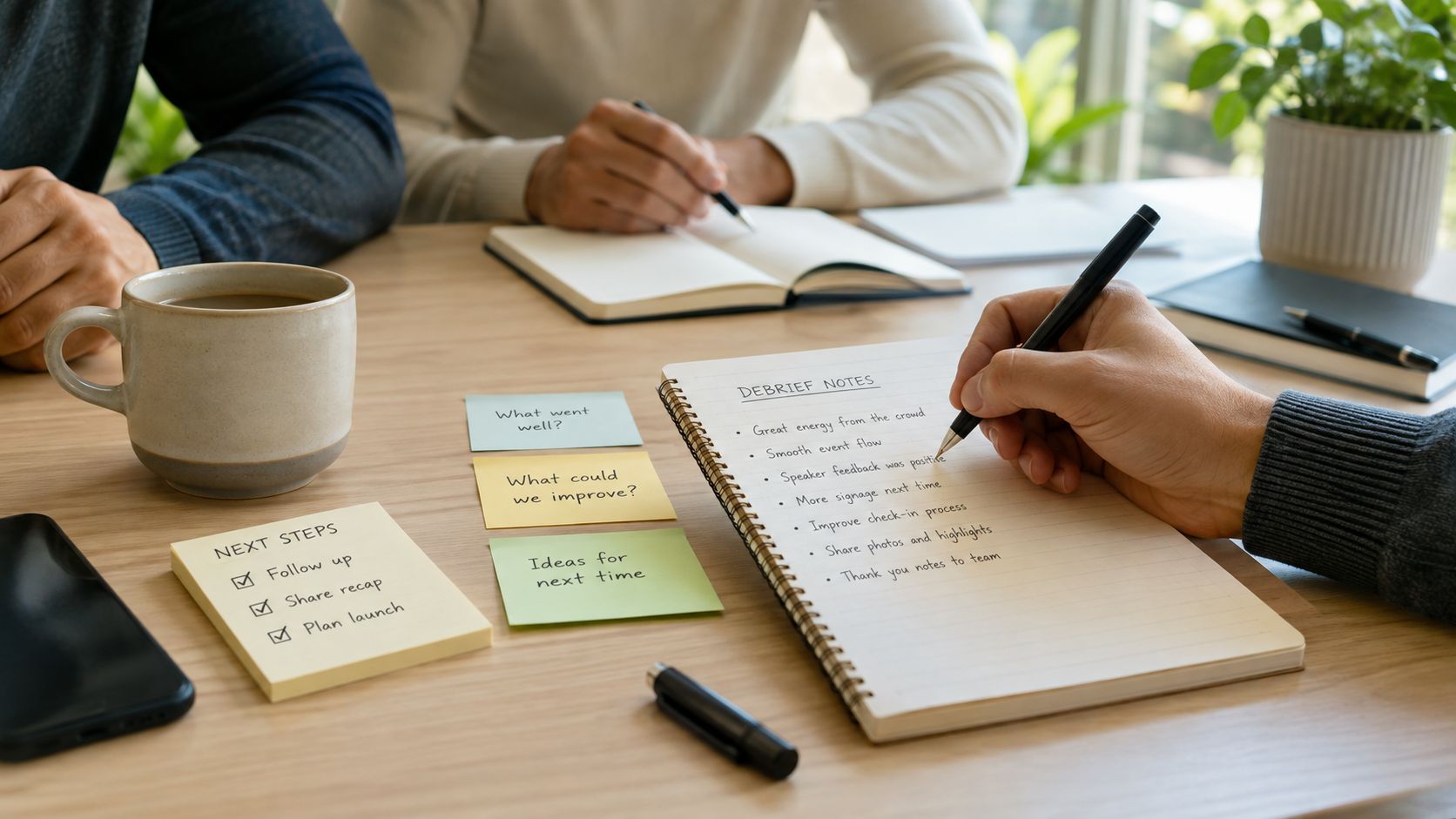
An event without reflection often creates a burst of energy and very little change. The lift comes when teams are given structured time to talk about what they learned, how they behaved, and what they'll do differently back at work. That is where the event stops being a moment and starts becoming a management tool.
The debrief should go beyond “What did you enjoy?” and into how the group communicated, made decisions, or handled pressure. After a collaborative challenge, a good facilitator will ask who spoke, who stayed quiet, and what patterns showed up. After a creative task, the group can discuss whether ideas were built on or shut down too quickly. Those conversations translate the event into workplace language.
Build the bridge from activity to behaviour
A good debrief creates specific commitments. A team might decide to let quieter voices speak first in the next project meeting. Another might agree to pause before critiquing an idea, so discussion feels safer. A third might notice that trust rose during the event and ask how that same trust can show up in hybrid work.
If people can't name what changes on Monday, the event has not finished its job.
The facilitator should know the workplace challenge before the event begins, because debrief needs a real target. Managers also have a role here. If they reference the commitments later, in team meetings or one-on-ones, the experience stays alive. Corporate Challenge Events' guide on ensuring team building benefits last points to the same principle, sustained reinforcement beats one-off enthusiasm.
A strong debrief often produces language leaders can reuse. That language becomes part of team culture, which is why this step is operational, not decorative. When the event is designed well, the debrief captures the shift while it's still visible.
5. Create Psychological Safety and Inclusive Participation
People participate differently when they feel safe. In a corporate context, that's not a soft preference, it's the condition that determines whether team members contribute openly or stay guarded. Psychological safety means people can take interpersonal risks without expecting embarrassment or punishment, and that can change the quality of every interaction in the room.
This is especially important in workplaces with hierarchy, performance pressure, or mixed relationships. A participant may need time before speaking. Another may contribute better through observation or strategy than through physical activity. A good event makes room for both.
Design for different ways of showing up
The most inclusive programs don't force one style of participation. They offer multiple roles, so people can contribute through movement, ideas, coordination, or reflection. Clear pre-event communication helps too, because it tells participants what's going to happen and what options exist if they need to sit out part of an activity.
A brief check-in before the event can surface comfort levels or accessibility needs. That gives the facilitator useful context without making attendees feel singled out. Leadership should model participation without setting a tone that pressures everyone to match the same energy level. Quiet participants often contribute more once the environment makes that contribution legitimate.
Team safety rises when leaders treat participation as flexible, not performative.
Accessibility should be discussed before booking, not after problems appear. In Australia, that conversation is especially important because event access, movement paths, toilets, signage, and service processes all affect whether people can participate fully. Corporate Challenge Events' resource on psychological safety in the workplace aligns well with that approach, because it treats safety as an operational issue rather than a slogan.
A team that feels safe will ask better questions, engage more openly, and take more value from the experience. That doesn't mean every participant becomes outgoing. It means the event design doesn't punish different communication styles.
6. Align Event Timing and Format to Organisational Context and Rhythm
A strong concept can still fail if it lands at the wrong time. An event scheduled during a deadline crunch, a restructuring, or a peak operational period is more likely to create resistance than connection. The best event planning best practices account for timing as carefully as they account for content.
Events have more impact when they align with a meaningful organisational moment. A return-to-office reset, a leadership transition, a merger integration period, or an end-of-year culture push all create natural reasons for people to focus. In those situations, the event feels purposeful because it's attached to a real business rhythm.
Format should fit the workforce, not the brochure
Format matters just as much as timing. Distributed teams may need regional events with virtual connection moments. Time-poor departments may need shorter, high-impact formats. Teams spread across Australia may need localised delivery that avoids unnecessary travel while still building shared experience.
The best date is the one people can actually show up for with attention, not just calendar acceptance.
A department in a busy season might be better served by waiting until pressure eases. A newly merged group might need an event during the transition window, not after people have already drifted into separate habits. Hybrid and distributed work have changed what “attendance” means, so format decisions should reflect the actual work pattern, not the old default of everyone on site in one place.
The practical question is simple. Does the event support the organisation's rhythm, or compete with it? If the answer is the latter, participation will feel forced. When timing and format fit the context, people arrive with more energy and less resistance.
7. Measure Impact and Build Ongoing Culture Reinforcement
Events deserve the same discipline as other workplace investments. If the organisation isn't measuring impact, it's only measuring attendance. That's a weak standard for something meant to shape communication, trust, and culture.
The strongest event planning best practices define success before the event starts. That usually means agreeing on a few measurable indicators, then collecting both quantitative and qualitative feedback. A leadership team might look at engagement or participation. A People & Culture team might look for changes in team confidence, collaboration, or follow-through. A facilitator can help capture the insights while they're still fresh.
Reinforcement is where event value compounds
One event can surface the right language, but the organisation has to keep using it. Managers can reference commitments in team meetings, leadership can build the same themes into coaching, and HR can fold the learning into broader culture initiatives. Without that reinforcement, even a strong event will fade into memory.
A few practices make the reinforcement practical.
Capture commitments in writing: Record what the team said it would do differently.
Share outcomes with leaders: Give managers a concise debrief they can use.
Reference the event later: Bring the same language into future conversations.
Track change over time: Review whether the event's themes show up in team behaviour.
A useful benchmark for this section already sits in the planning process itself, measurable goals and KPIs should be part of the brief before anyone books the venue, as best-practice guidance on event KPIs makes clear. For feedback design, improving your feedback forms is also worth considering when post-event data quality matters.
The point is not to turn every event into a spreadsheet exercise. It's to make the event visible in the system afterwards, so the organisation can see whether the learning carried forward.
8. Design Events That Balance Competition, Collaboration and Celebration
Pure competition can split a group. Pure collaboration can feel flat if the event never creates any energy. Strong corporate programs usually balance both, then finish with recognition that brings people back together. That mix tends to suit workplace culture because teams often contain a blend of competitive drive and collective intent.
Competition can lift attention quickly, especially when teams need momentum. Collaboration then turns that energy into shared problem-solving. Celebration closes the loop by recognising effort rather than only outcome. That structure works well for conference energisers, team offsites, and charity team building where engagement needs to stay high without becoming divisive.
Balance matters more than intensity
A good provider will know how to use competition as fuel rather than as a ranking system. Friendly scoreboards, team challenges, and timed activities can create urgency, but they shouldn't define people as winners and losers. The debrief should also make sure the competitive elements created positive energy rather than lingering tension.
Teams with strong performance culture may enjoy a sharper edge. Other teams respond better to lighter competition and more emphasis on shared success. There's no universal formula, which is why experienced planners check the emotional tone of the group before choosing the mix.
Healthy competition gives people a reason to lean in. Collaboration gives them a reason to stay connected.
Celebration should include everyone, not just the group that scored highest. That final moment matters because it tells participants the experience was about team development, not just performance theatre. When the event is designed with that balance, people leave with more energy and less friction.
9. Communicate Event Purpose and Expectations to All Participants
Unclear communication makes people cautious before the event even begins. If participants don't know what the event is for, what the format looks like, or how much participation is expected, they often arrive guarded. In corporate settings, that hesitation can be stronger than organisers expect.
Good pre-event communication should explain the purpose, timing, logistics, attire, and what participation will look like. That's especially important when the event includes play-based team building, because some employees may be unfamiliar with the format and unsure whether they'll feel comfortable. Clear communication reduces uncertainty and shows respect for people's time.
Make the brief practical, not promotional
The best participant email doesn't oversell the event. It tells people what they need to know. What time it starts, how long it runs, whether they need to bring anything, and how remote or hybrid participants will be included if that applies. If there are accessibility needs or comfort concerns, the message should invite them early.
A leadership note can strengthen the message by explaining why the event matters to the organisation. That gives the day a business rationale, not just a social one. If there's scepticism about team building, it helps to acknowledge that concern directly and explain how this event is designed differently.
This guidance on how Evite works is a reminder that even the invitation process shapes participation. In corporate settings, the communication doesn't need to be flashy. It needs to be clear, respectful, and specific.
When participants know what to expect, they're more likely to engage. When they don't, they conserve energy for self-protection.
10. Plan Charity and Purpose-Driven Events That Create Dual Impact
Purpose-driven events can do more than build camaraderie. When teams work together on a cause that matters, the experience combines connection with contribution, and that combination is often more memorable than entertainment alone. For corporate leaders, that makes charity team building a useful option when the goal is both engagement and values expression.
The cause has to be real, though. Teams can tell when an organisation chooses a charity because it sounds good rather than because it aligns with the culture. Purpose-driven events work best when the activity, the cause, and the company values connect naturally. That could mean packing goods, building resources, supporting community groups, or contributing skills to a local need.
Make the impact concrete
Participants engage more when they can see what they've contributed to and why it matters. That means the charity partner should be established, the activity should allow genuine contribution, and the follow-up should explain the result. If the organisation runs these events regularly, the CSR strategy becomes more coherent, not just more visible.
A few examples show how this can work in practice. A logistics team might combine teamwork with distributing goods to community organisations. A technology team might support digital inclusion through skill-sharing. A company with animal welfare values might choose a program that connects team building with local rescue support. The event still builds collaboration, but it also gives people a shared reason to care.
Purpose-driven events work best when people feel they helped create something useful, not when they merely attended a cause-themed activity.
The right charity event also gives people choice. Not everyone connects with the same cause, so the participation model should allow genuine buy-in rather than pressure. That respect strengthens both the culture and the event outcome.
10-Point Comparison of Event Planning Best Practices
| Initiative | Implementation complexity | Resource requirements | Expected outcomes | Ideal use cases | Key advantages |
|---|---|---|---|---|---|
| Define Clear Event Objectives Aligned to Organisational Outcomes | Medium, stakeholder alignment and objective-setting | Low–Medium, time with leaders, basic measurement tools | Focused program choices, measurable ROI, greater post-event behaviour change | Strategic events requiring leadership buy-in or measurable impact | Reduces scope creep; ties event to business outcomes; improves accountability |
| Select Programming That Matches Team Dynamics and Development Stage | Medium–High, assessment and tailored design | Moderate, discovery time, facilitator input, varied program options | Higher relevance and engagement; addresses specific team gaps | New teams, post-merger integration, teams at specific development stages | Tailored experiences; reduces mismatch and discomfort |
| Engage Professional Facilitation and Partner with Experienced Providers | Moderate, vendor selection and coordination | High, budget for providers, logistics and coordination time | Skilled management of dynamics, better debriefs, logistical reliability | Large, complex, hybrid or high-stakes events | Expert facilitation, scalability, removes internal logistics burden |
| Incorporate Meaningful Debrief and Workplace Application Planning | Medium, structured debrief design and facilitation | Low–Medium, event time allocation, facilitator support | Converted experiences into concrete actions and commitments | Events focused on learning, leadership development, behaviour change | Translates activity into applied change; creates accountability |
| Create Psychological Safety and Inclusive Participation | Medium, intentional design and pre-event communication | Low–Medium, accessibility planning, facilitator training | Broader genuine participation; reduced defensiveness | Diverse teams, neurodivergent or introverted participants, hierarchical groups | Inclusive engagement; better learning conditions; accessibility |
| Align Event Timing and Format to Organisational Context and Rhythm | Medium, calendar coordination and format selection | Low–Medium, scheduling, possible virtual/hybrid tech | Improved attendance and receptivity; less resentment over timing | Return-to-office, launch moments, post-peak periods, distributed teams | Greater relevance; respects team capacity and timing |
| Measure Impact and Build Ongoing Culture Reinforcement | High, define metrics and longitudinal tracking | High, measurement tools, leadership follow-through, reporting | Demonstrable ROI and sustained culture change when reinforced | Organisations seeking evidence-based culture programs | Accountability for impact; supports continuous improvement |
| Design Events That Balance Competition, Collaboration and Celebration | Medium, activity mix and energy management | Moderate, varied activities, facilitation to manage dynamics | Engaging, authentic experiences that recognise different strengths | Teams wanting high energy plus cohesion and recognition | Energises teams; builds shared memories and balanced dynamics |
| Communicate Event Purpose and Expectations to All Participants | Low, prepare clear pre-event messaging | Low, time for communications and RSVP management | Reduced anxiety, clearer participation, higher trust and attendance | Skeptical teams, hybrid events, sensitive participation contexts | Transparency; surfacing needs early; increases comfort to engage |
| Plan Charity and Purpose-Driven Events That Create Dual Impact | Medium–High, partner selection and alignment | Moderate–High, coordination with charities, impact reporting | Stronger meaning, higher engagement, tangible community impact | CSR-aligned organisations, values-driven teams, volunteer events | Dual benefit: team bonding plus measurable community contribution |
From Planning to Performance Your Next Steps
Strategic event planning is culture design in practical form. The strongest events don't happen by accident, they're built around clear objectives, appropriate programming, skilled facilitation, inclusive participation, and follow-through that keeps the learning alive. That's what separates a one-day interruption from an experience that changes how people work together.
For Australian leaders, the opportunity is especially strong because the workplace has become more distributed, more hybrid, and more conscious of what justifies time away from the desk. Events now have to earn their place. When they do, they can support communication, rebuild trust, and create the kind of shared momentum that's hard to generate through screens alone.
Play-based team building has a useful role here because it gives adults a low-risk way to interact, compete, collaborate, and reflect without turning the day into forced entertainment. Used well, it supports leadership development, conference energy, charity impact, and culture reinforcement. Used badly, it becomes another calendar event people tolerate.
The next step is simple. Treat the next event as a performance decision, not a scheduling one.
Corporate Challenge Events designs play-based team building, conference energisers, charity programs, and custom corporate experiences across Australia and New Zealand. Visit Corporate Challenge Events to explore options that align with your team objectives, strengthen culture, and turn your next event into something people carry back to work.