
Most advice about employee recognition ideas still leans on praise as a transaction. Say thanks, hand out an award, move on. That approach often misses the underlying problem. People don't only want to know that leadership noticed a result. They want to feel seen by the team around them.
Recognition builds team connection when it's specific, timely and shared. Gallup notes that the most memorable recognition comes from an employee's manager at 28%, followed by a high-level leader or CEO at 24%, and recommends recognition every seven days to keep it effective, according to Gallup's workplace recognition guidance. When recognition falls flat, it usually has the same causes: generic praise, leader-only delivery, awkward timing, and awards that favour visible personalities over consistent contributors.
Table of Contents
1. Peer-to-Peer Appreciation Circles
Peer recognition works best when it has structure. An appreciation circle is a short facilitated segment in a team meeting where each person names a specific contribution from a colleague and why it helped the team. That keeps recognition from becoming a popularity contest or a vague round of compliments.
Quantum Workplace reports that employees who believe they'll be recognised are 2.7 times more likely to be highly engaged, according to its recognition and engagement analysis. That makes peer-to-peer recognition more than a morale extra. It becomes part of employee engagement and positive team culture.
How to run it well
A simple format works best:
Keep the group small: Teams can run circles in regular meetings, project retrospectives or offsites where people know each other's work.
Ask for one real example: "You helped me land that client handover" is stronger than "great work as always".
Rotate the prompt: Use questions such as who helped someone else succeed this month, or what small contribution made a big difference.
Practical rule: If the recognition couldn't be linked to a real moment, it probably isn't specific enough.
This format also reduces pressure on managers to carry all workplace recognition themselves. The team starts noticing support, care, effort and follow-through in real time.
2. Values-Based Shoutouts

Values-based shoutouts fix one of the biggest problems in staff recognition ideas. Too many recognition moments celebrate output without reinforcing culture. A values-based shoutout names the action, the impact and the value behind it.
That sounds simple, but it changes the tone of recognition. Instead of rewarding only the loudest win, leaders can recognise behaviours like collaboration, care, clarity, customer focus or ownership. The message isn't just "well done". It's "this is how success looks here".
What strong shoutouts sound like
A useful formula is short and direct:
Name the behaviour: "You stayed with the client issue until it was resolved."
Link it to a value: "That reflected customer focus and accountability."
Explain the impact: "It protected trust at a tense moment."
AIHR advises that recognition in hybrid and remote workplaces should be visible and inclusive, with clear rules so it doesn't feel random, as noted in AIHR's guidance on employee recognition ideas. That is especially relevant in Australia, where hybrid work is now mainstream rather than occasional. A values-based system gives leaders a fairer framework than relying on whoever happened to be visible in the office that week.
3. Team Win Storytelling

Some recognition programs over-focus on individual stars. Team win storytelling shifts attention to shared effort. After a launch, event, quarter-end push or major project, the team retells the story of what happened and who made progress possible.
This works because it captures contributions that standard awards often miss. The person who calmed a client, fixed a handover, spotted a risk early or kept communication clear finally gets named in the same story as the person who closed the headline result.
Why it strengthens connection
Shared storytelling reinforces how high-performing teams operate. Success rarely comes from one person acting alone. It comes from trust, role clarity and coordinated effort, which aligns closely with these characteristics of high-performing teams.
A simple prompt set keeps the conversation useful:
What was the turning point
Who made someone else's job easier
Where did the team show its values under pressure
Recognition lands better when people can hear how their work connected to everyone else's.
That approach builds team connection because it turns recognition into a collective memory, not just a leaderboard.
4. Charity-Linked Recognition Awards
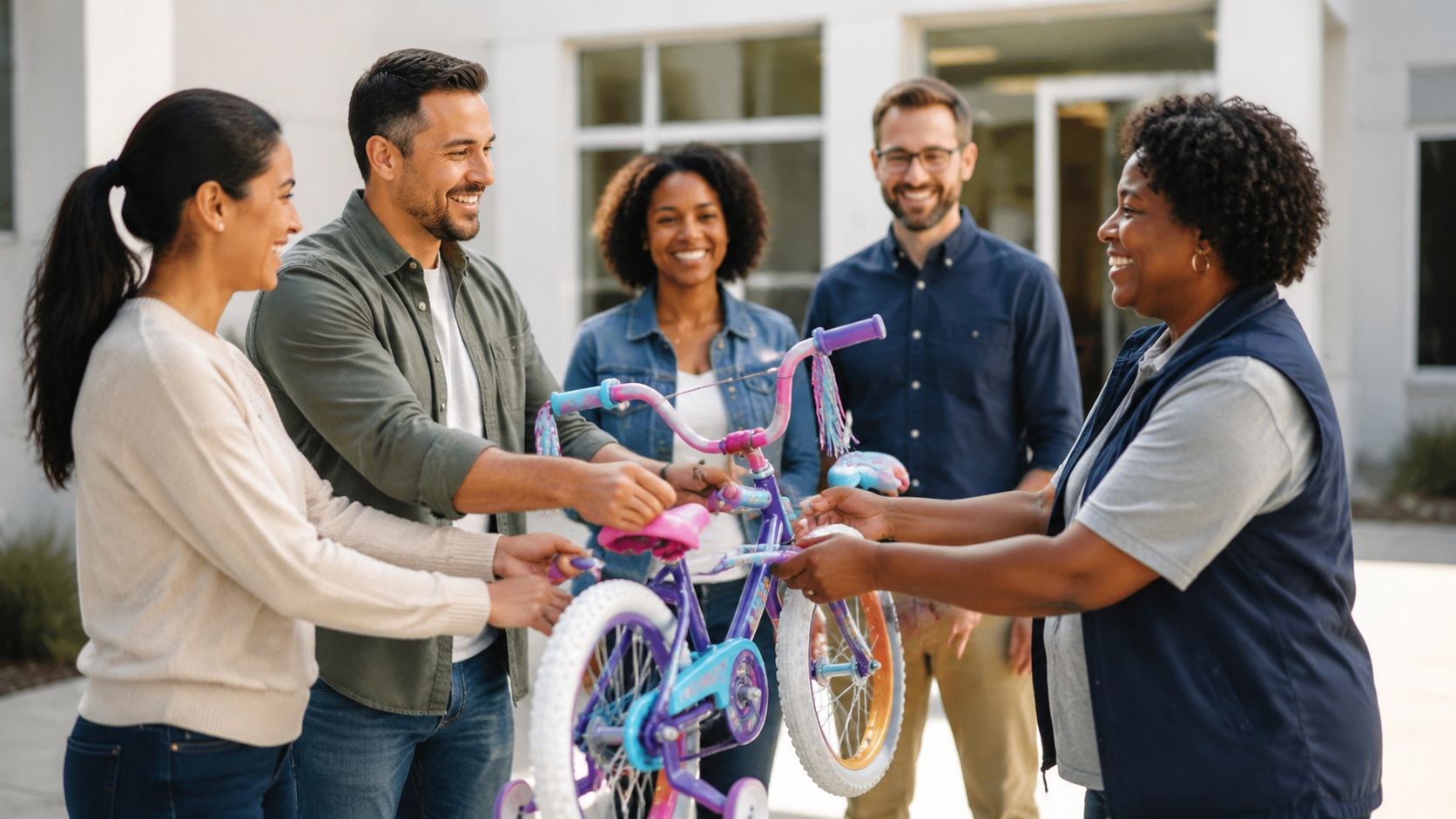
For major milestones, charity-linked recognition often feels more meaningful than another voucher or trophy. The organisation recognises a team or individual by directing support to a community cause in their name, or by celebrating through a shared give-back experience. Corporate Challenge Events already builds this model into its charity team building programs, which gives leaders a way to connect appreciation with purpose.
This style of employee recognition works well for organisations that want recognition to say something about culture, not just performance. It can also suit teams that don't want individualised spotlight but still want the achievement marked in a visible way.
Where it works best
Charity-linked recognition is strongest when the connection feels credible:
Tie it to a team outcome: Project completion, customer service recovery, safety milestone or cross-functional collaboration.
Explain why the cause fits: The cause should reflect organisational values or the team's work.
Add a shared moment: A presentation, team build or contribution reveal makes the recognition feel human.
Leaders looking for community-focused formats can draw ideas from these charity team building programs in Australia. If a physical token is still useful for event visibility, practical strategic event swag options can support the moment without becoming the whole point.
5. Play-Based Recognition Experiences
Not every recognition moment needs to be verbal. Sometimes the strongest thank you is a well-designed shared experience. Play-based recognition gives teams a low-pressure way to celebrate effort, reconnect and reset after demanding work.
That doesn't mean random entertainment. It means using facilitated activities that create laughter, reflection and interaction while still feeling workplace-appropriate. Corporate Challenge Events offers a broad range of team building activities that can be positioned as recognition for a team's contribution, especially after sustained delivery periods.
Where play fits into recognition
Play softens the awkwardness that often makes recognition feel forced. Instead of putting one person on the spot, it gives the group a more natural setting to notice each other. That is one reason play in the workplace can support stronger team connection.
WorkTango includes work-life balance achievements among behaviours that can be rewarded, according to its low-cost recognition ideas guidance. That points to an important shift. Recognition shouldn't only reward intensity. It can also recognise healthy performance, support during busy periods and the behaviours that make sustainable work possible.
Playful recognition doesn't need to be silly. It needs to lower pressure enough for people to connect.
6. Hidden Contribution Spotlight
Recognizing visible achievers is a common practice. Fewer have a system for recognising the people who keep everything moving behind the scenes. A hidden contribution spotlight corrects that.
This can be a regular meeting segment, a rotating internal award or a nomination channel that asks one question: whose work made others more effective? That surfaces the organiser who prevented confusion, the coordinator who held the moving parts together, or the steady operator who solved a problem before it spread.
How to keep it credible
The risk with hidden contribution awards is vagueness. If the language gets too broad, people stop trusting it. The nomination should ask for one concrete example, one team impact and one reason the contribution was easy to miss.
Awardco's case-study aggregation found that employees recognised early saw a 40% drop in attrition, and employees who received 4+ recognitions were 50% less likely to leave, according to its recognition program case study roundup. The useful lesson isn't just frequency. It's coverage. Recognition has more value when it reaches beyond the obvious people.
Leaders wanting more practical ideas can adapt these ways to make employees feel rewarded into a more inclusive recognition rhythm.
7. Customer Impact Story Showcase
Recognition gets stronger when employees can see the tangible effect of their work. A customer impact story showcase does exactly that. Instead of praising effort in the abstract, it shares a customer story, message or piece of feedback that explains what changed because the team did its job well.
This format is especially effective for service teams, operations, internal support functions and project teams whose work can feel distant from the end result. It turns recognition into meaning, not just approval.
How to use it without overproducing it
The best showcases are short. A written note read aloud in a team meeting can work. So can a customer story shared in a conference session, monthly all-hands or internal newsletter. The point is to connect contribution with impact.
Quantum Workplace reports that organisations with formal employee recognition programs have 31% less voluntary turnover than organisations without one, and that only 35% of employees get recognised monthly or weekly while 1 in 2 say they want more recognition, as noted in its recognition research earlier. That gap explains why simple, human formats like customer stories can carry so much weight. They feel earned, not scripted.
A good prompt for leaders is straightforward: what did the customer experience because this team showed up well?
8. End-of-Project Appreciation Rituals
Projects often finish badly from a culture point of view. Everyone is tired, the next deadline has already started, and the team moves on without proper closure. An end-of-project appreciation ritual fixes that.
This isn't just a celebration event. It's a short, repeatable recognition practice that happens every time a major piece of work wraps. The team names what was achieved, what was hard, who helped, and what should be carried forward.
What the ritual should include
The strongest version has four parts:
Reflection: What challenge stretched the team most.
Recognition: Who brought energy, care or clarity when it mattered.
Learning: What the team wants to repeat next time.
Closure: A deliberate marker that the effort has been seen.
Regular rituals help teams avoid office-centric recognition patterns by making appreciation part of the workflow, not an ad hoc extra.
For annual planning cycles, these moments can also sit naturally inside EOFY team building ideas so recognition reinforces culture rather than filling an event agenda.
Comparison of 8 Employee Recognition Ideas
| Recognition Method | Implementation Complexity | Resource Requirements | Expected Outcomes | Ideal Use Cases | Key Advantages |
|---|---|---|---|---|---|
| Peer-to-Peer Appreciation Circles | Low, simple facilitation and prompts | Low, 15–30 min meeting time, facilitator role | More peer-to-peer praise, improved sense of being valued, better collaboration | Small–medium teams (5–20), in-person, hybrid, remote with facilitation | Builds trust quickly, models vulnerability, minimal cost |
| Values-Based Shoutouts | Low, straightforward process, repeatable | Low, 5-min agenda item, Slack/form for submissions | Clearer alignment to core values, more value-specific recognition | Scalable org-wide, all-hands, team channels | Reinforces culture, scalable, fast to run |
| Team Win Storytelling | Medium, needs structured facilitation and narrative | Low, 30–60 min session, time to document story | Stronger team identity, improved cross-functional collaboration, shareable case studies | Project teams, functional wrap-ups, in-person or hybrid meetings | Emphasises collective contribution, captures learnings |
| Charity-Linked Recognition Awards | Medium, requires charity partnerships and admin | Medium–High, donation budget varies, coordination overhead | Increased pride in CSR, higher engagement on purpose, external brand benefit | Individuals, teams, or business units at any scale | Links performance to meaningful impact, highly motivating |
| Play-Based Recognition Experiences | Medium–High, planning, professional facilitation often needed | Medium–High, 2–4 hour events, vendor/facilitator costs | Measurable morale boost, stronger interpersonal bonds, memorable celebration | Teams of 10–100+, best in-person or hybrid events | Energising and memorable, promotes connection through shared activity |
| "Hidden Contribution" Spotlight | Low, nomination and communication channel required | Low, recurring comms segment, minimal expense | Greater recognition for support roles, more inclusive appreciation culture | Large or complex organisations, operations and support teams | Elevates unseen work, improves morale in non-spotlight functions |
| Customer Impact Story Showcase | Medium, coordination with customers and internal teams | Low–Medium, time to source stories, possible small customer token | Stronger sense of purpose, higher engagement for non-customer-facing roles | All team sizes, especially roles distant from end customers | Creates emotional connection to impact, tangible proof of value |
| End-of-Project Appreciation Rituals | Medium, repeatable structure and facilitation | Low–Medium, 1–2 hours, modest budget for wrap-up | Better knowledge transfer, reduced burnout, stronger team closure | Project-based organisations, cross-functional teams | Formalises closure, protects reflection time, preserves lessons learned |
Making Recognition Stick A Leader's Toolkit
The best employee recognition ideas don't rely on charisma, budget or one excellent manager. They rely on habits. Recognition feels meaningful when it's specific, connected to values, open to peer contribution and delivered close to the moment that earned it.
Leaders should also avoid making every recognition moment public. Some people enjoy a meeting shoutout. Others would rather receive a card, a quiet conversation or a note attached to a team update. Good workplace recognition gives people different ways to participate without forcing the same format on everyone.
A practical toolkit is simple:
Be specific: Name the action and its impact.
Recognise effort as well as outcomes: Especially when teams are under pressure.
Let peers contribute: Team connection grows faster when recognition doesn't only flow downward.
Keep it regular, not robotic: Cadence matters, but scripted praise dies quickly.
Use prompts: They help managers and teams notice the right things.
Useful recognition questions include:
Who helped someone else succeed this month?
What small contribution made a big difference?
Where did the team show its values in action?
What moment made people proud of the team?
Who brought energy, care or clarity when it mattered?
Recognition also gets easier when the environment supports it. Play helps by creating shared moments where appreciation feels warmer, more natural and less staged. For teams considering experiences alongside tangible thank-yous, it can help to discover curated corporate gifts for staff, then balance those with team-based formats that build connection, not just consumption.
Corporate Challenge Events helps organisations create serious fun with lasting impact through play based team building experiences that strengthen recognition, team connection and positive team culture across conferences, offsites, EOFY celebrations, Christmas events and culture programs.