
How often should companies do team building? At least once every quarter.
Three months is enough time for a team to change. New people arrive, priorities shift, pressure builds and communication habits begin to slip. Quarterly team building gives people a regular opportunity to reconnect, strengthen how they work together and address friction before it becomes part of the culture.
This applies to every team, including teams that are already performing well. Team building should not be reserved for Christmas parties, annual conferences or moments when morale has already dropped. Four purposeful sessions across the year create a reliable baseline, with additional sessions scheduled after restructures, leadership changes, rapid recruitment or other significant workplace change.
The sessions do not need to be four major offsites. The format can change throughout the year. The commitment to developing the team should remain consistent.
Why Quarterly Team Building Works Better Than One Annual Event
The case for regular team building becomes clearer when we look at Australian engagement data. ADP’s Australian workforce engagement research found that only 16 per cent of employees were fully engaged in 2025. Although 90 per cent of employees worked as part of a team, engagement varied dramatically according to the quality of that experience. Among employees who felt part of a high-performing team, 52 per cent were fully engaged. That figure dropped to 10 per cent among those who did not.
The wider picture is just as concerning. Gallup’s Australian engagement data classified 21 per cent of employees as engaged in 2025, while 65 per cent were not engaged and 14 per cent were actively disengaged. Reward Gateway’s Australian Workplace Engagement Index also found that fewer than half of Australian employees felt productive.
These findings come from different research models, but together they reveal how many Australian employees are working without feeling fully connected, engaged or productive. Waiting until the end of the year gives that problem too much room to grow.
Quarterly team building gives leaders a practical way to maintain the health of the team throughout the year. Each session can respond to what is happening at the time, whether the team needs to reconnect, improve communication, welcome new people, rebuild energy or strengthen collaboration. High-performing teams benefit from the same rhythm because strong performance still depends on relationships that receive regular attention.
What the Research Supports
Quarterly team building needs to be more than four social events placed on a calendar. Its value comes from giving people structured opportunities to practise the behaviours that influence how they communicate, solve problems and perform together.
A systematic review and meta-analysis examined 72 teamwork interventions involving 8,439 participants. It found significant improvements in both teamwork and team performance. Workshops, simulations and team reviews produced stronger teamwork outcomes than passive education, according to the PLOS ONE review of teamwork interventions.
That distinction is important. Teams are more likely to develop when people actively work through challenges together, observe their own behaviour and reflect on what helped or hindered the group. Simply telling employees to communicate better or delivering another presentation about teamwork does not provide the same opportunity for practice.
A separate meta-analysis of team-building outcomes found that team building had a positive, moderate effect across team outcomes, with particularly strong results for team processes and how participants felt about working together.
Together, these studies show that team building is most effective when it is active, structured and designed around real team behaviours. Each experience should give people an opportunity to work together, observe how the group responds and identify something useful they can carry back into the workplace.
A Quarterly Team Building Plan at a Glance
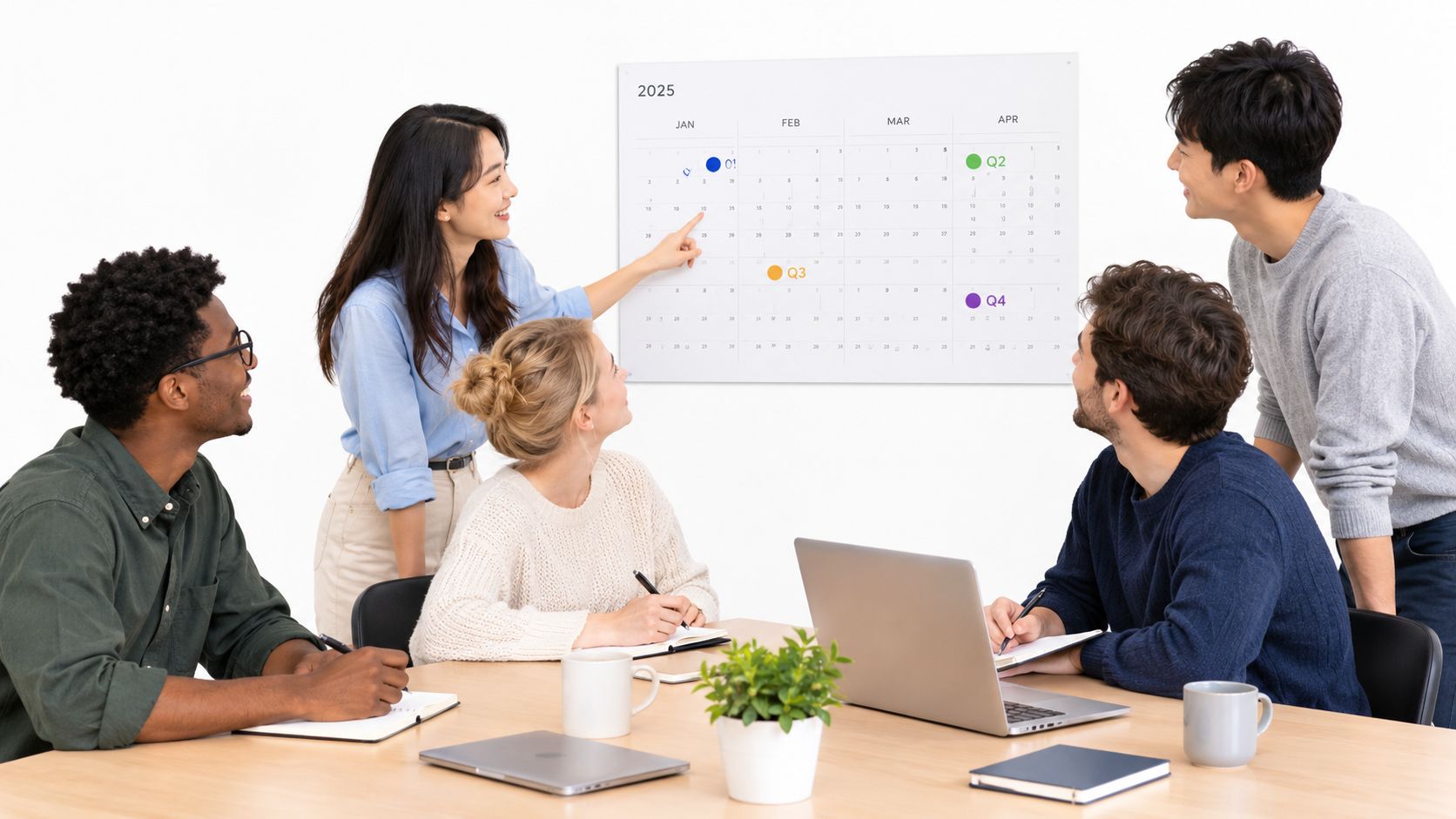
Quarterly team building does not mean four full-day offsites. One session might be a facilitated workshop, another an active challenge, another a charity program and another a shorter experience within a conference. Duration, cost and intensity can change while the commitment remains fixed.
Start by reserving four windows in the annual calendar. Choose the objective closer to each date, when leaders can see what the team needs. This protects time and budget without locking the organisation into the wrong activity months in advance. The following plan is a useful starting point.
| Quarter | Primary focus | Suitable format | Planning question |
| Quarter one | Reconnection and expectations | Workshop or collaborative challenge | What ways of working need to be clear for the year ahead |
| Quarter two | Communication and cooperation | Problem-solving or active program | Where is information being lost or held too tightly |
| Quarter three | Energy and relationships | Play-based or outdoor experience | What will help people reconnect during a demanding period |
| Quarter four | Recognition and shared purpose | Charity or end-of-year program | What should the team celebrate and carry into next year |
This is a planning model, not a fixed curriculum. A project team emerging from a difficult delivery cycle may need reflection and clearer handovers. A newly formed leadership group may need alignment. A stable team that has been working hard may simply need play, movement and a chance to relate without the pressure of normal roles. The objective should decide the format.
Give Each Quarter a Clear Purpose
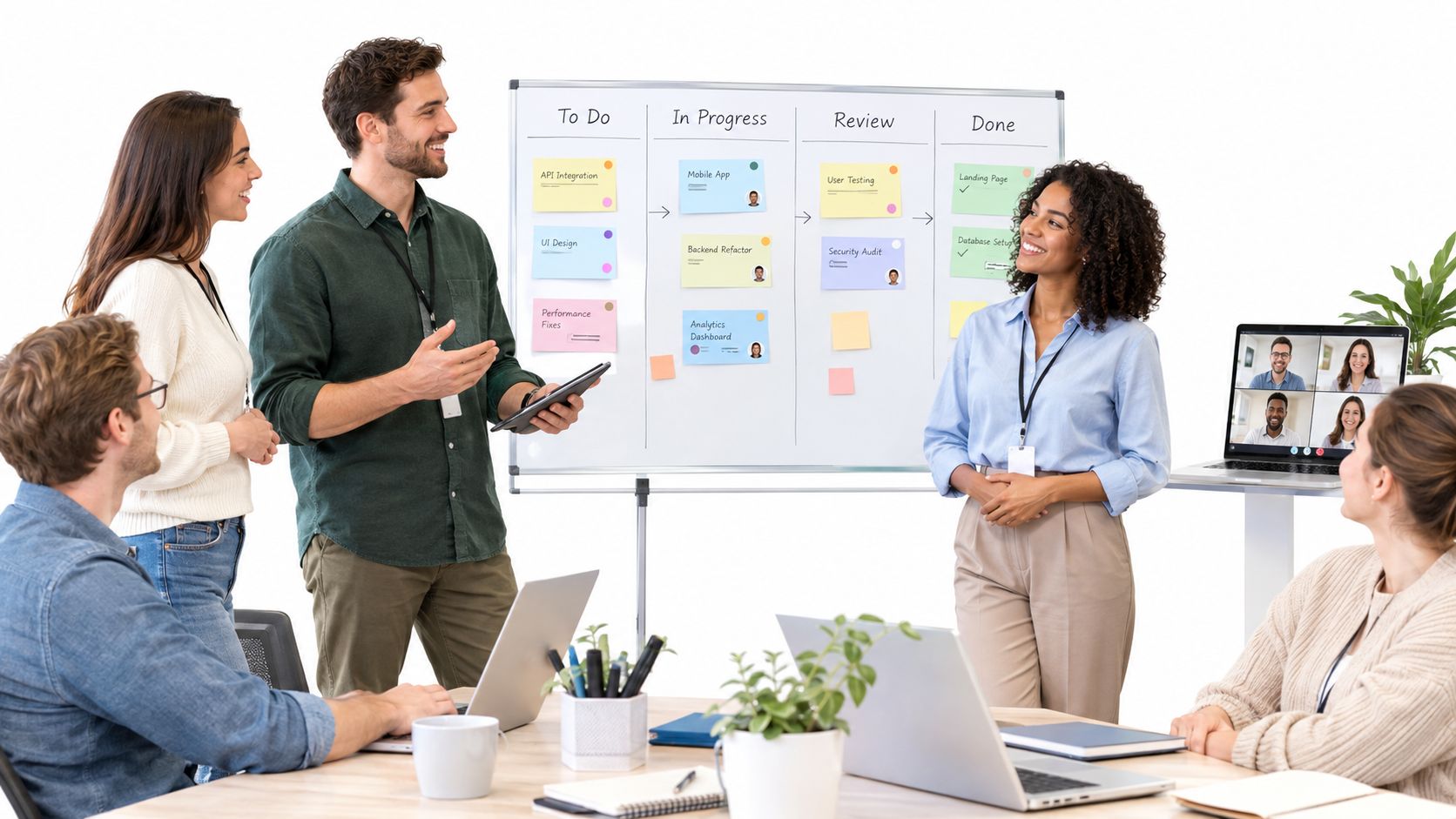
Quarterly team building does not mean repeating the same type of event every three months. A useful annual plan gives each session a distinct job based on what the team is likely to need at that point in the year.
Quarter One Sets the Team Up for the Year
The first session should establish how people want to work together. This is particularly valuable when the team is welcoming new employees, returning from the summer break or beginning the year with new priorities.
A program such as FISH! can help the group develop shared language around presence, attitude and workplace culture. The PLAY Principles is another strong option when the team needs to explore personal responsibility, relationships and the role play can have in better performance.
The aim is to give the team something practical to carry into the year ahead, rather than simply starting the calendar with an enjoyable activity.
Quarter Two Strengthens Communication
By the second quarter, people have usually settled into the year and patterns are becoming easier to see. This is a useful time to focus on communication, information sharing and how the team responds when a task requires genuine cooperation.
LEGO Legends creates a challenge in which instructions, roles and information need to move clearly between people. The activity gives the team something specific to examine afterward. Who shared useful information? Where did assumptions take over? What helped the group adjust?
Those observations give the session relevance beyond the activity itself.
Quarter Three Rebuilds Energy
The middle of the year can bring heavier workloads, reduced energy and fewer opportunities for informal connection. The third session can give people room to move, laugh and interact outside their usual roles.
Play Offs uses friendly competition and varied challenges to bring energy back into the group. The focus is not on identifying the most athletic or competitive participants. It is on creating an experience where different strengths can contribute and the team can enjoy working together again.
Quarter Four Connects Recognition With Purpose
The final session should give the team a meaningful way to recognise what has been achieved and finish the year with a shared experience.
Bikes for Tykes combines teamwork with a practical contribution to the community. Teams need to organise themselves, complete the build and deliver something with a clear purpose beyond the event. This makes it a strong option for organisations that want their end-of-year experience to include recognition, connection and community impact.
Choose the Format After the Objective
Not every quarterly need requires the same approach. A workshop is better suited to deeper discussion, shared language and workplace application. An activity gives people an opportunity to experience their team dynamics through action. This guide to choosing between a team-building activity and workshop can help organisers decide which approach fits the objective.
Once the format is clear, the wider collection of corporate team-building activities can be used to compare options. Organisers looking beyond familiar formats can also explore this international collection of team-building ideas for companies for additional indoor and outdoor inspiration.
The final choice should still be shaped around the organisation. The examples in this guide to adaptable team-building programs show how activities can be adjusted to support different objectives. Before booking, use the seven-question team-building selection guide to test the preferred option against the team’s size, profile, accessibility requirements, available time and budget.
Add Team Building When the Team Changes
Quarterly should be the minimum rhythm, not the maximum allowance. Some changes alter relationships faster than the calendar can respond. A team should not wait until its next scheduled quarter if people are struggling to understand new roles, work with a new leader or rebuild trust after a difficult period.
Consider an additional session after a restructure, merger, leadership change, rapid recruitment phase or return to the workplace. New project teams can also benefit before a high-stakes delivery begins, particularly when members come from functions that rarely work together. The purpose is not to celebrate change or disguise a management problem. It is to give people a structured opportunity to establish how they will communicate and cooperate in the new environment.
Extra team building may also be appropriate after a major project, during sustained workload pressure or when conflict is affecting handovers and decision-making. In those situations, the activity must match the condition. A light social event may help tired people reconnect, but a team facing unresolved role confusion may need a facilitated workshop instead.
Make Every Session Carry Into Work
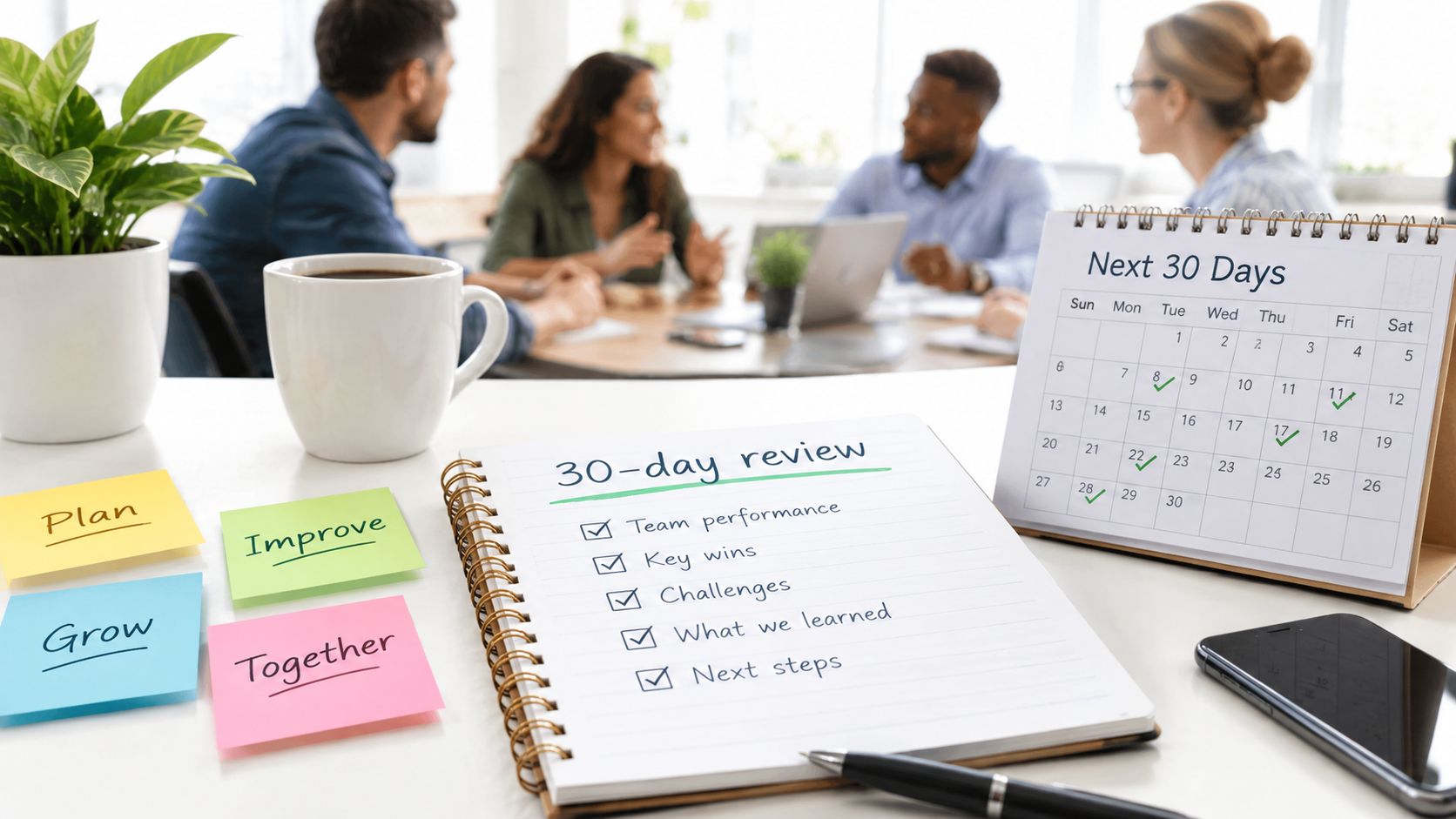
Frequency will not rescue weak design. Each session needs one clear objective and a credible connection to work. Leaders should explain why the experience has been chosen, participate alongside the team and make space for a short debrief. The debrief does not need to turn a lively event into a lecture. A few focused questions can help people name what supported performance, what created friction and what they want to repeat at work.
The follow-through can be simple. Revisit one agreed behaviour in team meetings, recognise examples when they occur and check progress after 30 days. Practical team-building guidance for managers can help leaders connect the session to everyday management. The guide to maintaining an effective team after an event offers further ideas for keeping the experience visible without forcing it.
If the organisation already uses digital learning, the team can turn one or two insights into short internal reminders or microlearning. A platform for creating short training videos is one possible way to record the behaviour in the team's own language and make it easy to revisit. The tool is less important than the discipline of carrying the agreement back into normal work.
Common Questions About Team Building Frequency
Is Annual Team Building Enough
Usually not. One annual event can be valuable, but it leaves long gaps while teams absorb new people, priorities and pressures. Quarterly team building creates a more reliable rhythm and reduces the expectation that one event must solve every team need.
Can Quarterly Team Building Create Fatigue
It can if every session feels identical or has no clear purpose. Vary the format, objective and level of intensity. Four quarterly sessions might include one workshop, one active challenge, one short conference activity and one charity program. A mixed plan feels responsive rather than mechanical.
How Long Should a Team Building Session Be
The objective should determine the length. A conference energiser may take less than an hour, while a workshop or complex team challenge may need half a day or longer. Do not stretch a simple objective to fill a day, and do not compress a sensitive team issue into a quick game.
Should Participation Be Compulsory
Organisations should make team development a normal part of work while ensuring the experience is inclusive. Ask about accessibility, physical requirements, dietary needs, sensory load and alternative ways to contribute. People are more willing to participate when the purpose is clear and the design does not punish them for age, ability, personality or personal circumstances.
How Do We Get Leadership Approval
Present the annual plan as a people and performance investment. State the team condition, the behaviour each session will address, the time required and how leaders will assess useful change afterward. This guide to building the case for team-building approval provides language for conversations with budget-focused decision-makers.
Put the Four Dates in the Calendar
The most practical place to begin is with the calendar. Reserve one team-building window each quarter and allocate the budget early, while leaving the exact program flexible until the team’s needs become clearer.
Before each session, look at what has changed since the previous quarter. Consider new employees, current workloads, communication gaps, leadership changes and the demands of the next stage of work. That review should determine the objective, format and level of facilitation required.
Planning this way removes the pressure from a single annual event. By the end of the year, the team has experienced four purposeful opportunities to develop different aspects of how it works, with each session responding to the people and priorities in front of them.
Corporate Challenge Events can help you plan a quarterly program that balances workshops, active challenges, play-based experiences and charity team building across the year.