
Late January in a school is rarely calm. Leaders are finalising staffing, teachers are adjusting to new year levels or responsibilities, and students are entering classes with different faces, routines and expectations. With so much attention on timetables, compliance and logistics, connection can easily become something everyone intends to address later.
The first weeks of the year are precisely when it deserves attention. Well-designed team bonding activities for schools give staff and students an early opportunity to practise how they will communicate, participate and support one another when the term becomes busy.
The strongest approach is often a two-part one. A teacher PD or team development day gives staff practical language and behaviours they can use together. A separate student experience builds communication, confidence and positive relationships in an age-appropriate way. The activities do not need to be identical. They simply need to reinforce a consistent view of what good teamwork looks like across the school.
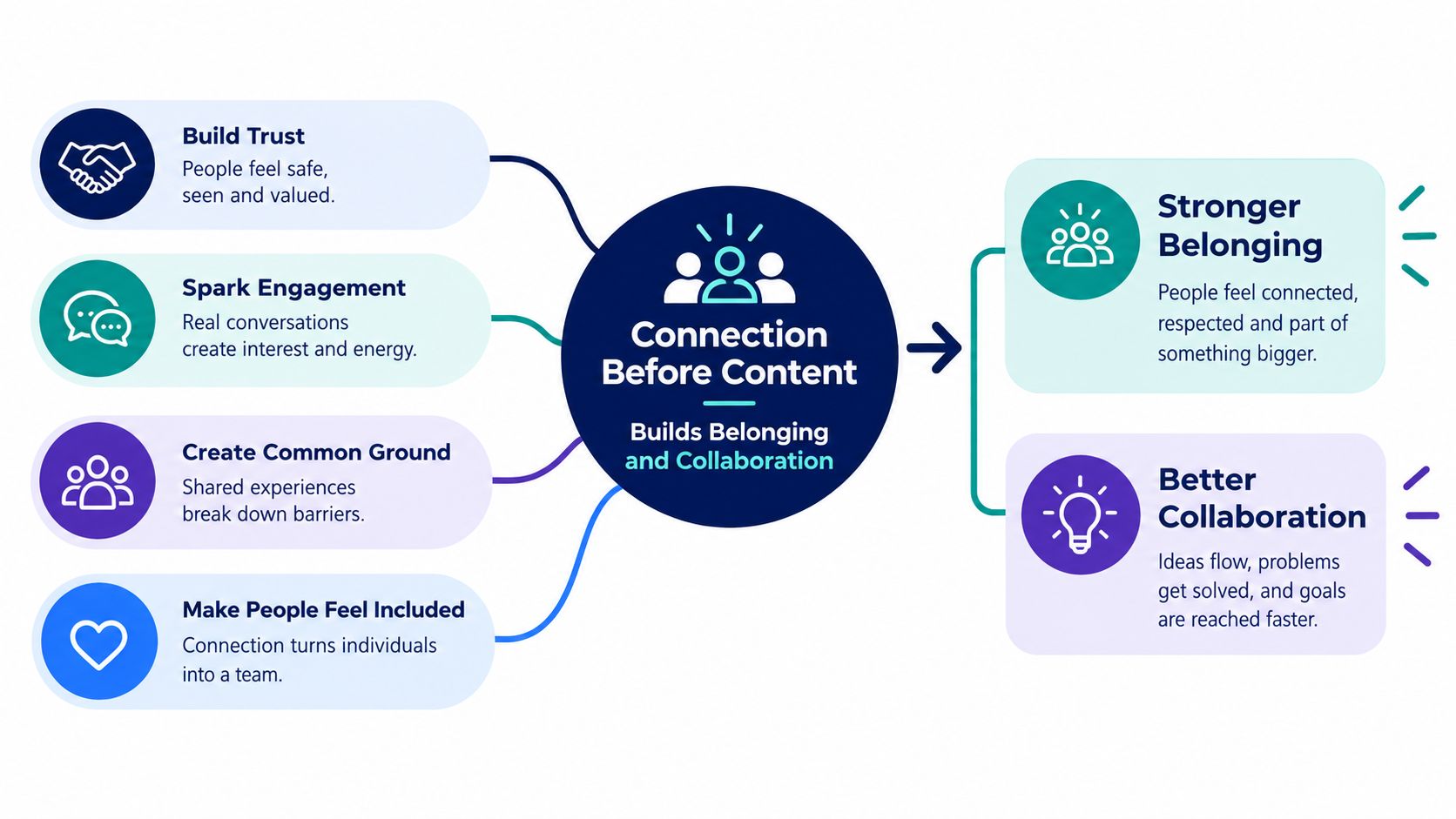
Why the beginning of the school year deserves attention
Schools ask people to operate as teams from the first day, even when those teams are still forming. A faculty may include experienced staff working with a new coordinator, graduate teachers joining an established department and support staff responding to different classroom needs. Students are also navigating new year levels, changing friendship groups and unfamiliar teachers.
If the opening weeks focus only on information, relationship-building is left to chance. A purposeful shared experience can create early reference points for how people listen, contribute and respond when a plan does not work. It does not need to be a dramatic event. The goal is to give people a practical starting point they can draw on later.
Schools already recognise this in other areas. Student leadership programs, including guidance on developing a collaborative Model United Nations community, use agreed norms, meaningful roles and structured participation to help groups work well together. The same principles can shape a staff development day, a Year 7 transition activity or a whole-school program.
For schools planning across the opening weeks, this guide to using team building at the start of the school year offers a useful broader framework. The important step is to decide what the school wants people to practise before selecting an activity.
Connection supports belonging and participation
Belonging is not separate from school improvement. An ACER review found that almost all Australian jurisdictions collect annual wellbeing data for students in Years 4 to 12, including information about peer and staff relationships, belonging, engagement and safety. The review of student wellbeing measurement in Australia shows how firmly relational wellbeing now sits within education planning.
The evidence also points to the conditions that help belonging grow. AERO's review of evidence-based wellbeing practices highlights explicit expectations for inclusion, culturally safe environments and opportunities for students to work together. A recent Australian study of school belonging similarly identified positive peer relationships, choice and collaborative participation as important influences.
This gives leaders a useful filter for evaluating team activities. The question is not simply whether students or staff will enjoy the experience. It is whether they will need to listen, contribute, make decisions, include others and reflect on how their group worked.
Collaborative work also needs structure. The Australian evidence review of collaborative learning reports positive academic effects overall, while cautioning that results depend on task design, group size and the quality of interaction. A team day is not an academic intervention, but the same design lesson applies: placing people in groups does not automatically create collaboration.
Schools comparing formats can begin with an overview of team-building programs designed for school groups and then work backwards from the outcome they want.
Teacher PD days that create shared ways of working
A pupil-free day can place staff in the same room for hours without improving how they work together. A stronger session makes team habits visible. Teachers might solve a problem, build something together or work through a facilitated framework, then examine how the group communicated and what should carry into meetings, classrooms and daily interactions.

FISH
FISH! for school teams gives staff four memorable practices: Be There, Play, Make Their Day and Choose Your Attitude. They translate easily into everyday school life, from being present in a briefing to supporting a colleague during a difficult week. The value is not in presenting another slogan. It is in helping staff name the behaviours they want to see and decide how those behaviours will look in practice.
The PLAY Principles
The PLAY Principles workshop helps staff explore how connection, communication and personal responsibility influence culture. It suits schools that want a facilitated conversation about trust and team behaviour, supported by activities that make those ideas concrete. Staff do not need identical working styles, but they do need clear expectations for how people listen, challenge ideas and follow through.
Bikes for Tykes
Bikes for Tykes combines teamwork with a community outcome. Staff plan, divide roles, solve practical problems and complete a bike build together. The purpose gives the task focus while creating a natural conversation about role clarity, quality and supporting others under time pressure.
LEGO Legends
LEGO Legends is a creative option that relies on clear instructions and visible interdependence. Teams need to organise materials, communicate details and manage different ideas without losing momentum. It can reveal who seeks clarity, who creates structure and how the team responds when information is incomplete.
Survivor
Survivor team building uses a series of challenges to make leadership, communication and responses to setbacks easier to observe. A well-designed session creates useful roles for planners, encouragers, organisers and practical problem-solvers, rather than rewarding only the fastest or loudest participants.
For schools weighing these options, the overview of team building for teachers can help leadership teams match the format to staff needs. AITSL's guidance on professional learning for teachers is also a useful reference when deciding how the day fits within a broader development plan. A team experience is not automatically accredited professional learning, but it can strengthen the relationships and shared practices that support ongoing learning.
Staff should leave with more than a positive memory. They should have language they can reuse, stronger relationships across roles and one or two agreed behaviours the school can revisit during the term.
Student team days that build confidence and communication
Student programs need clear entry points. In any cohort, some students will volunteer immediately while others will wait, observe or avoid the spotlight. A useful activity offers several respected ways to contribute and makes expectations easy to understand.

The Victorian guidance on High Impact Teaching Strategies recommends ground rules, purposeful grouping, assigned roles and shared responsibility during collaborative tasks. Those principles transfer well to student team days.
Survivor
A student version of Survivor can build communication, decision-making and recovery after a failed plan. The learning comes from giving students time to pause, regroup and try a different approach. Success should depend on strategy and cooperation as well as physical participation.
Play Offs
Play Offs works well for groups that benefit from movement, variety and repeated opportunities to reset. A difficult round does not define the day. Students can try again with a new challenge, a different role or a better plan.
Mini Olympics
Mini Olympics can build year-level spirit when activities reward a mix of strengths, including planning, coordination, memory, encouragement and problem-solving. This broader design helps prevent confident athletes from becoming the only students who feel successful.
Purpose-led building programs
Some cohorts respond better to a quieter task with a clear outcome. Bikes for Tykes, LEGO Legends and Toys for Tykes give students practical roles such as planning, sorting, building, checking quality and keeping the group organised. They also connect teamwork with service and care for others.
Choice and predictability are important for inclusive participation. This Australian resource on trauma-informed school practice discusses the value of safety, structure and responsive participation. In practical terms, schools should consider clear instructions, visible transitions, alternative roles and ways for students to step back briefly without being excluded from the experience.
The work should continue after the event. A classroom example such as this collaborative Odyssey learning activity shows how assigned roles and shared interpretation can reinforce teamwork through curriculum tasks. Schools can also review this school EDventure case study for an example of how facilitation, pacing and debriefing shape the student experience.
Matching the program to the school group
One activity does not need to solve every need. Start with the group, the desired behaviour and the type of participation the school wants to create.
| School group | Main priority | Suitable programs |
| Whole teaching staff | Shared culture and practical behaviours | FISH! or The PLAY Principles |
| Teaching teams | Communication and creative problem-solving | LEGO Legends or Survivor |
| Staff community day | Connection and shared purpose | Bikes for Tykes |
| New year levels | Communication and relationship-building | Play Offs or Mini Olympics |
| Student leaders | Leadership, resilience and decision-making | Survivor |
| Service-focused students | Teamwork and community contribution | Bikes for Tykes, LEGO Legends or Toys for Tykes |
| Mixed-confidence groups | Multiple ways to participate | LEGO Legends, Toys for Tykes or Play Offs |
Some schools also use communication profiles to help staff or students discuss different contribution styles. The article on using the DOPE Bird Personality Test in collaborative classrooms provides one way to extend that conversation, provided the profile is treated as a prompt rather than a fixed label.
Connecting staff and student experiences
Staff and students do not need to complete the same activity. The connection comes from the behaviours that teachers introduce, model and reinforce afterwards.
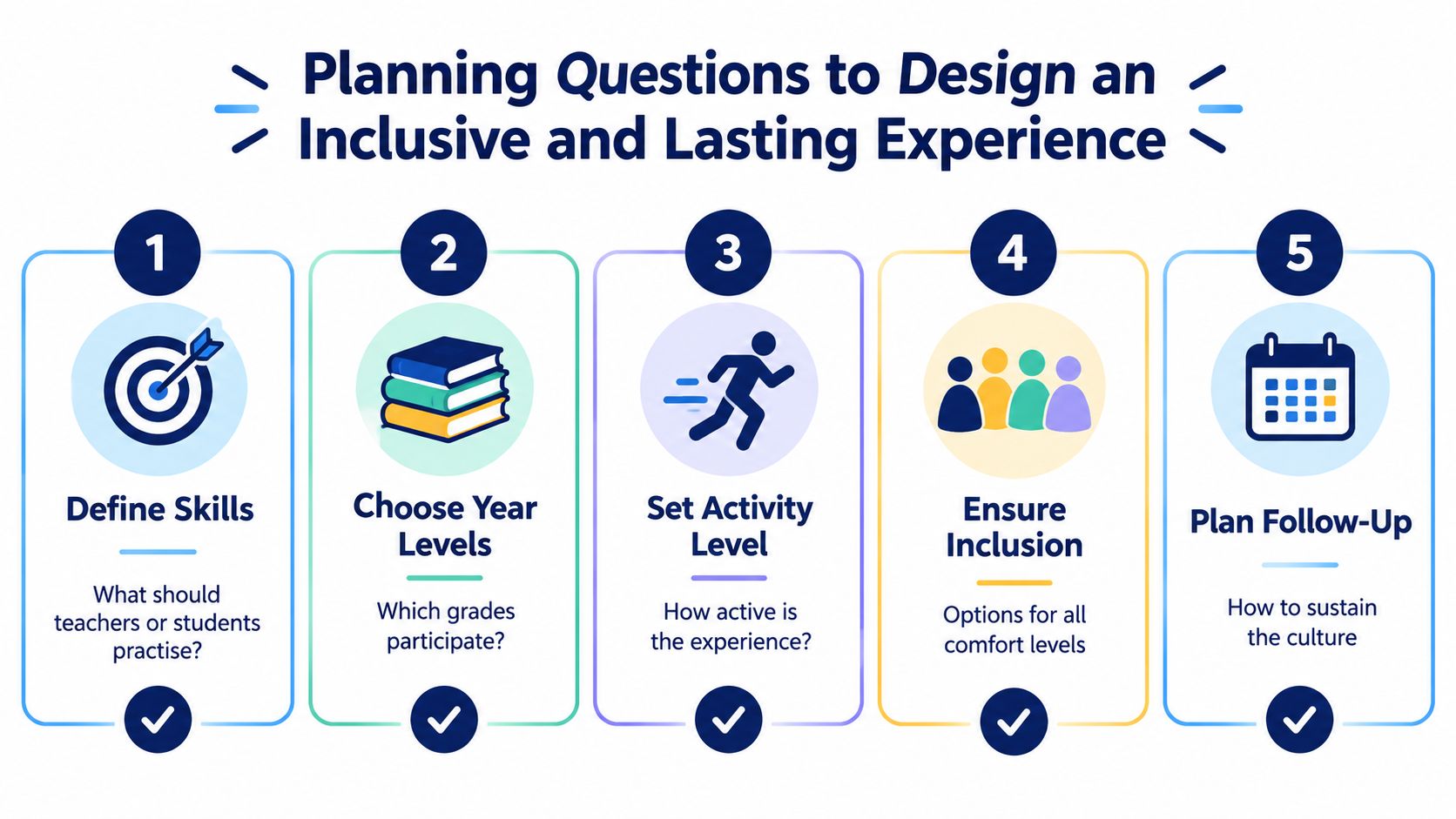
A practical sequence might look like this:
-
Before students return: Staff complete FISH! or The PLAY Principles and agree on two or three behaviours they want to model.
-
During the opening weeks: Student programs run by year level, with formats chosen for age, confidence and purpose.
-
Back in class: Teachers use short debrief prompts about listening, role-sharing, encouragement and resetting after setbacks.
-
Later in the term: Staff meetings and student leadership sessions revisit the same language through real examples from school life.
An Australian study of school-based social and emotional learning involving 18,643 Year 6 students found stronger outcomes when programs explicitly taught the skill they were intended to develop. The practical lesson for a team day is simple: if communication, cooperation or leadership is the goal, facilitators and teachers should name, practise and revisit it.
Planning Questions to Design an Inclusive and Lasting Experience
Good planning usually starts with purpose, then moves quickly to inclusion. A school should be able to explain what teachers or students are meant to practise and how the design will help different participants contribute. If that isn't clear, the day can become busy without becoming useful.
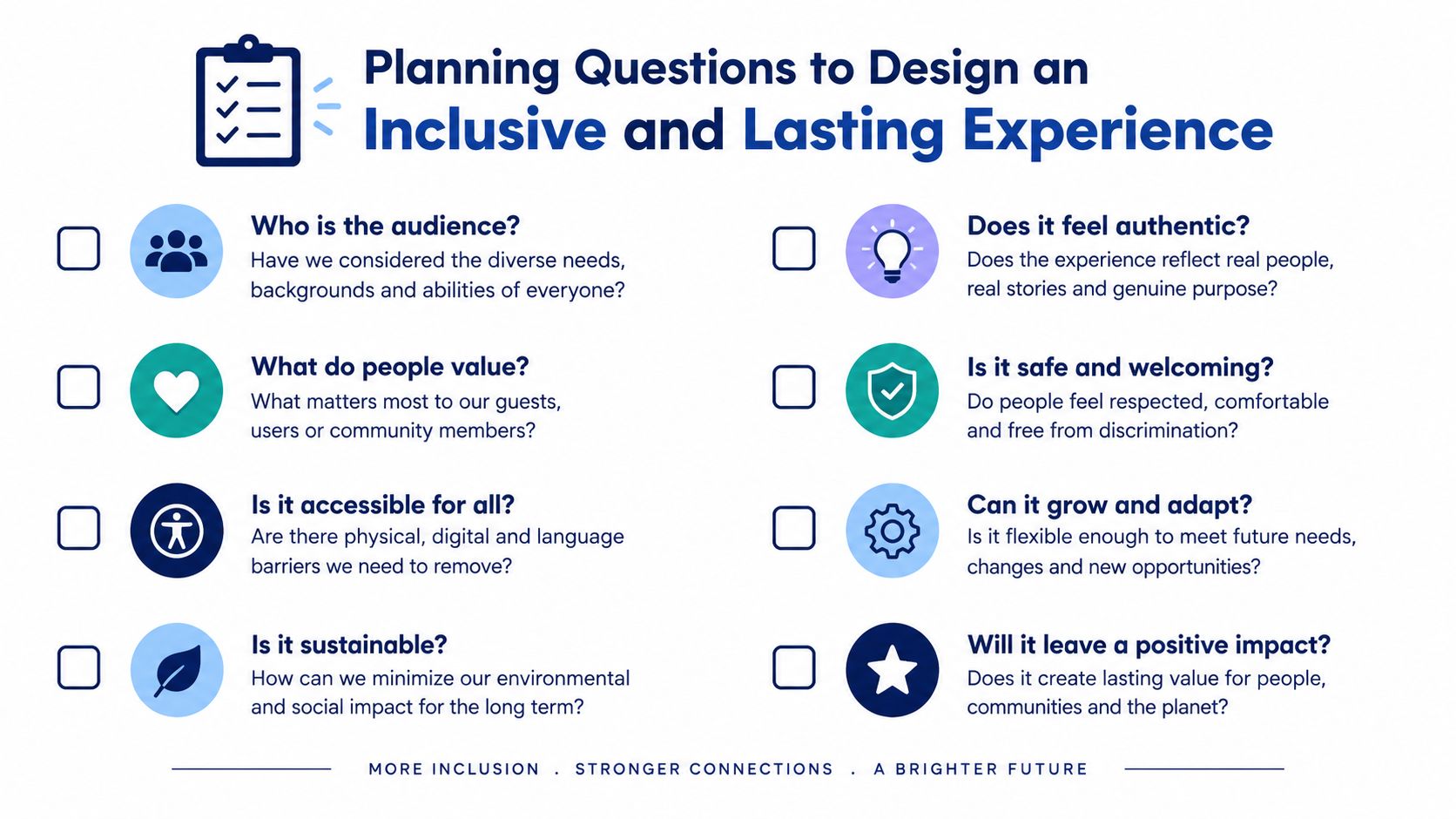
Before confirming a program, ask:
-
What should staff or students be able to practise during the session?
-
Which year levels, roles or staff groups will participate?
-
How active should the experience be?
-
How will different abilities, sensory needs and confidence levels be included?
-
Does the school want professional learning, connection, community contribution or a combination?
-
What indoor and outdoor spaces are available?
-
What wet-weather alternative is required?
-
How will teachers debrief the experience and revisit it afterwards?
Clear instructions, predictable transitions and genuine role choice make an activity more accessible without lowering expectations. The event should also give teachers language they can use when classroom pressure returns. That is what turns a good day into something useful beyond the day itself.
Plan staff and student programs together
Schools can work with Corporate Challenge Events to plan facilitated teacher development, student team days and charity-based programs. Different formats can be selected for adults and students while keeping the focus on consistent behaviours such as listening, participation, responsibility and support.
The best starting point is not choosing the most exciting activity. It is deciding what the school wants people to practise, then selecting the program that gives them the clearest opportunity to do it.